

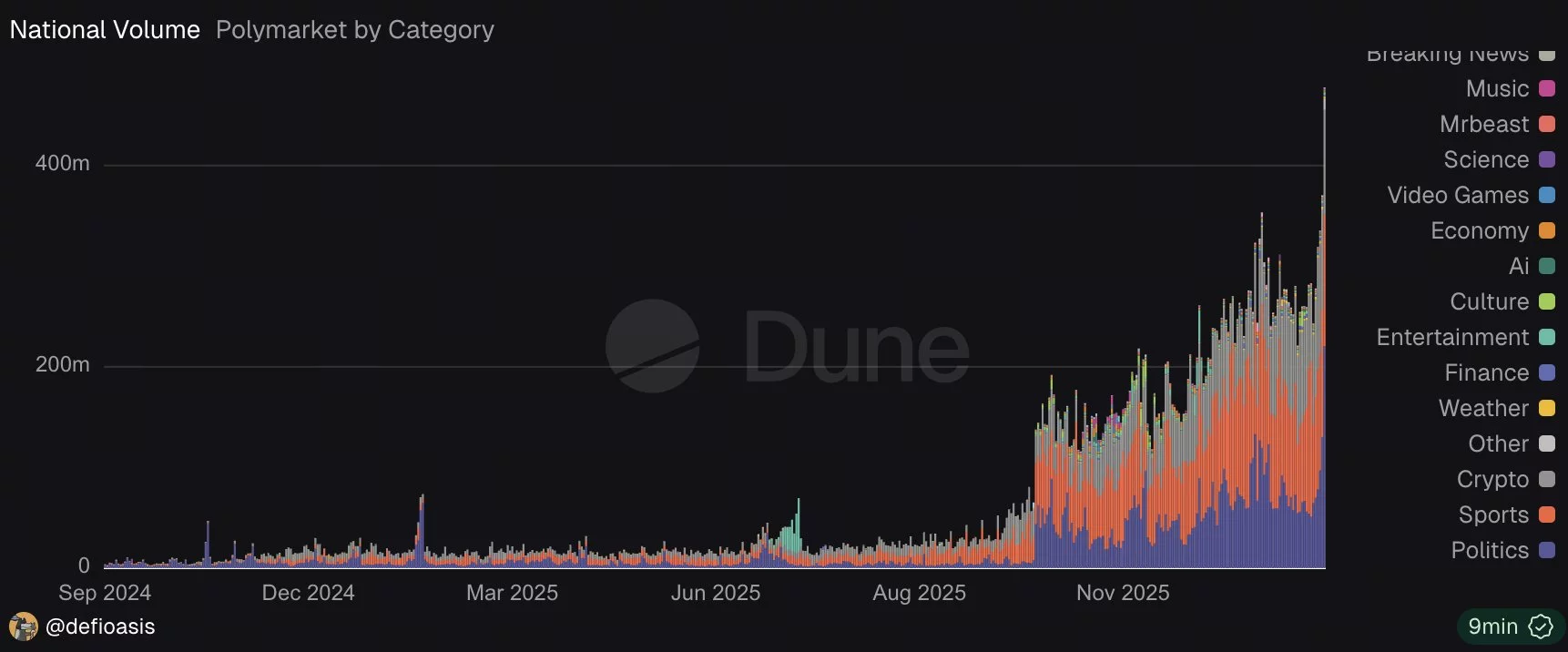
Polymarket processed a record $478 million in daily volume as airstrikes involving Iran intensified. The spike underscores how geopolitical shocks are rapidly redirecting liquidity into blockchain-based prediction markets.
在美以对伊朗实施联合打击当天,Polymarket 单日交易量创下历史新高,名义交易量达到 4.78 亿美元
— defioasis.eth (@defioasis) March 1, 2026
其中政治板块达 2.2 亿美元,同样创下历史新高,占比当日 Polymarket 名义交易量的 46.2%
此外,Polymarket Builders 在这历史节点上同样创下了单日交易量新高 pic.twitter.com/KnKmWO3vAn
The politics category alone generated $220 million, or 46.2% of total daily volume, marking another platform high. Central to the activity was the contract “US strikes Iran by February 28, 2026?” where several newly created wallets accumulated “yes” shares hours before coordinated strikes early Saturday. On-chain analytics firm Bubblemaps identified six wallets that collectively earned about $1.2 million, noting most were funded within 24 hours of the attack and concentrated specifically on the February deadline.
Did Insider Timing Drive War Contract Gains?
Bubblemaps said the wallets’ funding patterns and concentrated positioning raised suspicions of potential privileged knowledge. The findings have drawn attention from analysts and regulators monitoring whether blockchain transparency can effectively flag suspicious trading in real time. Critics argue that fresh accounts profiting from precisely timed geopolitical events risk undermining confidence in decentralized prediction infrastructure.
Not all traders benefited from the volatility. On-chain tracker Lookonchain highlighted a bettor known as “anoin123,” who had accumulated more than $2 million in gains over two months by wagering that the U.S. and Israel would not strike Iran. When strikes materialized, the trader lost $6.5 million in a single day, reversing prior gains into losses exceeding $4.5 million.
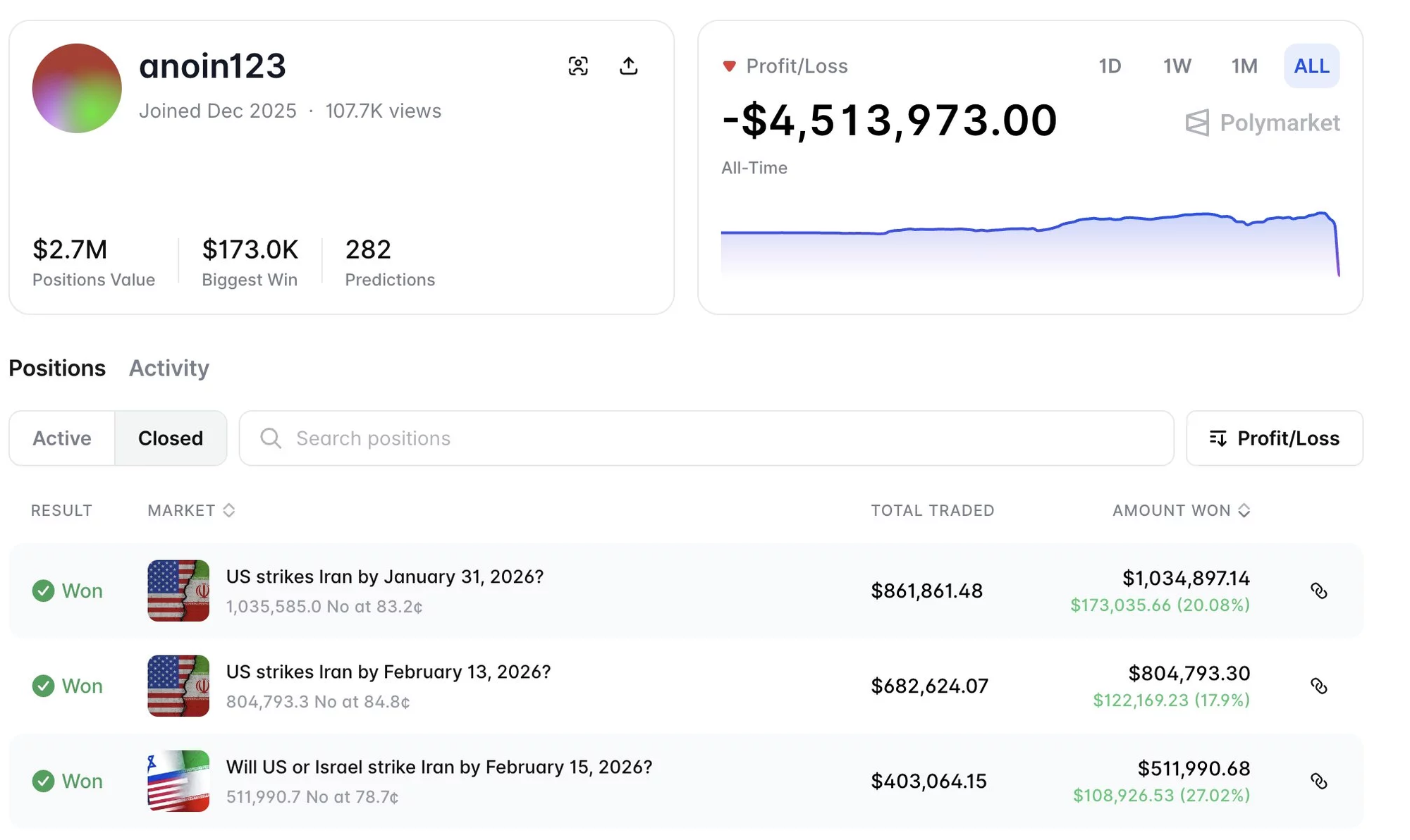
The contrasting outcomes illustrate both the scale and speed of capital rotation during crisis-driven trading. Prediction markets processed $44 billion in total volume last year, according to prior industry estimates, but single-day spikes tied to military events are testing oversight frameworks.
Regulators are now likely to scrutinize whether disclosure rules, wallet surveillance, or listing standards require tightening. The next catalyst will be whether enforcement agencies formally examine the flagged wallets or seek additional reporting requirements for geopolitically sensitive contracts.



