
Pi Coin (PI), the native token of Pi Network, has dropped another 7% this week, extending a month-long slide that has seen its price decline nearly 30%. While the price dip alone has rattled some investors, a deeper issue is emerging: questions over the Pi Network’s transparency—particularly regarding the true number of active nodes supporting the blockchain.
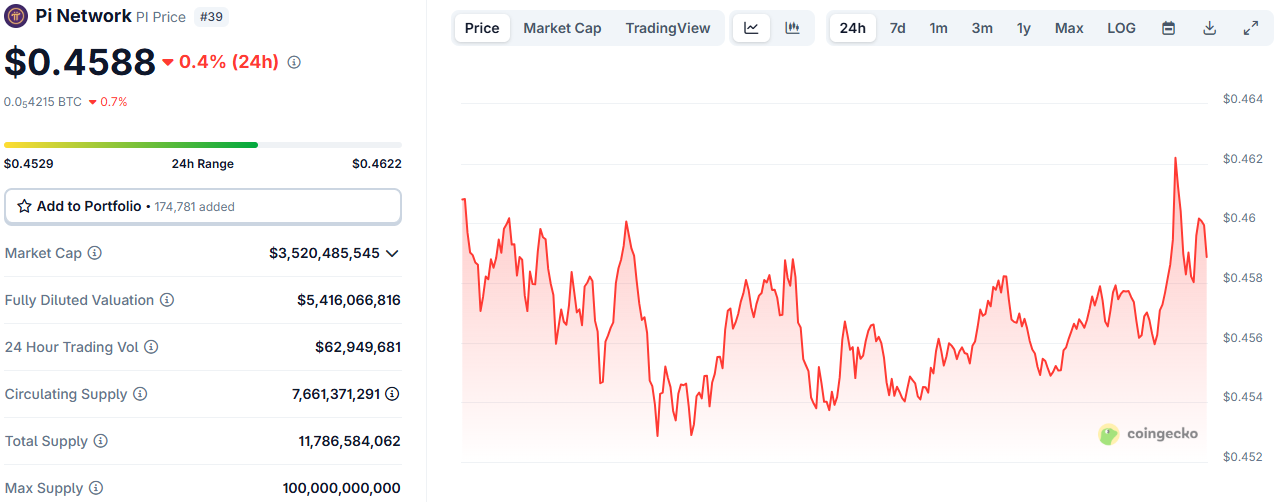
As of now, PI is trading at $0.4573, according to CoinGecko, reflecting a broader loss of confidence that goes beyond market movements.
400,000 Nodes—or Flawed Metrics?
In a recent blog post, the Pi Core Team claimed that the network has over 400,000 active nodes across its blockchain infrastructure, including Testnet1, Testnet2, and the Mainnet.
At face value, that sounds like a strong signal of decentralized adoption. But closer inspection tells a different story.
Only 114 of those nodes are active on the Mainnet—the network’s primary layer, where real transactions, governance, and token economics take place. The rest operate on testnets—experimental environments that don’t process real transactions or offer mining rewards. These are used primarily by developers and hold no immediate economic value.
Worse still, node activity ratios in testnet regions suggest inflated numbers. For example:
- Vietnam has 918,000 total nodes, but only 8,153 are active—a participation rate of just 0.9%.
- South Korea shows a 24.8% activity rate (43,043 out of 173,435).
- Hong Kong leads with 59.9% activity (70,722 out of 117,971).
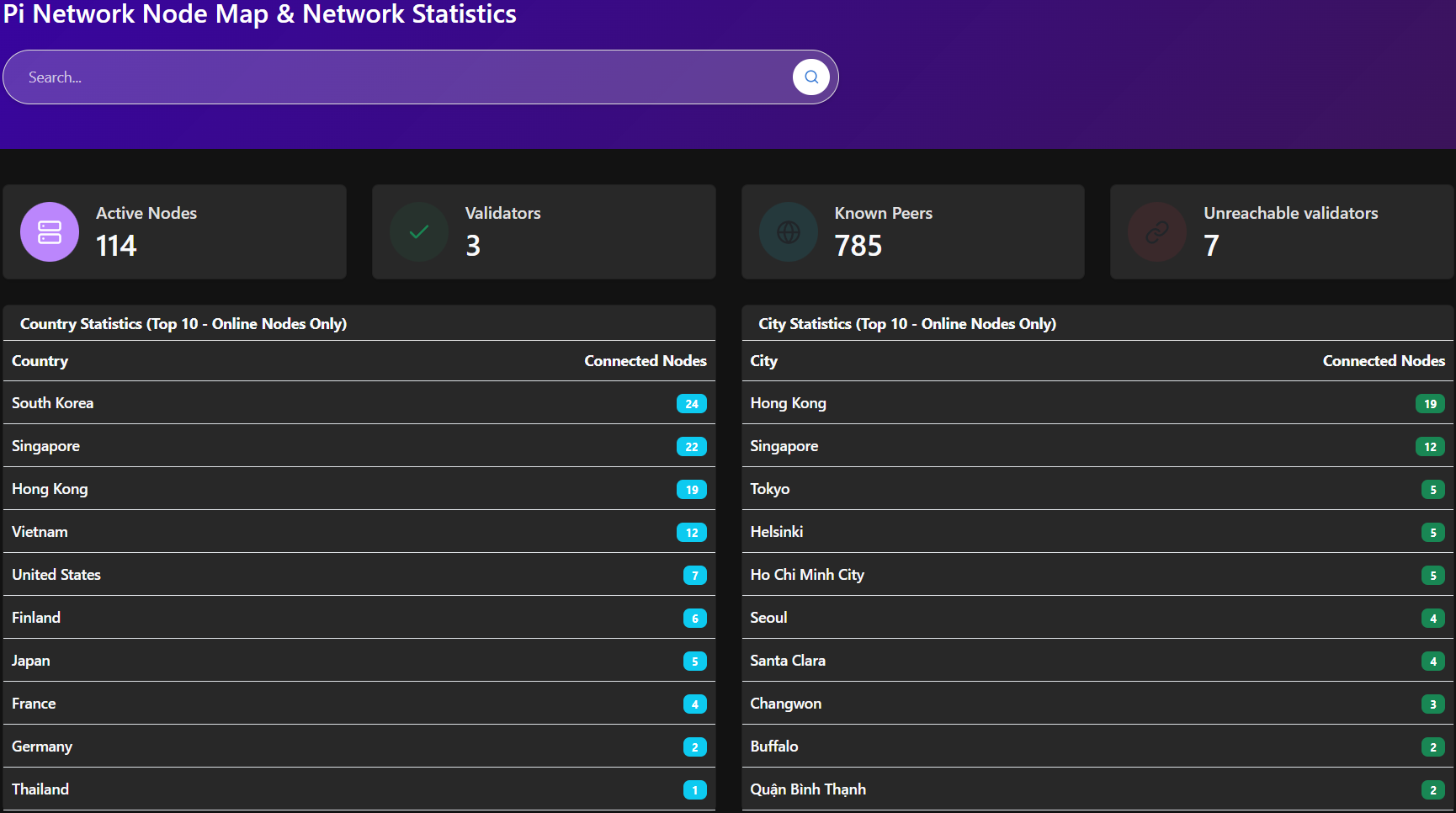

These stats raise concerns that the Pi Network’s widely publicized node count may misrepresent actual network strength—particularly when Mainnet activity remains minimal.
Transparency Issues Echo Wider Industry Concerns
Skepticism is growing as comparisons are drawn to recent crypto collapses, including the $5.5 billion downfall of the OM token. Analysts fear that inflated metrics and lack of clear communication from Pi Network could put its ecosystem at similar risk.
The $OM incident is a wake-up call for the entire crypto industry—proof that stricter regulations are urgently needed. It also serves as a HUGE lesson for the Pi Core Team as we transition from the Open Network to the Open Mainnet. @PiCoreTeam @nkokkalis @Chengdiao pic.twitter.com/zBN4LSsONN
— Dr Altcoin (@Dr_Picoin) April 14, 2025
Crypto researcher Dr. Altcoin has called for stronger decentralized ethics and more honest disclosures. “Projects need to stop chasing hype and start delivering verifiable fundamentals. If not, we’ll keep repeating the same mistakes,” he said, referencing the parallels between Pi and other failed ventures.
While Pi Network has not faced any major regulatory or financial scandals, the recent doubts show how fragile investor trust can be in an industry that demands openness and accountability.
Has Pi Network Overpromised?
Despite boasting one of the largest communities in Web3—with millions of mobile miners and supporters—Pi Network has struggled to turn its buzz into long-term value. Key events like “Pi2Day” and discussions around launching an Open Mainnet have been met with optimism, but little has changed in terms of price or functionality.
The lack of clear timelines and transparent metrics has led some investors to grow wary, wondering whether Pi’s fundamentals can ever match its ambitious branding.



