
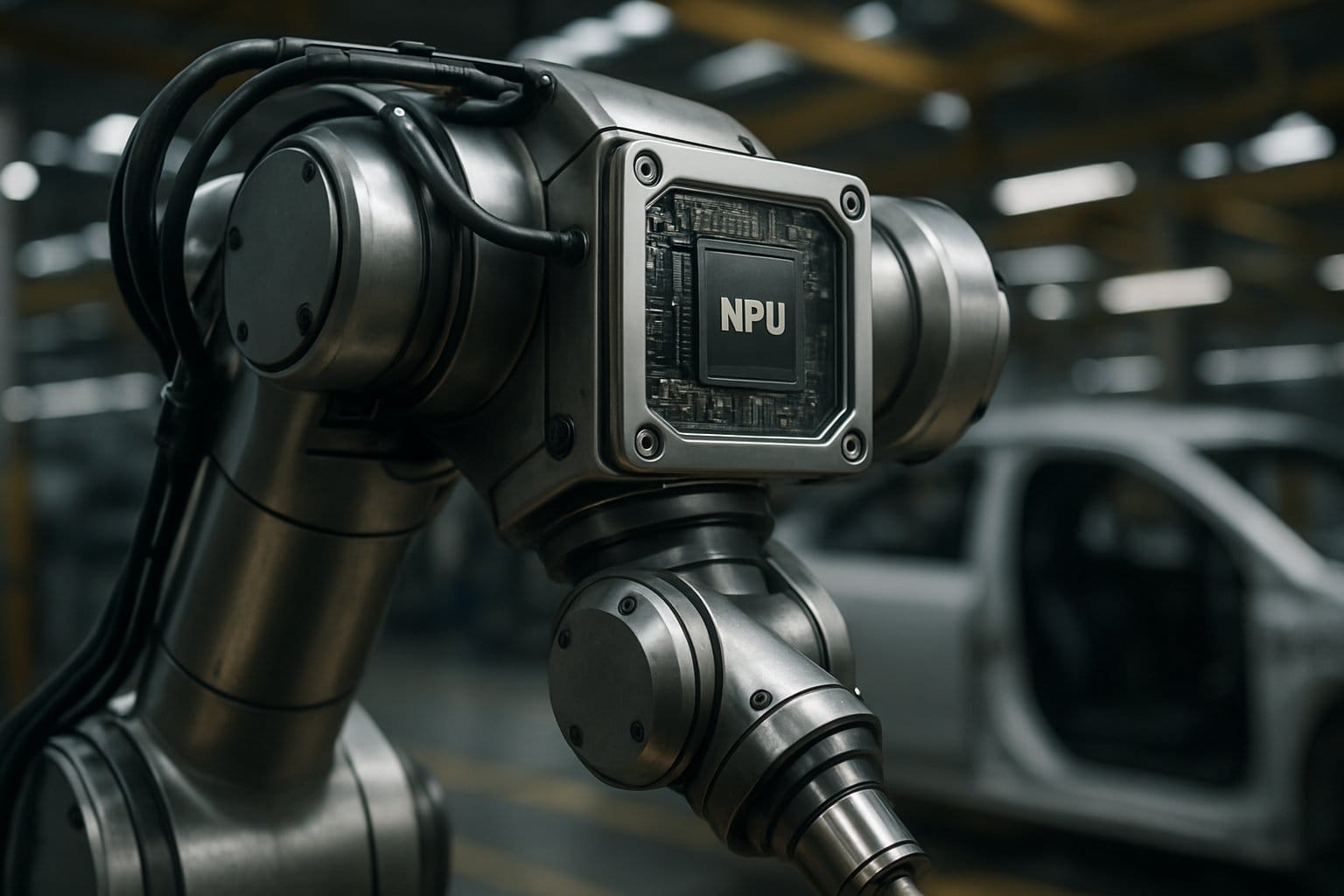
Hyundai Motor Group plans to invest $26 billion in the United States by 2028, with a significant share allocated to robotics and physical AI systems. The scale signals a shift from automotive manufacturing toward integrated machine-driven infrastructure across industrial environments.


Chairman Chung Eui-sun said robotics and AI will define Hyundai’s next growth phase, extending beyond vehicles into systems that operate in physical spaces. The company is consolidating its robotics and AI efforts, building on its 2021 acquisition of a controlling stake in Boston Dynamics. Deployment of humanoid robots in manufacturing is targeted for 2028, with production scaling to 30,000 units annually by 2030.
Can Physical AI Redefine Industrial Production Models?
Hyundai’s approach centers on collaboration between humans and machines rather than full automation. Robots are being designed to handle repetitive or physically demanding tasks, while workers oversee operations and coordinate workflows. Manufacturing remains the primary testing ground, where software-driven systems already manage production across U.S. facilities.
The strategy aligns with broader industry trends toward embedding AI into physical infrastructure. Unlike software-only AI deployments, physical AI introduces real-time adaptability in dynamic environments such as factories and logistics networks. Global manufacturers are increasingly pursuing similar models, but few have committed capital at Hyundai’s projected scale.
Chung said robotics and physical AI are central to long-term strategy, emphasizing that machines are intended to work alongside people. He added that evolving customer expectations and regulatory conditions are pushing companies to rethink production systems across regions.
The company is also linking its AI push to energy strategy. Hyundai continues to expand its hydrogen business under the HTWO brand, citing rising demand tied to data centers and AI infrastructure. Hydrogen and electric vehicles are positioned as complementary options depending on system requirements and usage patterns.
Still, most end users will not directly interact with humanoid robots in the near term. Instead, the impact is expected to appear through faster production cycles, improved product consistency, and more responsive logistics services. Will physical AI remain confined to factories, or extend into consumer-facing systems?
Hyundai’s transition is gradual but structural, as it integrates AI into both production and mobility services. The next catalyst will be early-stage deployment of humanoid robots in live manufacturing environments ahead of its 2028 timeline.



