
A new proposal in the Philippines is aiming to position Bitcoin as a long-term strategic asset for the country. Congressman Miguel Luis Villafuerte has introduced House Bill 421, which seeks to establish a national Bitcoin reserve totaling 10,000 BTC.
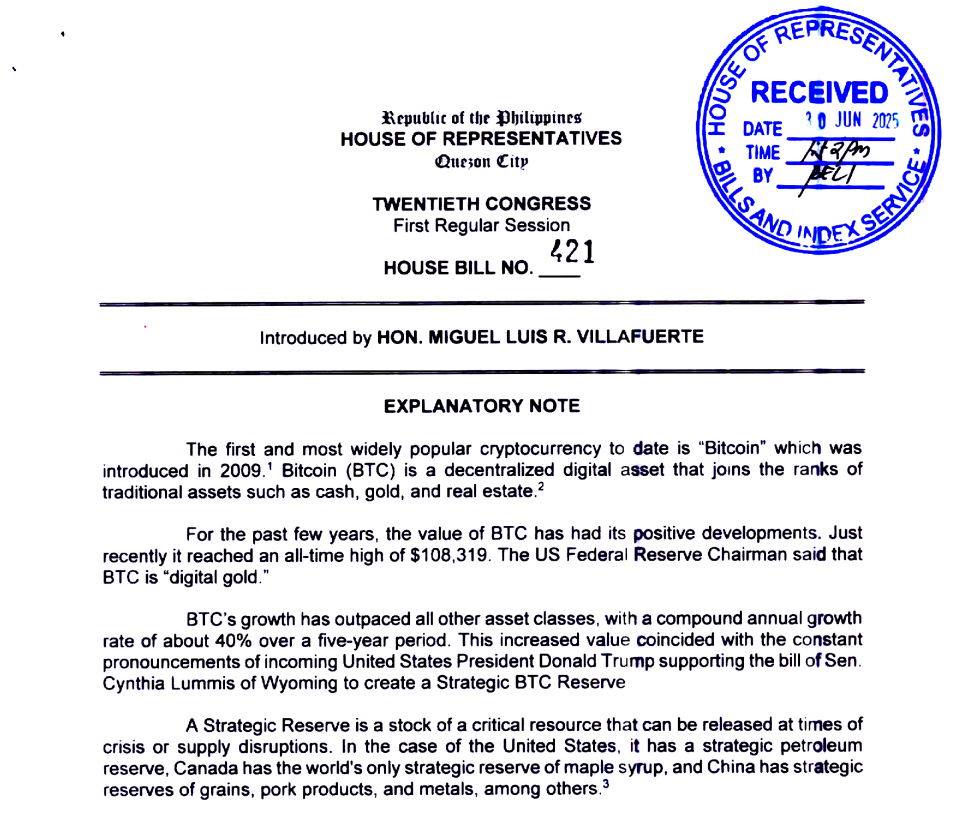
Under the bill, the Bangko Sentral ng Pilipinas (BSP) would purchase 2,000 bitcoin annually over five years. The assets would then be placed in cold storage and locked for at least 20 years. Villafuerte argued that Bitcoin’s growing role in global finance makes it necessary for the Philippines to secure its own reserve.
“The increasing significance of BTC in ensuring financial and economic prowess across continents makes it imperative for the country to take significant legislative measures,” he wrote in the bill’s explanatory note.
The legislation sets strict rules on how the reserve could be used. During the mandatory holding period, the Bitcoin cannot be sold or swapped except to pay off government debt. Once the 20-year lockup expires, the BSP governor would be allowed to sell no more than 10% of the reserve within any two-year period.
If approved, the Philippines would join a small but growing list of nations treating Bitcoin as a sovereign asset. El Salvador and Bhutan have already integrated Bitcoin into their national strategies, while the United States and China remain among the largest holders, though much of their reserves come from seized assets.
Globally, governments currently hold more than 517,000 BTC, according to data from Bitbo. This represents about 2.46% of Bitcoin’s fixed supply of 21 million, underscoring the cryptocurrency’s emerging role in international economic planning.


While the proposal is still in its early stages, it highlights the Philippines’ interest in exploring digital assets as part of its long-term economic security strategy. Whether the bill advances or not, it adds to the growing debate over how nations should prepare for a financial system increasingly influenced by Bitcoin.



