

ETHZilla, a digital asset firm backed by tech investor Peter Thiel, has sold $74.5 million worth of ether to pay down debt, signaling a strategic shift away from its Ethereum-based digital asset treasury model. The move comes less than six months after the company adopted the strategy, which centered on holding large amounts of ETH on its balance sheet.
In a statement released Monday, ETHZilla said it sold 24,291 ETH as part of efforts to redeem its outstanding senior secured convertible notes. The company noted that all, or most, of the proceeds from the sale would be used to retire that debt.
As part of redeeming our outstanding senior secured convertible notes, ETHZilla sold 24,291 ETH for approximately $74.5 million. We plan to use all, or a significant portion, of the proceeds to fund the redemption. The dashboard below excludes cash on the balance sheet which… pic.twitter.com/c5HMDrf48X
— ETHZilla (@ETHZilla_ETHZ) December 22, 2025
Following the transaction, ETHZilla said it still holds 69,802 ETH, valued at roughly $207 million based on current market prices. Ethereum has been trading near $3,000 and is down nearly 30 percent over the past three months, reflecting broader volatility in the crypto market.
This is not the company’s first large ETH sale. In October, ETHZilla sold approximately $40 million worth of ether as part of a previously announced $250 million stock buyback plan. Together, the transactions mark a notable pullback from a strategy that once placed crypto accumulation at the center of the company’s identity.
ETHZilla’s current structure is the result of a major transformation. The firm was formerly known as 180 Life Sciences, a Nasdaq-listed biotechnology company. In July, it entered into a $425 million private investment in public equity (PIPE) deal involving more than 60 investors, shortly before pivoting to a digital asset treasury, or DAT, approach focused on Ethereum.
At the time, ETHZilla joined a growing group of smaller-cap Nasdaq companies that began accumulating cryptocurrencies in an effort to mirror the market performance of Bitcoin-focused treasury strategies. That trend was popularized by firms such as Strategy, formerly MicroStrategy, whose chairman Michael Saylor has long championed Bitcoin as a corporate reserve asset.
However, ETHZilla now appears to be formally stepping away from that model. In its latest update, the company said it believes future value creation will come from operating revenue rather than balance-sheet exposure to crypto prices.
“In the future, the company believes its value will be driven by revenue and cash flow growth from our real-world asset tokenization business,” ETHZilla said.
Earlier this month, the company outlined its plans to focus on tokenizing real-world assets, or RWAs. These include auto loans, manufactured housing loans, aerospace equipment, and real estate. RWA tokenization has attracted growing interest across the financial sector as firms explore ways to bring traditionally illiquid assets onto blockchain-based platforms.
 ETHZilla Corporation
As part of the strategic shift, ETHZilla also announced changes to how it communicates balance-sheet data. The company said it is discontinuing its mNAV dashboard, effective immediately, though it will continue to provide periodic balance-sheet updates.
Multiple of Net Asset Value, or mNAV, is a metric that compares a company’s market capitalization to the value of its underlying assets. In ETHZilla’s case, the dashboard had been closely followed by investors tracking its ETH holdings under the DAT strategy.
The company’s stock has been volatile over the past year. Shares surged more than 90 percent in August after news broke that Peter Thiel had invested in the company’s digital asset strategy. On Monday, ETHZilla shares were down nearly 4 percent, trading at $6.64, according to Yahoo Finance.
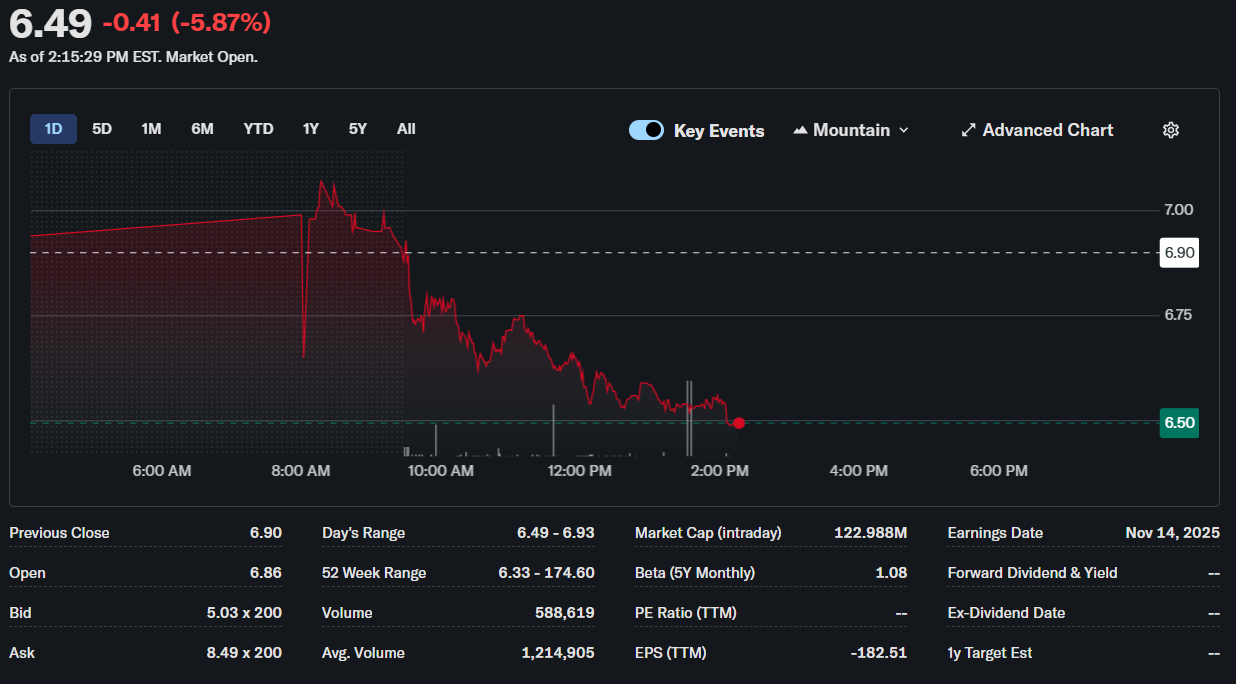
The pullback in ETHZilla’s stock mirrors a more cautious tone across parts of the crypto-linked equity market, particularly as digital asset prices have softened in recent months and investors place renewed emphasis on cash flow and operating fundamentals.
By reducing its exposure to Ethereum and emphasizing real-world asset tokenization, ETHZilla is repositioning itself once again. Whether the shift will deliver more stable revenue and investor confidence remains to be seen, but the company has made clear that its priorities are evolving with market conditions.



