

International law enforcement agencies have launched a coordinated crackdown on crypto approval-phishing scams that drained millions from users last year. The effort, called Operation Atlantic, brings together authorities from the United States, the United Kingdom, and Canada to disrupt organized fraud networks.
The operation is led by the U.S. Secret Service alongside the UK’s National Crime Agency and Canadian regulators and police agencies. Participants include the Ontario Provincial Police, the Ontario Securities Commission, the Royal Canadian Mounted Police, the City of London Police, and the U.S. Attorney’s Office for the District of Columbia.
Officials said the initiative also involves private-sector partners to identify victims and track stolen funds. The effort focuses on scams where attackers trick users into approving malicious blockchain transactions that grant access to their crypto wallets.


Can Law Enforcement Slow Crypto Phishing Networks?
Approval phishing has emerged as a persistent threat in decentralized finance and wallet-based systems. Victims are typically prompted through fake alerts or pop-ups that imitate legitimate applications, asking them to approve access permissions tied to their wallets.
Once a signature is approved, attackers can transfer assets out of the wallet. The irreversible nature of blockchain transactions often makes recovery difficult, particularly when funds are rapidly moved through multiple addresses.
Still, recent data suggests the scale of losses may be shifting. Scam Sniffer reported that approval-phishing losses across EVM-compatible blockchains totaled $83.85 million in 2025, down from $494 million in 2024. Victim counts also dropped sharply to 106,106 from roughly 332,000 the previous year.
Researcher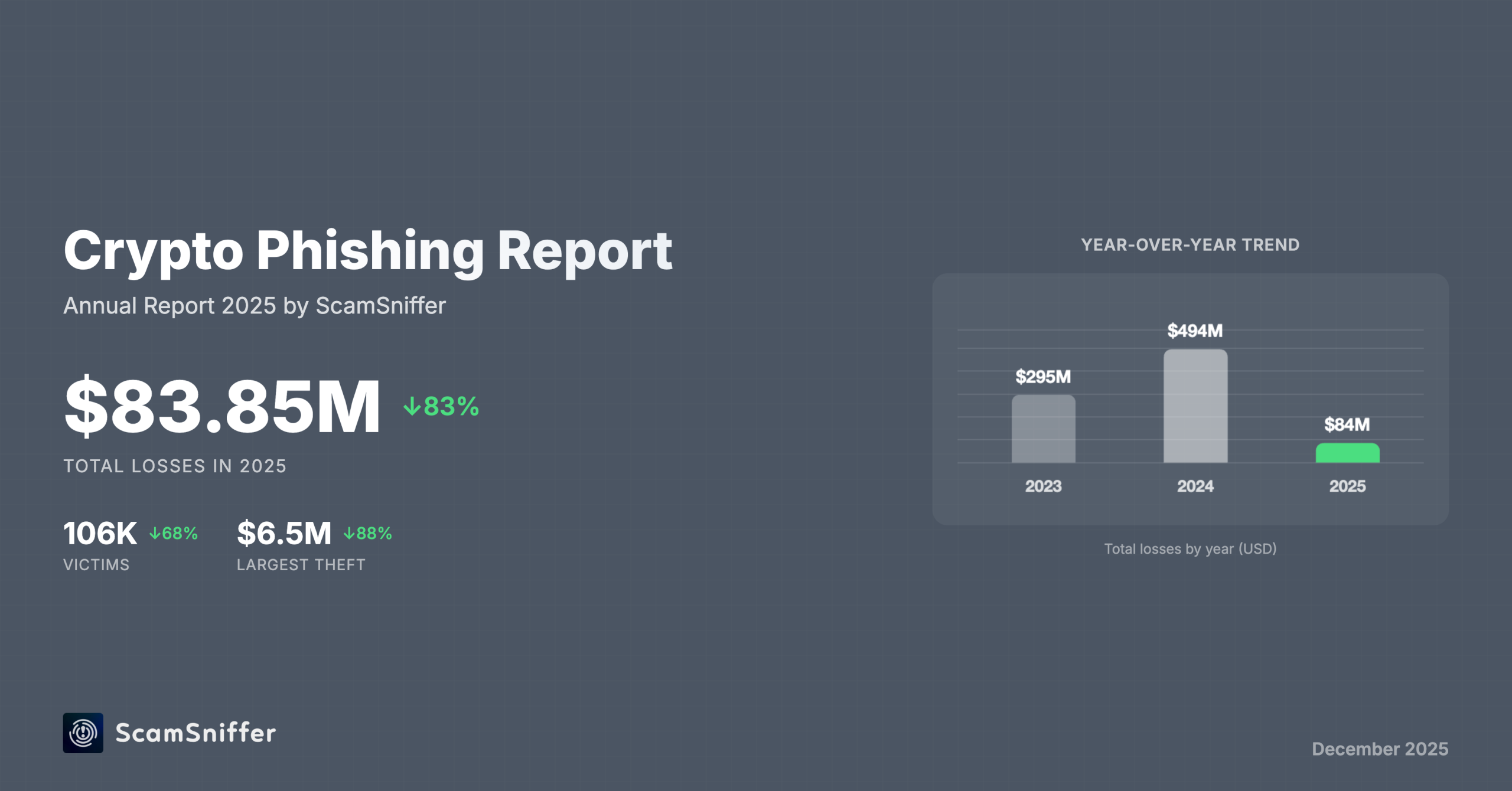
Authorities argue that stronger coordination could further disrupt the networks behind these scams.
“Approval phishing and investment scams cost victims millions in financial loss each year,” said Brent Daniels, deputy assistant director for the U.S. Secret Service’s Office of Field Operations.
“During Operation Atlantic, the U.S. Secret Service, alongside our international law enforcement partners, will identify and disrupt these scams in near real time, denying criminals the ability to further profit from their crimes,” Daniels added.
Investigations suggest that phishing operations are becoming increasingly organized. Chainalysis previously identified a network known as the Smishing Triad, which operated a phishing-kit vendor called Lighthouse that collected more than 7,000 crypto deposits and generated over $1.5 million in three years.
The effectiveness of Operation Atlantic may depend on whether authorities can move as quickly as the attackers. Investigators will now track whether coordinated enforcement actions can reduce approval-phishing activity across major blockchain networks in the months ahead.



