
OpenAI is taking ChatGPT deeper into the business world. The company announced a major new capability that connects ChatGPT directly to enterprise data, allowing it to surface insights and analyze information scattered across internal systems. The update turns ChatGPT from a general-purpose assistant into a custom business analyst capable of working with real company knowledge.
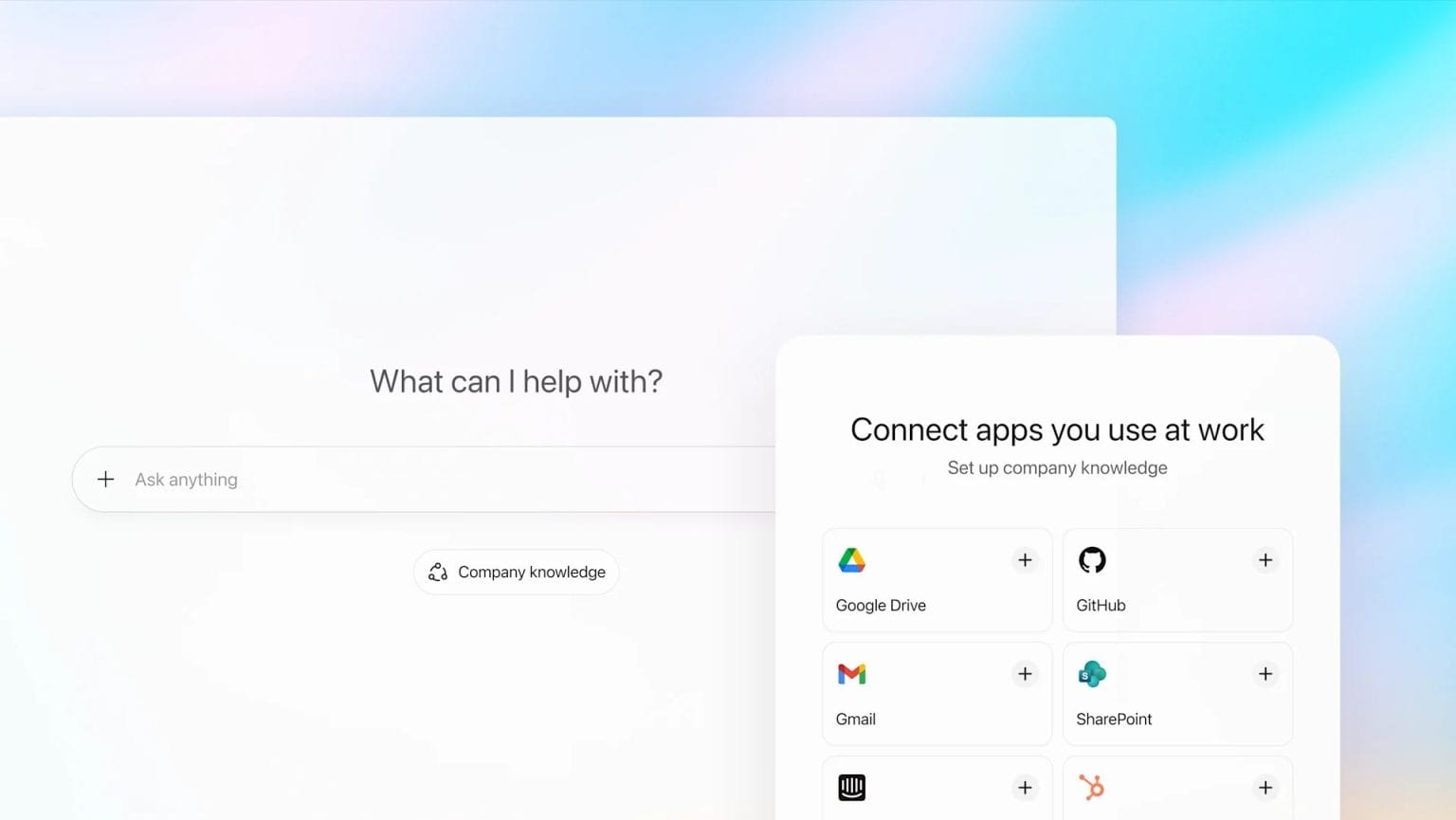
For years, one of the biggest challenges with generative AI in enterprise environments has been limited access to internal data. No matter how advanced an AI model is, it can’t deliver meaningful business insights without access to the tools and documents that hold critical information. OpenAI is tackling this head-on by linking ChatGPT to popular workplace platforms such as Slack, SharePoint, Google Drive, and GitHub.
The result: fewer silos, better answers, and faster decisions. As OpenAI put it, “This means fewer accounts to manage, less switching back and forth, and easier cross-network activities.”
Connecting ChatGPT to the Tools Businesses Use Every Day
The new enterprise feature allows ChatGPT to pull relevant data from multiple sources simultaneously. For instance, a manager preparing for a client meeting could ask ChatGPT for a full briefing, and it might compile Slack messages, email summaries, project notes from Google Docs, and customer support tickets from Intercom—all in seconds.
The AI doesn’t just retrieve data; it analyzes it for context. If asked about company goals or upcoming projects, ChatGPT can summarize different viewpoints across teams and highlight where opinions diverge—helping leaders spot gaps or unresolved decisions before they become roadblocks.
Teams can apply the feature in a range of ways:
- Strategy: Combine feedback from Slack, survey data from Google Slides, and recurring themes from support tickets to shape product roadmaps.
- Reporting: Build marketing or sales summaries using information from HubSpot, emails, and project briefs.
- Planning: Help engineering teams prioritize releases by reviewing GitHub issues, Linear tickets, and Slack discussions about bugs or blockers.
The system is powered by a version of GPT-5, trained to draw from multiple trusted sources and cite them for verification. Each AI-generated answer includes source references, allowing users to trace where the information came from.
Data Security and Governance at the Core
For enterprise leaders, data protection remains the top concern. OpenAI emphasized that ChatGPT respects existing company permissions, meaning it only accesses information that a user is already authorized to see.
ChatGPT does not train on company data by default, and admins have full control over integrations, access levels, and app connections. Features like encryption, single sign-on (SSO), IP whitelisting, and compliance APIs support strong enterprise security and auditing.
There are still limits. Users must manually enable the enterprise data connection at the start of a chat, and when it’s active, ChatGPT temporarily loses the ability to browse the web or generate visual charts. OpenAI says it is working to close these gaps in future updates.
Competing in the Enterprise AI Race
The move places OpenAI in direct competition with other enterprise AI ecosystems, including Microsoft’s Copilot, Google’s Vertex AI, Salesforce’s Agentforce, and AWS Bedrock. All are racing to bridge the same gap: securely linking large language models with corporate data.
OpenAI is also expanding integrations with additional tools such as Asana, GitLab, and ClickUp, following a strategy similar to IBM’s watsonx and SAP’s Joule platforms. The value of the system, experts say, will depend heavily on how broad and seamless this integration network becomes.
What It Means for Business Leaders
For executives, OpenAI’s latest move signals a shift in what matters most in enterprise AI. The focus is no longer just on how powerful the model is—it’s about how well it connects to secure, real-world data.
Leaders considering adoption should:
- Review internal permissions to ensure sensitive data is properly secured before integration.
- Pilot the system in complex workflows where data fragmentation slows performance, such as client briefings or multi-department reports.
- Set clear expectations with teams about current limitations and roadmap updates.
- Evaluate integrations to see how well OpenAI’s system fits within their existing software stack.
A Smarter Path to Enterprise Intelligence
By connecting ChatGPT to enterprise data, OpenAI is transforming generative AI from a creative companion into a true business partner. The update has the potential to eliminate long-standing knowledge silos, streamline workflows, and make decision-making faster and more data-driven.
For companies ready to organize and connect their internal knowledge, this innovation offers a glimpse of how AI can finally work where business actually happens—inside the systems and conversations that drive real results.



