
Nvidia’s latest earnings report delivered a mix of triumph and trouble: record-breaking revenue alongside the total collapse of sales in China.
Record-Breaking Numbers — With a Catch
In its fiscal Q2 2025 earnings report, Nvidia announced $46.7 billion in revenue, a historic high for the chipmaker and well above last year’s results. Net income also climbed, and earnings per share exceeded Wall Street expectations.
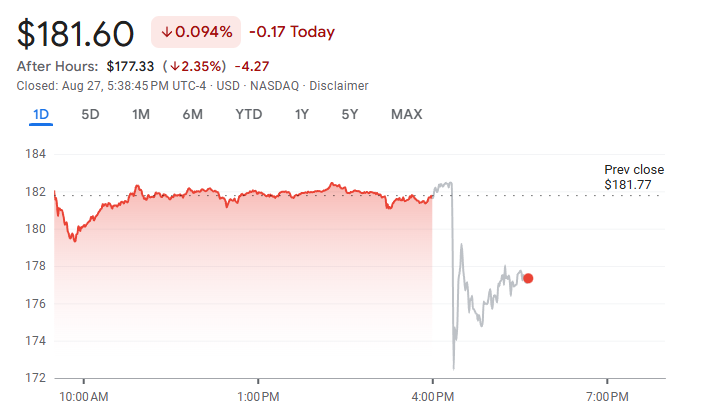
But markets weren’t entirely convinced. The company also revealed a $60 billion stock buyback program, spending more than it earned in revenue. While buybacks often boost share prices in the short term, they can also raise concerns that growth opportunities are drying up.
This is absolutely insane:
— The Kobeissi Letter (@KobeissiLetter) August 27, 2025
Nvidia just reported RECORD quarterly revenue of $46.7 billion without a SINGLE H20 chip sale to China.
And, they are guiding up to $55 billion in revenue next quarter without ANY H20 shipments to China in its outlook.
Just imagine what will happen… pic.twitter.com/hDNHLic5ek
Adding to investor unease, data center revenue came in below estimates, a red flag given that AI demand has been the company’s growth engine.
The China Problem
The starkest figure in the report wasn’t about revenue—it was about geography. Nvidia reported zero chip sales to China during Q2, after bringing in $4.6 billion from the market just a quarter earlier.
That sudden cutoff reflects the escalating fallout from U.S.–China trade tensions. Following restrictions on exporting high-performance chips, Beijing has moved to eliminate reliance on U.S. suppliers. In parallel, Chinese chipmakers are scaling up production, reportedly aiming to triple output within the next year.
The implication is clear: what was once one of Nvidia’s most lucrative markets may now be permanently closed off.
Rising Competition on the Horizon
Nvidia’s loss in China is more than a temporary dip—it could mark the start of a new competitive era. Domestic Chinese manufacturers are rapidly advancing in AI chip design, positioning themselves to challenge Nvidia’s dominance not only at home but globally.
The shift echoes a broader geopolitical realignment in technology supply chains. Just as Huawei became a formidable rival in smartphones after U.S. sanctions, local chipmakers could soon emerge as credible alternatives to Nvidia in AI hardware.
Still a Powerhouse—for Now
Despite the setbacks, Nvidia remains in an enviable position. Generative AI demand continues to fuel extraordinary sales, even without China’s contribution. The company’s brand strength, deep ties with major cloud providers, and leading-edge chip designs give it a commanding lead over Western competitors like AMD and Intel.
Yet the risks are mounting.
- Heavy reliance on stock buybacks could signal weaker organic growth ahead.
- Data center shortfalls suggest demand may not be as limitless as some investors expect.
- The loss of China—a multi-billion-dollar market—hands rivals an opening they’ll be eager to exploit.
What’s Next for Nvidia?
For now, Nvidia has proven it can deliver record revenue even under intense geopolitical pressure. But the road ahead looks more complicated. With China out of the picture, the company will have to rely more heavily on U.S. and European buyers, as well as partnerships with hyperscalers like Microsoft, Amazon, and Google.
The next few quarters will be telling. If Nvidia can sustain its growth without Chinese sales, it will reinforce its position as the undisputed leader in AI chips. If not, the Q2 report may be remembered as the moment when its dominance started to crack.



