
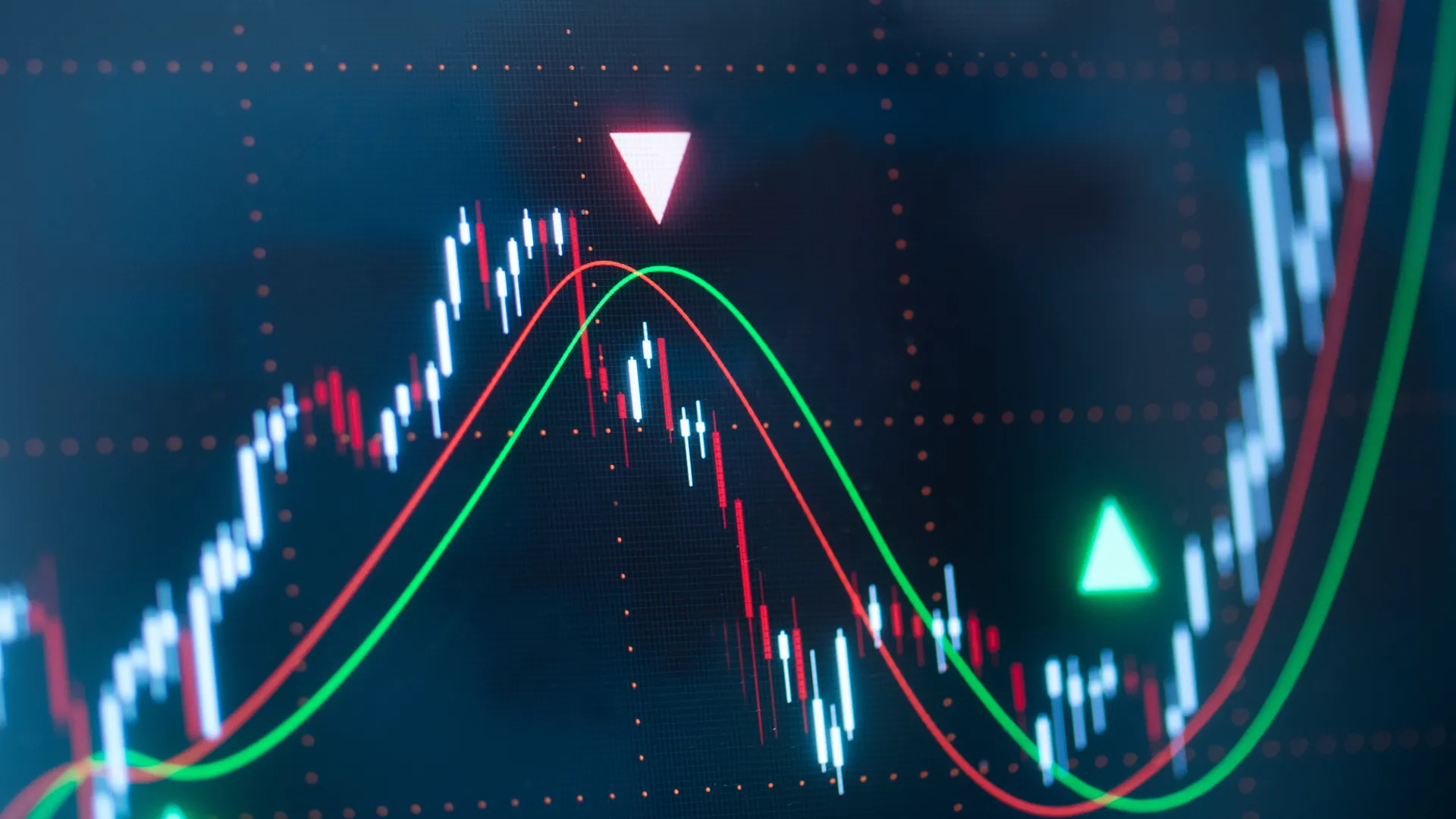
If you stare at a raw price chart for too long, it starts to look like a heart monitor during a panic attack. Prices spike, dip, and jitter with "noise" - random fluctuations that can trick you into buying high or selling low.
To make sense of this chaos, traders use one of the oldest and most reliable tools in the book: the Moving Average (MA).
Think of a moving average as a pair of noise-canceling headphones for the market. It smooths out the jagged price action to reveal the true underlying trend. While it won't predict the future (it is a "lagging" indicator based on past data), it is exceptional at telling you what is actually happening right now.
The Two Heavyweights: SMA vs. EMA
While the math can get fancy, most traders stick to two main types.
1. Simple Moving Average (SMA) This is the democratic approach. If you look at a 10-day SMA, it treats the price 10 days ago with the exact same importance as the price today. It takes the average of all closing prices over a set period and divides by the number of days.
- Best for: Long-term investors who want to ignore short-term volatility. It reacts slowly but offers a stable view of the trend.
2. Exponential Moving Average (EMA) This is the "what have you done for me lately?" approach. The EMA gives more weight to recent prices. It reacts much faster to sudden price spikes or crashes than the SMA.
- Best for: Short-term traders who need to catch a trend reversal the moment it starts.
How to Use Them: Support, Resistance, and Signals
Moving averages are not just lines on a screen; they are dynamic battlegrounds.
- Dynamic Support & Resistance: In an uptrend, the price often bounces off the moving average like a trampoline (Support). In a downtrend, it often hits the moving average and falls back down (Resistance).
- The Crossover Strategy: This is the classic "buy/sell" signal. When a fast-moving average (e.g., 50-day) crosses a slow-moving average (e.g., 200-day), it signals a major shift in momentum.
The Golden Cross and The Death Cross
You will often hear these dramatic terms in financial news. They refer to specific crossovers involving the 50-day and 200-day averages.
- The Golden Cross: The 50-day crosses above the 200-day. This is a massive bullish signal, suggesting a long-term bull market is beginning.
- The Death Cross: The 50-day crosses below the 200-day. This is a major bearish signal, warning that a long-term bear market may be on the horizon.
Which One Should You Choose?
There is no "perfect" moving average, only the one that fits your style.
- The Day Trader: You likely prefer the EMA. You need speed. You want to know if the trend changed five minutes ago, even if it means getting faked out occasionally by false alarms.
- The HODLer: You likely prefer the SMA. You don't care about a 2% dip today. You want to stay in the trade for months or years and avoid getting shaken out by minor volatility.
Many pros use both. They might look for the price to be above the 200-day SMA to confirm the long-term trend, but use the 20-day EMA to time their specific entry points.



