

Morgan Stanley has taken another notable step into digital assets, filing registration statements with the U.S. Securities and Exchange Commission to launch spot Bitcoin and Solana exchange-traded funds. The move signals growing confidence among traditional financial institutions in regulated crypto investment products.
According to SEC disclosures published Tuesday, the Wall Street firm submitted separate S-1 filings for a Morgan Stanley Bitcoin Trust and a Morgan Stanley Solana Trust. The Solana product would include a staking component, a feature that could allow the fund to generate additional yield from the underlying blockchain network if approved.
With roughly $6.4 trillion in assets under management, Morgan Stanley’s entry would place it alongside established crypto ETF issuers such as BlackRock and Fidelity. The filings reflect a broader shift in the financial industry following the U.S. approval of spot Bitcoin ETFs in January 2024, which opened the door for more mainstream participation in digital assets.
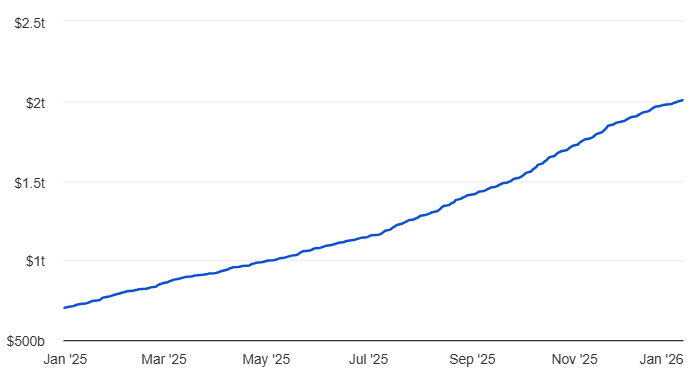
Investor demand for crypto ETFs has continued to build momentum. Cumulative trading volume across U.S. spot crypto ETFs has surpassed $2 trillion, according to data. After taking more than a year to reach the first $1 trillion milestone, the market added the next trillion in roughly eight months, pointing to rising liquidity and engagement. Spot Bitcoin ETFs alone now hold more than $123.5 billion in assets, equivalent to about 6.6% of bitcoin’s total market value, even as prices have remained below the $100,000 mark in recent trading.
Regulatory developments have also played a role. A more accommodating stance toward digital assets at the SEC, following President Donald Trump’s return to office, has coincided with increased participation from established financial firms. In September 2025, the SEC approved new generic listing standards for cryptocurrency exchange-traded products, allowing eligible funds to launch more quickly without undergoing lengthy individual rule-change reviews.
Morgan Stanley’s ETF filings build on its broader push into crypto investing. The firm previously introduced a 4% allocation cap for digital assets within certain “opportunistic” portfolios and has expanded crypto access across its client base, including retirement accounts. These steps align its strategy with peers such as BlackRock and Grayscale.
Together, the proposed Bitcoin and Solana ETFs suggest Morgan Stanley is positioning itself to meet rising demand for regulated, exchange-traded exposure to digital assets. As crypto markets mature and institutional participation grows, the firm’s latest move highlights how digital assets are becoming a more established part of the global investment landscape.



