
Morgan Stanley is pressing ahead with its shift toward digital assets, signaling how quickly attitudes toward cryptocurrency are changing across traditional finance. Two years after calling crypto a “paradigm shift,” the Wall Street giant is now preparing to bring bitcoin, ether, and solana trading to its E-Trade platform and develop its own digital wallet, expected in the second half of 2026.
The move reflects what Morgan Stanley executives describe as an unavoidable evolution in financial infrastructure.
“This is really a recognition that the way financial services work is going to change,” Jedd Finn, the firm’s head of wealth management, said in an interview with Barron’s.
He added that over time, the firm expects closer integration between traditional finance and decentralized finance systems.
From cautious observer to active participant
Morgan Stanley’s crypto pivot has gathered pace since early 2024, when U.S. regulators approved spot bitcoin exchange-traded funds. At the time, the bank described the decision as a potential turning point in how digital assets are perceived and used globally.
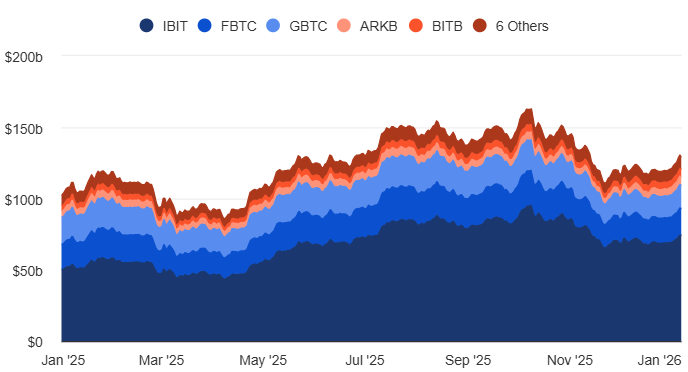
The impact has been substantial. Since their launch, spot bitcoin ETFs have generated more than $1.6 trillion in cumulative trading volume, according to data. The 11 U.S.-listed products now manage about $130 billion in assets, with BlackRock’s IBIT standing out as the fastest-growing ETF on record.
Morgan Stanley initially allowed a limited group of high-net-worth clients to access these products. That offering later expanded to all client accounts, including retirement plans, following regulatory easing tied to an executive order aimed at opening 401(k) plans to crypto exposure.
Infrastructure and product expansion
Behind the scenes, the firm has been investing in the plumbing needed to support crypto trading at scale. In September, Morgan Stanley participated in a $104 million funding round for Zerohash, a digital asset infrastructure provider. That partnership is set to enable bitcoin, ether, and solana trading on E-Trade, with a rollout expected in the first half of 2026.
At the same time, Morgan Stanley surprised industry watchers by filing registration statements with the U.S. Securities and Exchange Commission for its own bitcoin, ether, and solana ETFs. The move caught even seasoned analysts off guard, underscoring how rapidly large financial institutions are rethinking their crypto strategies.
“It all fits together in a broader strategy of adapting to change in the industry and, in some cases, helping drive that change,” Finn said.
A wider Wall Street shift
Morgan Stanley is not alone. Other major banks, including JPMorgan, are reportedly exploring expanded crypto trading services for institutional clients, ranging from spot markets to derivatives. The trend suggests that large financial firms increasingly see digital assets not as a niche experiment, but as a core part of future offerings.
As Bitwise Chief Investment Officer Matt Hougan recently noted, while some believe institutions are cautiously warming to crypto, the reality may be closer to full-speed adoption driven by competitive pressure and client demand.



