
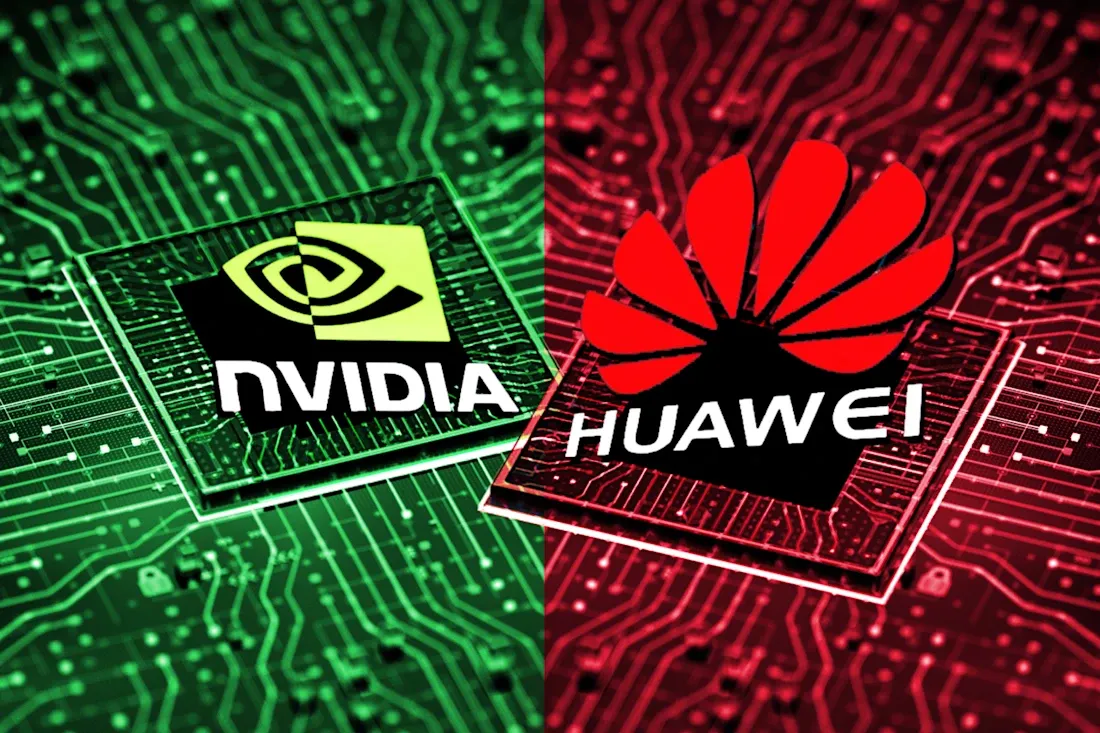
Nvidia’s Long Reign—and Why Some Are Looking Elsewhere
For years, Nvidia has been the undisputed backbone of the AI revolution. Its GPUs, combined with the powerful CUDA software stack and a thriving developer community, have made it the go-to choice for training and running large-scale machine learning models.
But in an increasingly fragmented global tech landscape, businesses are starting to explore alternatives. Huawei, the Chinese technology giant, is positioning itself as one of the most serious contenders—offering its Ascend chip architecture and SuperPod clusters as an alternative AI computing ecosystem.
The company claims its Ascend NPUs (Neural Processing Units) can link thousands of processors with data transfer speeds up to 62 times faster than competing systems. Huawei’s emphasis on inference efficiency—the phase where trained models make predictions—has also made its hardware attractive for enterprises focused on deploying, rather than training, AI models.
 Khurram Hanif
Why Companies Are Considering Huawei
Shifting from Nvidia to Huawei isn’t simply a technical move—it’s a strategic one. Businesses are looking beyond performance metrics toward supply-chain resilience, cost control, and vendor diversification.
Relying solely on Nvidia has its downsides. Export controls, supply shortages, and pricing leverage can create vulnerabilities. Huawei’s growing ecosystem offers an alternative path, especially for companies operating in China and Asia, where local incentives and stronger hardware support make it a natural fit.
Major players are already experimenting. ByteDance, parent company of TikTok, has begun training new AI models on Huawei’s Ascend 910B chips with reported success. Similarly, DeepSeek has developed the V3.2-Exp model optimized for Huawei’s CANN software stack, demonstrating growing confidence in the platform’s capabilities.
Matthias Bastian
Huawei’s architecture tends to favor inference-heavy workloads—use cases where models are applied repeatedly at scale rather than trained from scratch. In such cases, Huawei’s systems can deliver competitive performance with potential cost and power savings.
PenBrief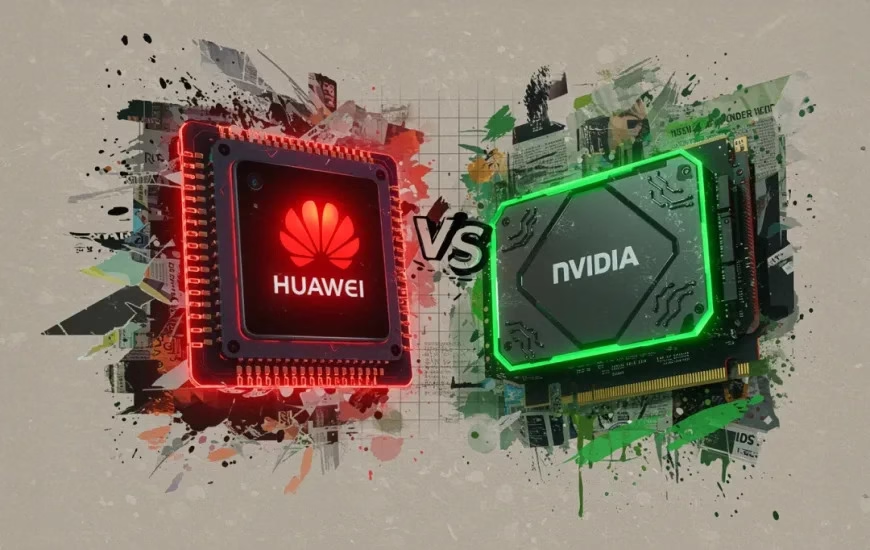
The Trade-offs: Ecosystem and Compatibility
Still, migration is far from plug-and-play. Nvidia’s CUDA ecosystem remains unmatched in terms of developer tools, framework compatibility, and global community support. Moving to Huawei’s CANN framework and MindSpore platform often requires code re-engineering, staff retraining, and pipeline redesigns—a significant investment in both time and expertise.
Albemarle’s (ALB) Earnings Outlook: A Bearish Crossroads Amid Industry Headwinds and Strategic ShiftsOct.28 2025
Even performance parity isn’t guaranteed. One Chinese firm reportedly employed 200 engineers over six months to port its AI model from Nvidia to Huawei, ultimately reaching about 90% of the original performance. For companies deeply entrenched in CUDA workflows, short-term returns on migration may be limited.
There’s also a geopolitical dimension. While Huawei mitigates dependency on U.S. chipmakers, it carries its own regulatory baggage, with restrictions in some Western markets due to ongoing concerns about its hardware in critical infrastructure.
When Migration Makes Sense
Huawei’s AI stack is best suited for:
- Companies operating in Huawei-dominant regions or within China’s AI ecosystem.
- Organisations with inference-heavy workloads or long-term deployment needs.
- Firms seeking vendor diversification and flexibility in supply chains.
- Enterprises capable of engineering adaptation and workforce retraining.
It may be less practical for firms dependent on CUDA-optimized models, global infrastructure, or cross-platform compatibility.
Many analysts recommend a dual-stack strategy—maintaining Nvidia systems for training and experimentation while integrating Huawei hardware for specific inference tasks. This approach allows flexibility without committing to a full-scale migration.
Final Thoughts
Migrating from Nvidia to Huawei isn’t just a technology decision—it’s a strategic realignment that touches every part of an organisation’s AI roadmap. The potential rewards are real: cost control, reduced vendor dependence, and regional alignment. But so are the risks, from ecosystem fragmentation to regulatory uncertainty.
In a world where AI development is both a competitive edge and a geopolitical flashpoint, companies weighing this move must look beyond performance benchmarks. The true question is whether migration to Huawei can strengthen—not complicate—their long-term AI strategy.



