

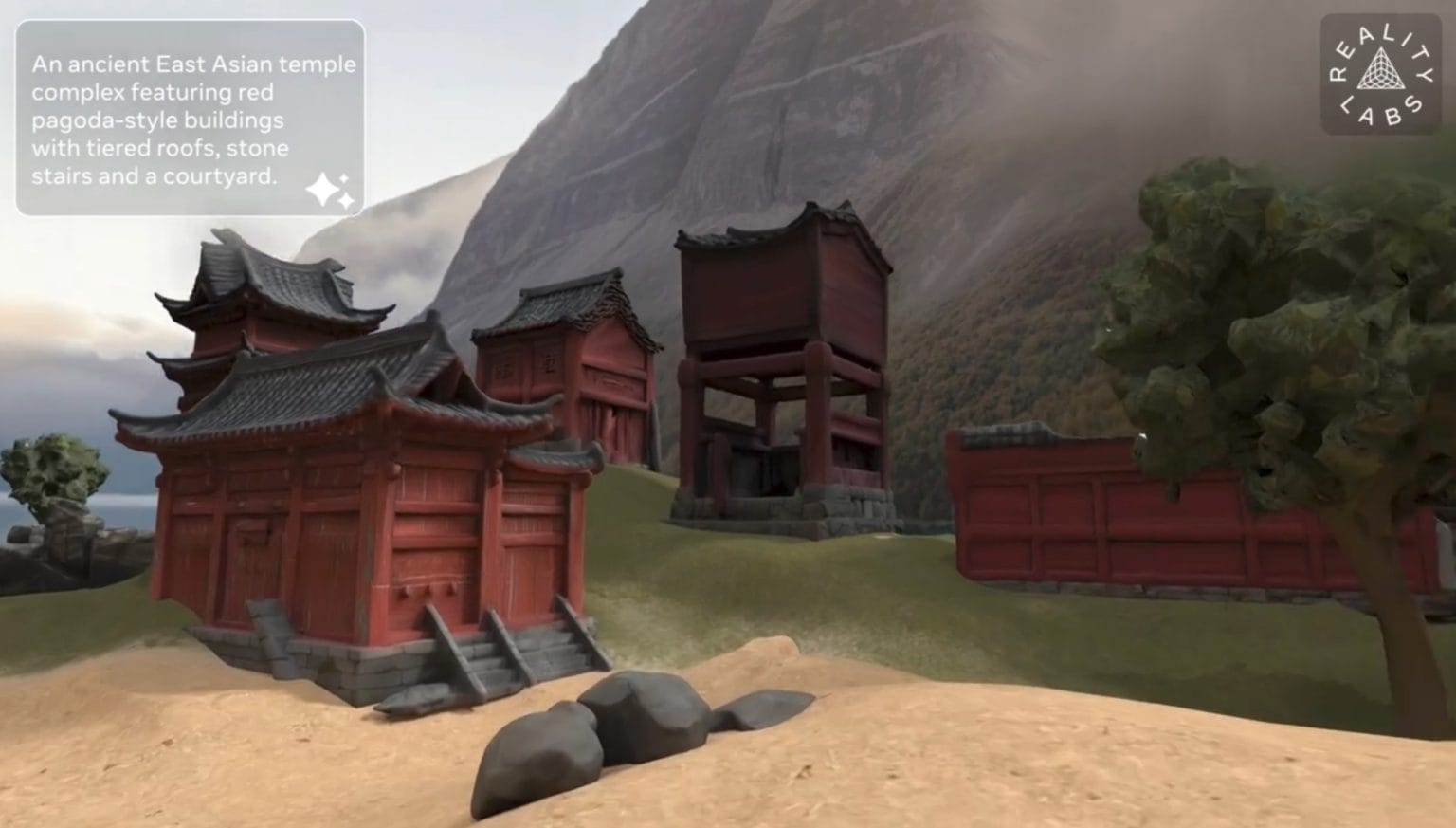
Meta is pushing generative AI further into the 3D space with the introduction of WorldGen, a new system designed to create fully interactive environments from a simple text prompt. The technology aims to lighten one of the toughest parts of spatial computing: the long, hands-on process of building navigable virtual worlds.
Creating a functional 3D environment normally requires teams of specialists and weeks of modeling work. Meta’s Reality Labs says WorldGen can produce a traversable scene in about five minutes, which could reshape workflows in gaming, digital twins, and simulation training.
 Ryan Daws
According to Meta’s technical report, the system focuses on the biggest gaps that have held back earlier text-to-3D tools. These include interactivity, compatibility with common game engines, and enough structure for teams to edit or refine the results.
3D GenAI Team, Reality LabsTurning text prompts into usable 3D spaces
Many generative models excel at pretty visuals but fall short when it comes to physics and function. They may produce scenes that look convincing in a video but cannot be explored or used for real simulation work.
WorldGen tackles this by prioritizing walkable, physically coherent layouts. The system builds a navigation mesh that defines where a user can move, making sure a prompt like “medieval village” produces not just houses but streets and open areas that make sense. This is essential for enterprise clients who need reliable environments for factory simulations or training modules.
Meta also designed the output to be compatible with engines like Unity and Unreal. This means technical teams can use the generated scenes without special hardware or complex conversions that other methods often require.
A modular pipeline built for real workflows
WorldGen follows a four-step process that mirrors the way human teams build 3D worlds.
It starts with planning, where a language model outlines the structure of the scene based on the prompt and produces a rough layout. The reconstruction stage then builds geometry while respecting the navigation map, preventing objects from blocking key paths.
Next, WorldGen breaks the scene into individual parts through a method called AutoPartGen. This gives artists and developers freedom to move or modify single elements instead of wrestling with a single fused mesh.
The final step enhances the scene with higher detail and improved textures so the environment looks consistent up close.
Practical gains and current limits
WorldGen outputs standard textured meshes, which avoids the lock-in risk that comes with more experimental rendering approaches. A manufacturing firm, for example, could quickly generate a layout for a VR drill, then pass it along to developers for refinement.
The speed boost is significant. A scene that once took days to block out can now be generated in minutes, freeing teams to focus on interaction design rather than raw asset creation.
There are limits, though. The current system generates worlds from a single reference view, which restricts the size of the environments. It also treats every object as unique, which may use more memory than hand-optimized assets. Meta plans to address scale and efficiency in future updates.
How it compares to emerging tools
Other systems in development, including those built on Gaussian splatting, aim for high-end visuals but often struggle when the user moves through the environment. Fidelity can drop quickly once the camera shifts.
WorldGen takes a different path by producing mesh-based geometry built for function first. The system can create stable 50 by 50 meter scenes that support physics and navigation across the entire space.
For studios, this change signals a shift in how 3D teams will work. Artists may spend less time modeling every detail and more time guiding AI outputs, editing generated assets, and shaping the overall experience. Companies will also need to evaluate whether their current compute setup, on-premise or cloud-based, is ready for generative 3D pipelines.
Generative AI will not replace human creativity, but it can dramatically speed up the early stages of worldbuilding. By handling the groundwork, systems like WorldGen let teams focus on the gameplay, logic, and interaction design that bring virtual environments to life.



