

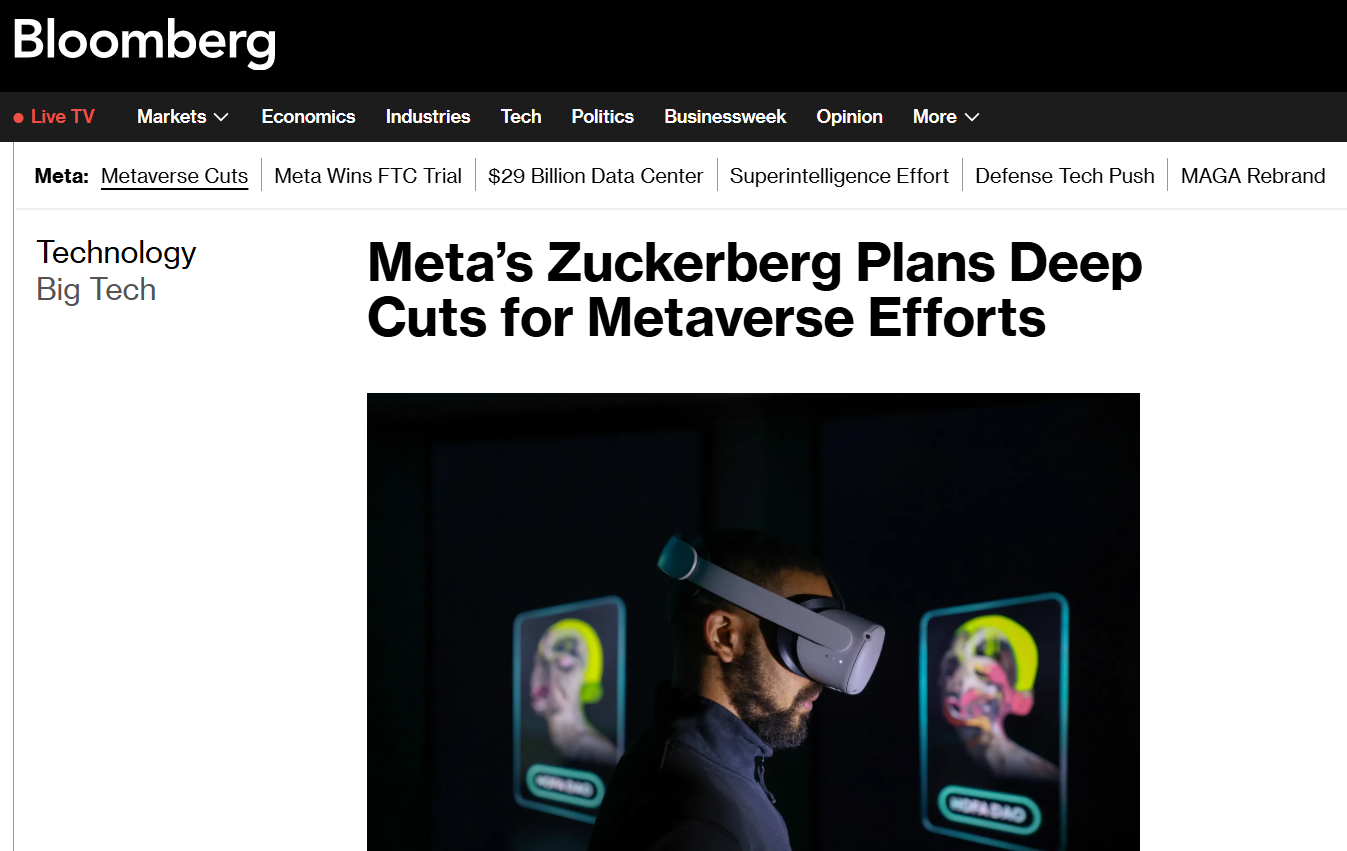
Meta is weighing its most significant shift away from metaverse investment since its 2021 rebrand, with executives reviewing plans that could trim Reality Labs’ budget by as much as 30 percent in 2026. The potential cuts, reported by Bloomberg, would mark a much deeper pullback for the division behind Horizon Worlds and the Quest headset than for the rest of the company, where most teams are targeting savings of about 10 percent.
The discussions remain ongoing, and any restructuring could include staff reductions early next year. These ideas surfaced during Meta’s annual budget talks held in recent weeks.
A growing focus on AI
Reality Labs, which oversees Meta’s long-term hardware and immersive tech work, has logged more than 70 billion dollars in losses since 2021. People familiar with the review said executives are urging the metaverse group to consider sharper cuts because the broader industry is not moving toward VR and virtual worlds as quickly as Meta once believed.
Mark Zuckerberg rejected claims in 2023 that the company had lost interest in the metaverse, saying the idea that he had shifted entirely to AI was “not accurate.” Even so, Horizon Worlds has struggled to gain traction, and financial pressure on the unit has continued to mount.
Investors reacted quickly to the possibility of reduced metaverse spending. Meta’s stock, which closed at 640 dollars on Wednesday, jumped to 674 dollars in early pre-market trading Thursday before easing to about 665 dollars in the first hour. Over the past year, the company has poured more attention into generative AI and the hardware that supports it.
One of the strongest examples is the company’s AI powered Ray-Ban smart glasses. They have delivered clearer commercial momentum than Meta’s VR efforts and boosted sales for EssilorLuxottica, the manufacturing partner behind the frames. The success has given investors more confidence in hardware projects that could deliver returns sooner than the metaverse roadmap.
Metaverse tokens lose steam
Across crypto markets, enthusiasm for metaverse themed platforms has faded even faster. Render, once the sector’s most prominent token, now has a market cap below one billion dollars and has fallen out of the top 100 digital assets. Other well known tokens such as Sandbox and Decentraland are trading near record lows.
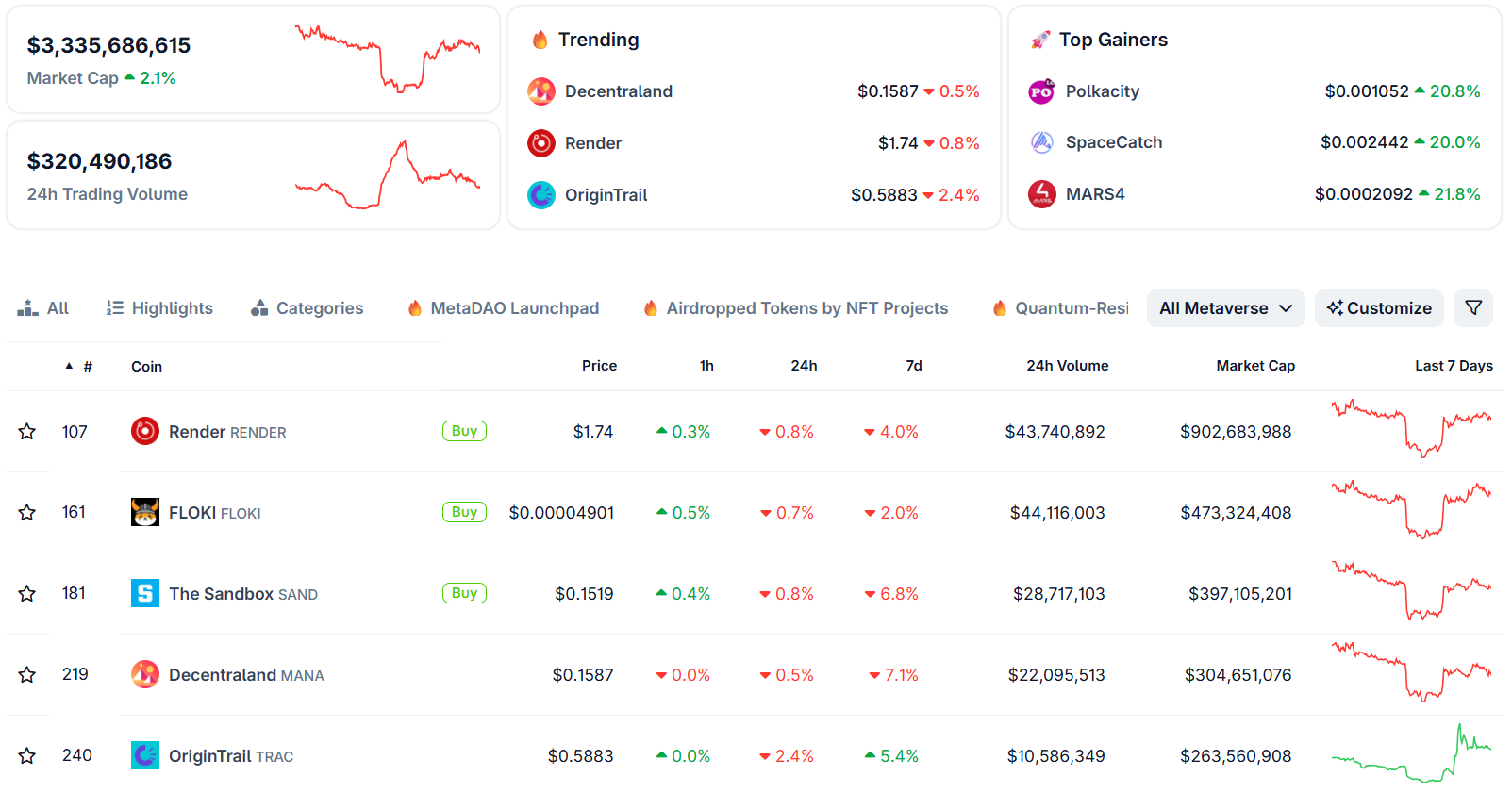
The entire metaverse token category has plunged to under 3.4 billion dollars in value, down from more than 500 billion at the start of 2025, according to CoinGecko figures.



