

Once Ethereum’s liquid staking heavyweight, Lido is now navigating its toughest chapter yet—marked by declining dominance, internal restructuring, and growing user uncertainty.
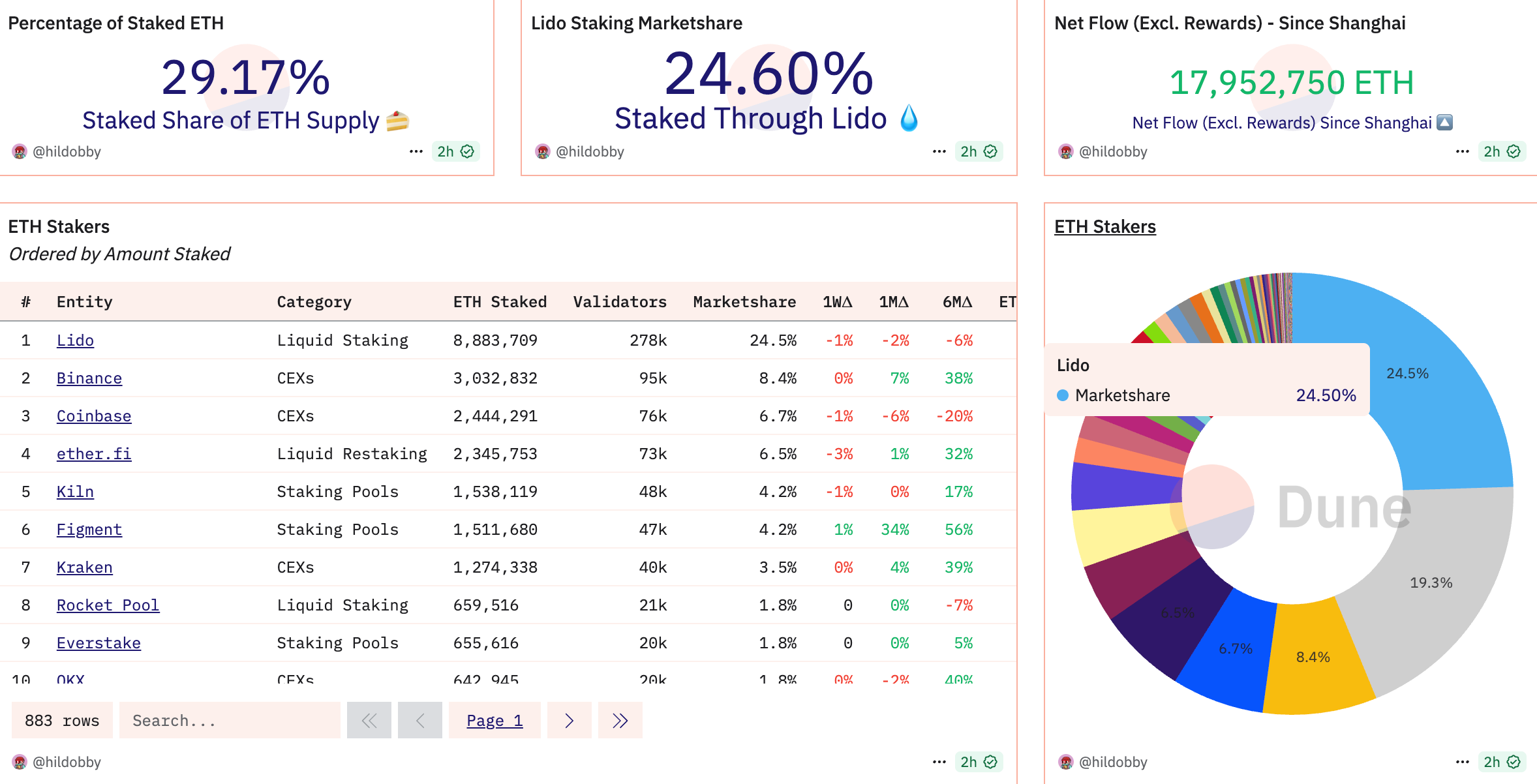
After years at the top of Ethereum’s staking ecosystem, Lido DAO is seeing its grip on the market loosen. According to on-chain data from Dune Analytics, Lido’s share of staked ETH recently dropped to 24.6%, its lowest point in over three years. This comes as Ethereum’s broader ecosystem prioritizes decentralization—and staking alternatives begin to catch up.
Why Lido’s Dominance Is Slipping
Several factors are putting pressure on the protocol.
First, competition has intensified. Decentralized alternatives like Rocket Pool and centralized staking offerings from exchanges like Coinbase and Kraken are carving out larger shares of the staking pie. As more validators come online, many in the Ethereum community have raised concerns about centralization risks, particularly when a single protocol—like Lido—manages a significant chunk of the network’s validators.
In parallel, Lido recently revealed a technical vulnerability in its “Dual Governance” (DG) system—specifically in the RageQuit mechanism, which governs how DAO participants can exit their roles. Although no funds were compromised and mitigation steps were taken swiftly, the disclosure underscores the operational complexity of large-scale DeFi protocols and the need for airtight security.
Signs of Shifting User Sentiment
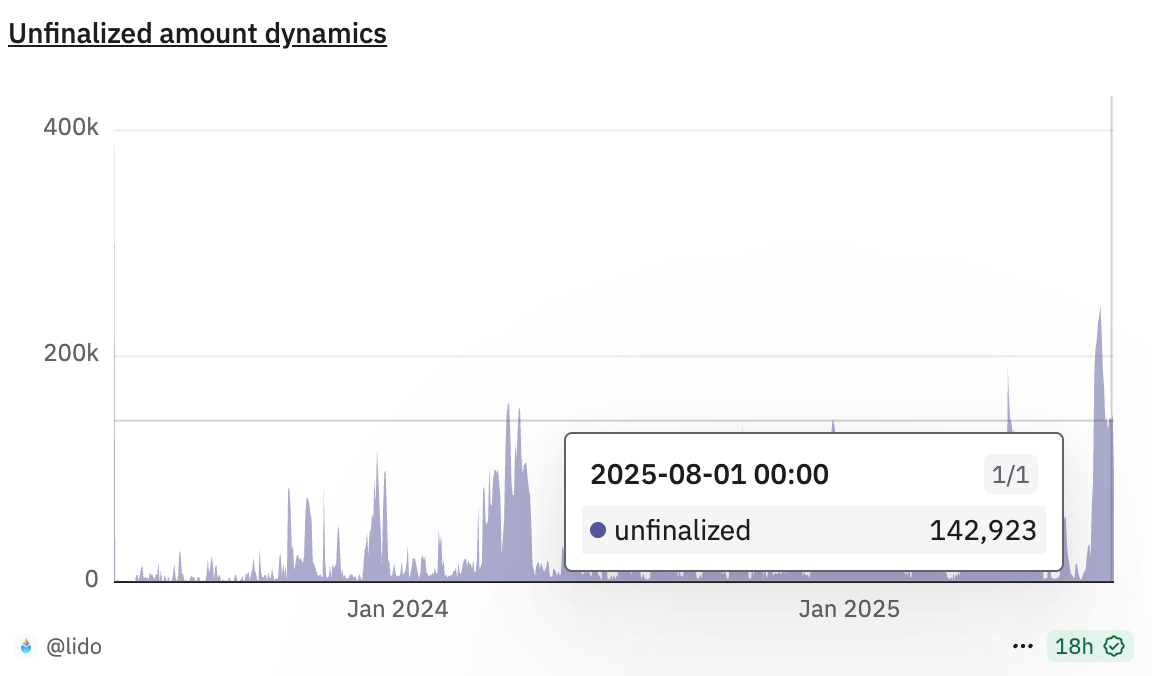
Another warning sign: withdrawal requests have surged. Nearly 143,000 ETH were pending withdrawal on Lido in early August—the highest level since Ethereum enabled staking withdrawals. Although this figure has since decreased, it still reflects a dip in user confidence as investors explore more agile or transparent staking solutions.
Lido Tightens Its Belt
In a move to stay lean and adaptive, Lido DAO has announced a 15% cut to its contributor team. The decision, confirmed by co-founder Vasiliy Shapovalov, is part of a broader cost-optimization effort rather than a performance issue.
“This decision was about costs — not performance. It affects incredibly talented people who helped shape the protocol and community,” Shapovalov wrote on X.
While restructuring isn’t unusual in volatile markets, the timing aligns with Lido’s waning growth, suggesting leadership is recalibrating the organization for a more competitive and less forgiving staking environment.
What’s Next for Lido?
To retain its relevance, Lido must evolve. That means more than just patching bugs or cutting costs—it means reaffirming its commitment to decentralization, improving security mechanisms, and earning back community trust. As Ethereum continues its transition into a more scalable and modular network, Lido’s place in that future is no longer guaranteed.
For now, the message is clear: Ethereum staking is no longer a one-horse race—and Lido will need to prove it still belongs at the front.



