

Kraken is widening the scope of its Krak money app, rolling out a cashback debit card, salary deposit options, and new onchain yield tools in a bid to compete with both traditional banks and modern neobanks. The company says the upgrades are part of a larger push to make Krak “the default money app” for everyday spending, saving, and cross-border payments.
Krak launched in June with the goal of offering a simpler alternative to services like Venmo and PayPal. Kraken says the app has been downloaded more than 450,000 times across over 130 countries and now supports sending more than 400 cash and crypto assets to 160+ destinations. Users can earn up to 3.6 percent on supported assets, with the company now aiming to expand those opportunities even further.
 KrakenFX
Mark Greenberg, Kraken’s Global Head of Consumer, said customers increasingly want more control over their money. According to him, people are looking for access to yield, transparent holdings, and rewards that feel meaningful rather than restricted.
Debit card arrives first in the UK and EU
The Mastercard-powered Krak debit card will be available first to users in the UK and EU. It comes in both physical and virtual formats and can draw from multiple balances in real time without monthly or foreign exchange fees. Kraken says a single purchase can be split across cash and crypto based on a user’s preset preferences, with instant conversions at checkout.
The card earns 1 percent cashback on all purchases, payable in local currency or Bitcoin. Kraken UK Managing Director Bivu Das contrasted the card with other products that offer limited or hard-to-use rewards, saying Krak’s cashback is designed to be straightforward with no caps or hidden conditions. The card will also work at ATMs worldwide without an ATM fee.
Vaults bring onchain yield strategies to the mainstream
Krak is introducing “Vaults,” a tool that channels user funds into audited DeFi lending strategies curated by firms such as Chaos Labs and Sentora. These Vaults aim to deliver yields of more than 10 percent APY depending on the strategy and user risk level. Funds can be added or withdrawn with a few taps, with Kraken presenting the feature as a way to offer competitive returns compared to traditional financial institutions.
Salary deposits coming soon
Users in the UK and EU will soon be able to receive their salaries directly into Krak through named accounts and IBANs. Das said future automations could let users instantly convert wages into stablecoins, route funds to a Vault, or buy Bitcoin. He added that Krak’s expanding payment features will let users pay bills and send money domestically or internationally with minimal friction.
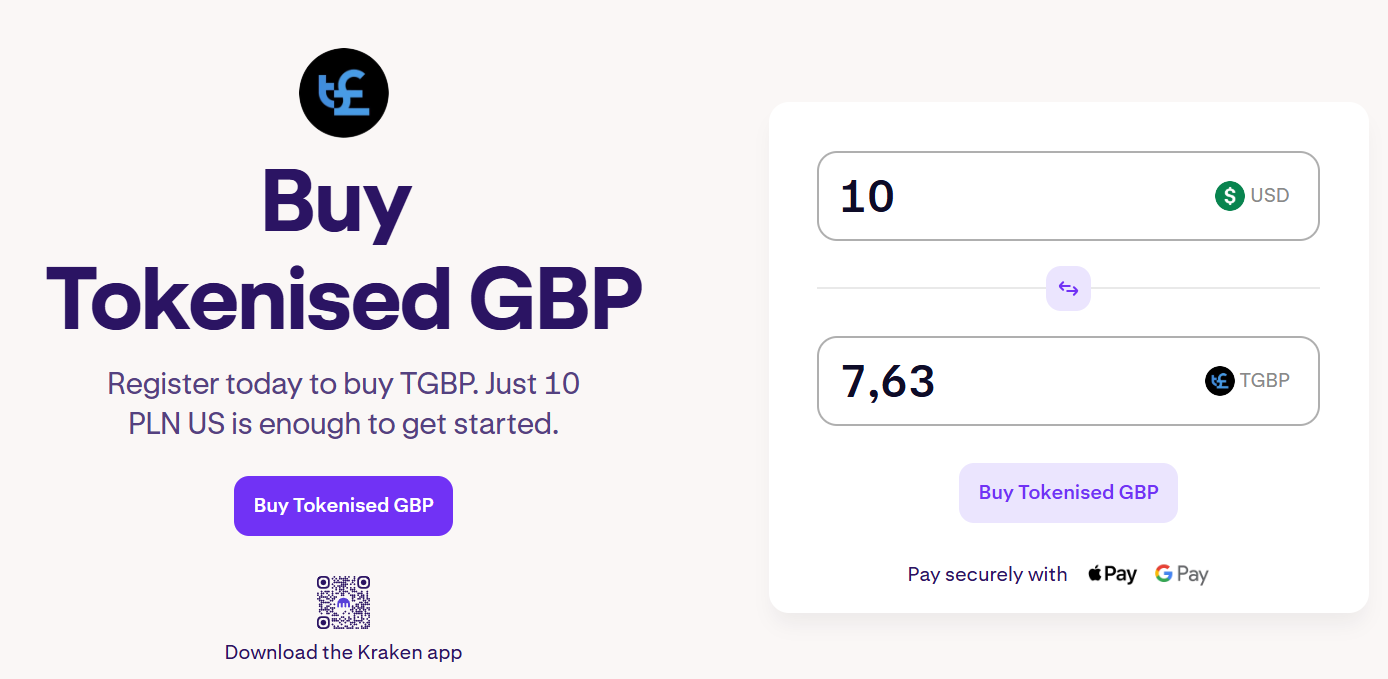
Although Krak is not a bank and does not offer deposit insurance, Kraken executives stressed that its EMI licenses require all fiat to be safeguarded one-to-one in segregated accounts at regulated financial institutions. They also highlighted the transparency of fully backed stablecoins, including Kraken’s new GBP stablecoin.
Kraken believes its regulatory foundation in Europe puts Krak in a strong position for global expansion. The firm holds a Markets in Crypto-Assets Regulation license from the Central Bank of Ireland and has been operating under the UK’s Financial Conduct Authority since 2013.
Looking ahead, Kraken plans to introduce credit products, new card variations, enhanced rewards for merchants, broader asset support, and smoother onboarding.
Kraken hits $20 billion valuation ahead of planned US IPO
The product rollout comes on the heels of major fundraising activity. Last week, Kraken announced a $200 million strategic investment from Citadel Securities, pushing total recent funding to $800 million and giving the company a $20 billion valuation. Earlier funding rounds included participation from firms such as Jane Street, DRW Venture Capital, HSG, Oppenheimer Alternative Investment Management, and Tribe Capital, plus a significant contribution from co-CEO Arjun Sethi’s family office.
Kraken also confirmed it has submitted a confidential draft S-1 to the U.S. Securities and Exchange Commission, signaling progress toward a potential public listing.



