

Kalshi has raised more than $1 billion in fresh capital, doubling its valuation to approximately $22 billion within months. The funding underscores accelerating investor demand for regulated prediction market infrastructure despite mounting legal challenges.
The round is led by Coatue Management, according to reporting from The Wall Street Journal and Bloomberg. The New York-based platform previously reached an $11 billion valuation during its Series E in November. Kalshi operates a federally regulated exchange where users trade contracts tied to real-world events, serving both retail traders and institutional participants.
Can Prediction Markets Scale Amid Regulatory Pressure?
Kalshi’s growth reflects broader momentum in event-driven trading products. The company’s annualized revenue run rate has reached roughly $1.5 billion, driven in part by increased institutional participation. Market makers such as Susquehanna International Group and Jump Trading are active on the platform, while Tradeweb Markets has partnered to distribute its data.
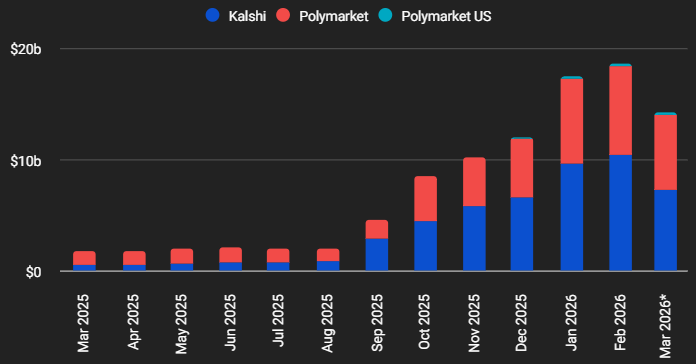
The model differs from crypto-native competitors. Kalshi supports crypto deposits but converts them into fiat for trading, aligning with Commodity Futures Trading Commission (CFTC) oversight in the United States. This contrasts with platforms like Polymarket, which historically operated outside U.S. regulatory frameworks but recently expanded access.
Still, regulatory pressure is intensifying across jurisdictions. Arizona has filed criminal charges alleging unlicensed gambling activity, which Kalshi disputes as “seriously flawed.” A recent Ninth Circuit decision denied the company’s request for an emergency stay in a Nevada-related case. Can investor enthusiasm persist if legal risks escalate further?
The latest funding suggests capital markets remain willing to back the sector’s expansion. With both Kalshi and competitors exploring valuations near $20 billion, the next phase will depend on how regulators define the boundary between derivatives trading and gambling, a distinction that could shape the trajectory of prediction markets globally.



