

Kalshi imposed fines and five-year bans on three U.S. congressional candidates for trading on their own election outcomes, signaling stricter enforcement in prediction markets. The action highlights rising compliance pressure as regulators and platforms tighten rules around potential insider advantages in political contracts.
According to company regulatory filings, the individuals were Mark Moran, Matt Klein, and Ezekiel Enriquez. Moran, a Virginia Senate candidate, was fined $6,229, ordered to return trading profits, and barred from the platform for five years. Klein and Enriquez received smaller penalties of $540 and $784, respectively, alongside identical suspensions.
Finally, one of the moments I’ve been waiting for.
— Mark Moran for U.S. Senate (@itsmarkmoran) April 22, 2026
YES, I did bet ~$100 on myself on Kalshi because I wanted to get caught…
After discovering potential manipulation on polymarket in the NYC mayoral race (NY Post reported on this) I realized how rife with corruption kalshi… https://t.co/9o6wgwTmv8 pic.twitter.com/WJSdHnsfRd
Are Prediction Markets Tightening Insider Trading Rules?
The enforcement comes as prediction platforms face increased scrutiny from U.S. lawmakers and market participants. Data shows Kalshi recorded roughly $13 billion in monthly trading volume in March, compared with $10.57 billion on rival Polymarket. Yet, concerns over manipulation and participant advantage continue to shape policy debates.
Kalshi has introduced new monitoring tools, while Polymarket expanded restrictions aimed at curbing abusive trading behavior. Last month, Senators Adam Schiff and John Curtis proposed the “Prediction Markets Are Gambling Act,” targeting certain contract types and signaling broader regulatory intent.
“Regardless of the size of a trade, political candidates who can influence a market based on whether they stay in or out of a race violate our rules,” said Bobby DeNault, enforcement and legal counsel at Kalshi.
Moran publicly claimed he traded to expose perceived issues, while Klein said his single wager was made out of curiosity before complying with penalties.
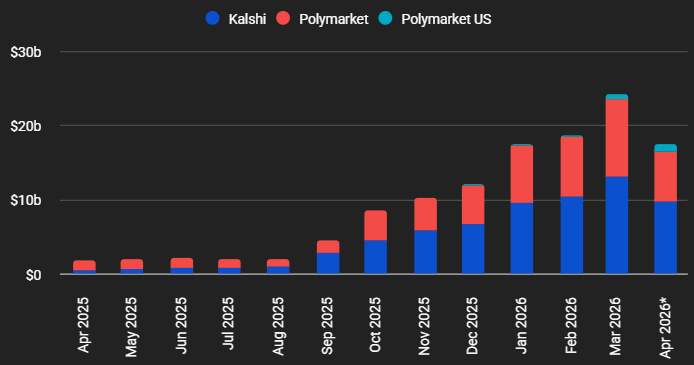
Still, the crackdown raises a broader question: can prediction markets scale institutional participation while maintaining credible safeguards against insider influence? The next catalyst will likely come from U.S. legislative action and how platforms adapt compliance frameworks in response.



