

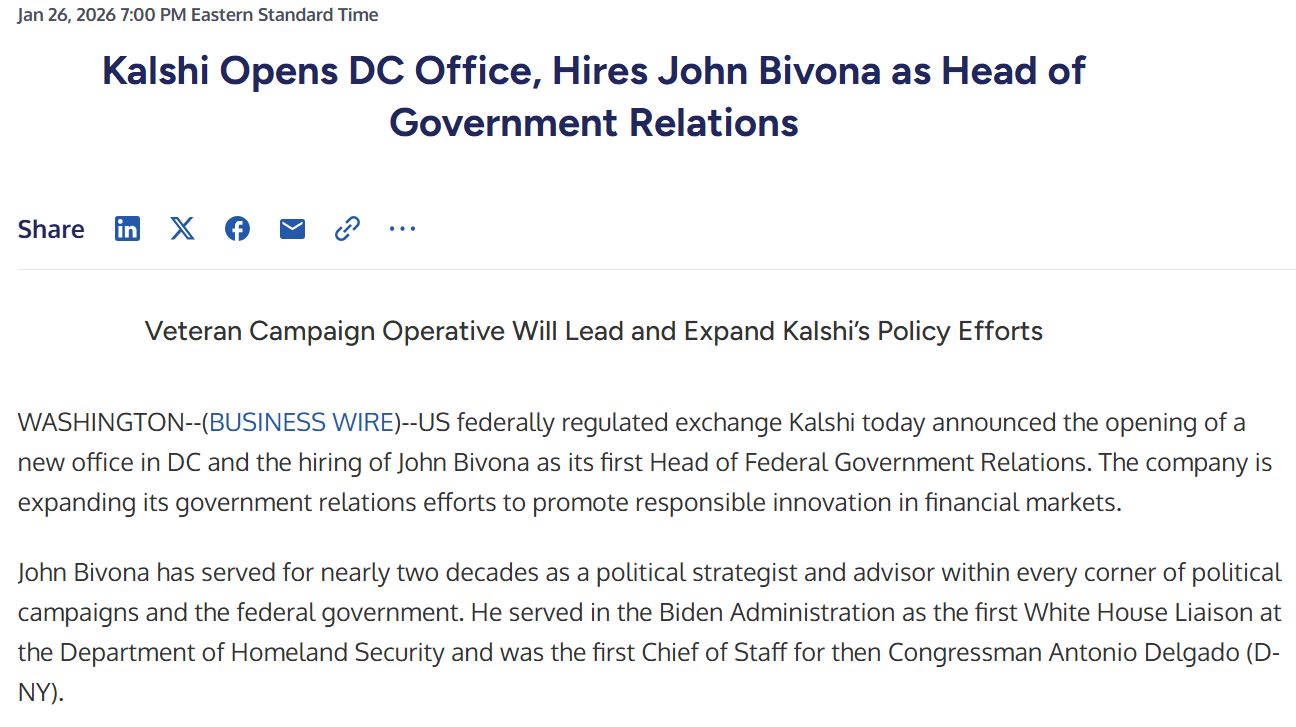
Prediction markets platform Kalshi is stepping up its engagement with U.S. policymakers by opening a new office in Washington, D.C., a move aimed at strengthening its federal and state-level advocacy as regulatory scrutiny around prediction markets continues to grow.
The company announced the expansion alongside two key hires. John Bivona has joined Kalshi as its first head of federal government relations. A seasoned political strategist with more than two decades of experience, Bivona previously served as the inaugural White House liaison at the Department of Homeland Security during the Biden administration. His role will focus on navigating federal policy and building relationships across government agencies.
Kalshi is also reinforcing its state policy strategy by appointing Blake Bee to lead those efforts. Bee previously worked at Amazon as a senior manager for state and local public policy, where he regularly engaged with state attorneys general and regulatory bodies.
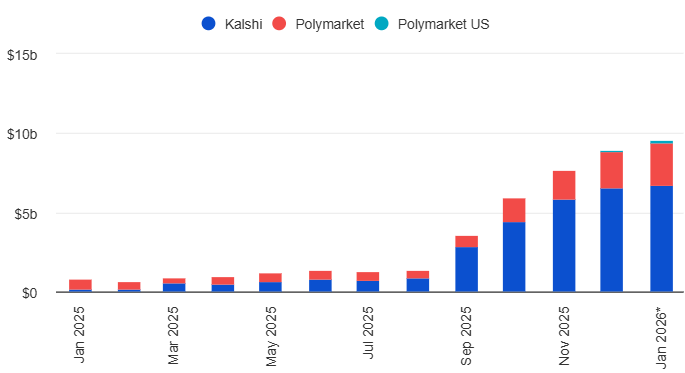
The Washington expansion comes at a time of strong growth for Kalshi. Regulated by the Commodity Futures Trading Commission, the platform reported $6.58 billion in monthly trading volume in December, making it the world’s largest prediction market by that measure. Rival platform Polymarket reported $2.28 billion during the same period. Kalshi’s volumes surged notably beginning in September 2025, aligning with the start of the U.S. National Football League season. CEO Tarek Mansour said the platform recorded approximately $441 million in volume in the four days following last year’s NFL kickoff alone.
Kalshi has done $441m of volume since NFL kickoff.
— Tarek Mansour (@mansourtarek_) September 8, 2025
NFL week 1 is equal to a US election.
Probably nothing. pic.twitter.com/l08dshJ2eN
Despite its federal license, Kalshi has faced mounting legal challenges at the state level, particularly over its sports-related event contracts. Several states, including Arizona, Tennessee, Connecticut, and Massachusetts, have argued that these contracts amount to unlicensed sports gambling under state law.
Court rulings have so far been mixed. In Nevada, a federal judge ruled late last year that Kalshi must comply with state gaming regulations, rejecting the company’s position that CFTC oversight overrides state authority. Kalshi has since appealed that decision. In contrast, a federal judge in Tennessee ordered state officials to temporarily pause enforcement actions aimed at blocking Kalshi’s sports contracts.
Regulators in some states have also expanded their focus to include other platforms, such as Polymarket and Crypto.com, signaling broader uncertainty around how prediction markets fit within existing gambling and financial frameworks.
As Kalshi deepens its presence in Washington, the company appears to be positioning itself for a prolonged regulatory debate. The new office and policy hires suggest a long-term strategy to shape how prediction markets are understood and governed in the U.S., even as legal questions remain unresolved.



