
KakaoBank has taken a clear step forward in its push into digital finance, moving its Korean won-pegged stablecoin project from planning to active development, according to a Wednesday report from Newspim. The shift is also reflected on the bank’s official website, where new job listings seek blockchain backend developers with smart contract expertise, familiarity with token standards, and experience running full nodes.

The bank has not yet commented publicly on the development update. However, KakaoBank CFO Kwon Tae-hoon signaled earlier this year that the company was exploring opportunities across the digital asset space, including issuing or managing digital assets. That interest led KakaoBank and other financial units within the Kakao Group to form a task force focused on building a won-based stablecoin and shaping a broader digital finance ecosystem.
카카오뱅크 인재영입
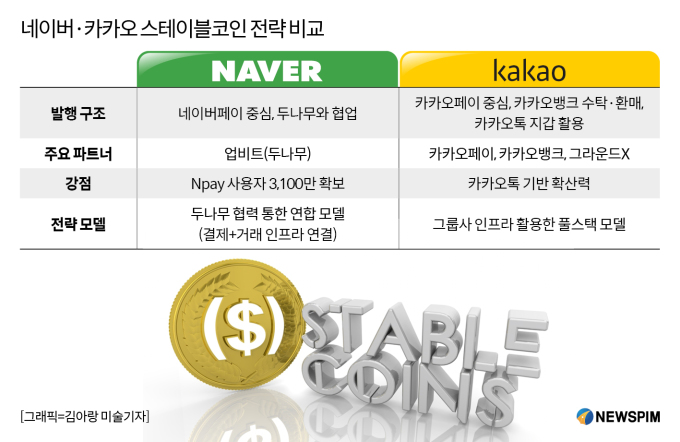
Kakao is not alone in the race. Its payments subsidiary, KakaoPay, filed six trademark applications in June for potential stablecoin tickers, all designed to blend the Kakao or KakaoPay brand with the Korean won. The move followed reports that Naver, another major tech powerhouse in South Korea, is preparing a wallet service tied to a Busan-based stablecoin initiative. Naver Financial, the company’s fintech arm, is also reportedly merging with Upbit, the nation’s largest crypto exchange.
Both Kakao and Naver hold powerful positions in the local market. KakaoPay counts 42 million registered members and averages 24 million monthly users, while NaverPay reports a monthly user base of about 30 million. With South Korea’s population at 51.7 million, each company has the reach to influence digital finance adoption at scale.
Their accelerating interest in stablecoins comes as President Lee Jae Myung positions a Korean won-backed stablecoin market as a national priority. His administration views a locally issued stablecoin as a way to protect monetary sovereignty at a time when U.S. dollar-backed stablecoins dominate global markets.
Still, regulatory uncertainty remains a hurdle. Several lawmakers have proposed frameworks for domestic stablecoin issuance, but progress has been slow. The Bank of Korea’s position that only licensed banks should be allowed to issue won-based stablecoins has added to industry friction, particularly among nonbank innovators.



