
JPMorgan Chase is introducing a new structured investment note that gives investors a chance to benefit if Bitcoin weakens in the short term and then rebounds sharply by 2028. The product uses BlackRock’s iShares Bitcoin Trust ETF (IBIT) as its benchmark, according to a recent filing with the U.S. Securities and Exchange Commission.
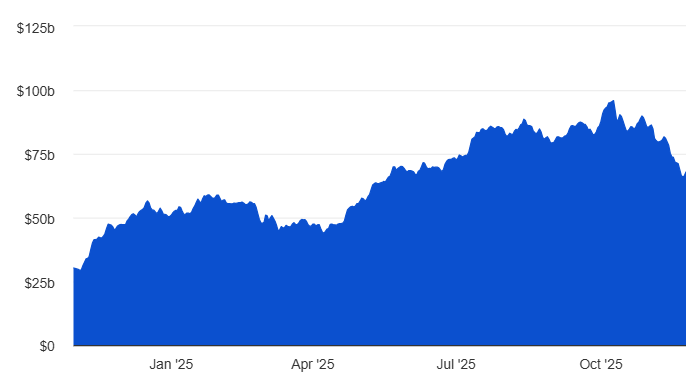
IBIT, which has grown to nearly 70 billion dollars in assets, has become a key gateway for traditional investors who want exposure to Bitcoin without holding the cryptocurrency directly. JPMorgan’s new note leans on IBIT to offer a different kind of wager on Bitcoin’s long-term performance.
Structured notes bundle a standard security, such as a bond, with a derivative. The return is based on how the chosen asset performs. In this case, JPMorgan will set a price for IBIT next month. If IBIT trades at or above that level one year later, the note automatically ends and investors walk away with a minimum 16 percent return. If IBIT falls below the target price instead, investors stay in the product until 2028.
The long-term payout can be significant. If IBIT rises above JPMorgan’s 2028 target, investors receive one and a half times their initial investment with no upper limit. If the ETF is down by 30 percent or less by then, investors recover their original investment. Losses, however, occur if IBIT sinks more than 30 percent. In its filing, JPMorgan reminds buyers that these notes are not risk free, do not pay interest, and are not insured deposits.
This approach highlights how major Wall Street firms continue to experiment with ways to offer crypto-linked opportunities without requiring anyone to hold digital coins. It also signals how far JPMorgan has come since CEO Jamie Dimon famously criticized Bitcoin years ago.
Competitors are moving in a similar direction. Morgan Stanley recently launched its own structured note tied to IBIT, generating more than 100 million dollars in sales. That product rewards investors if the ETF rises or even remains steady, while offering smaller gains if it declines modestly. If the ETF drops too far, investors take the full loss.


Industry analysts say these new offerings reflect a renewed appetite for structured products after years of limited activity following the collapse of Lehman Brothers, once a major issuer.
As interest in digital assets continues to shift, products like these give investors more ways to express their outlook on Bitcoin within defined boundaries. For some, that blend of protection and potential could be an appealing middle ground.



