
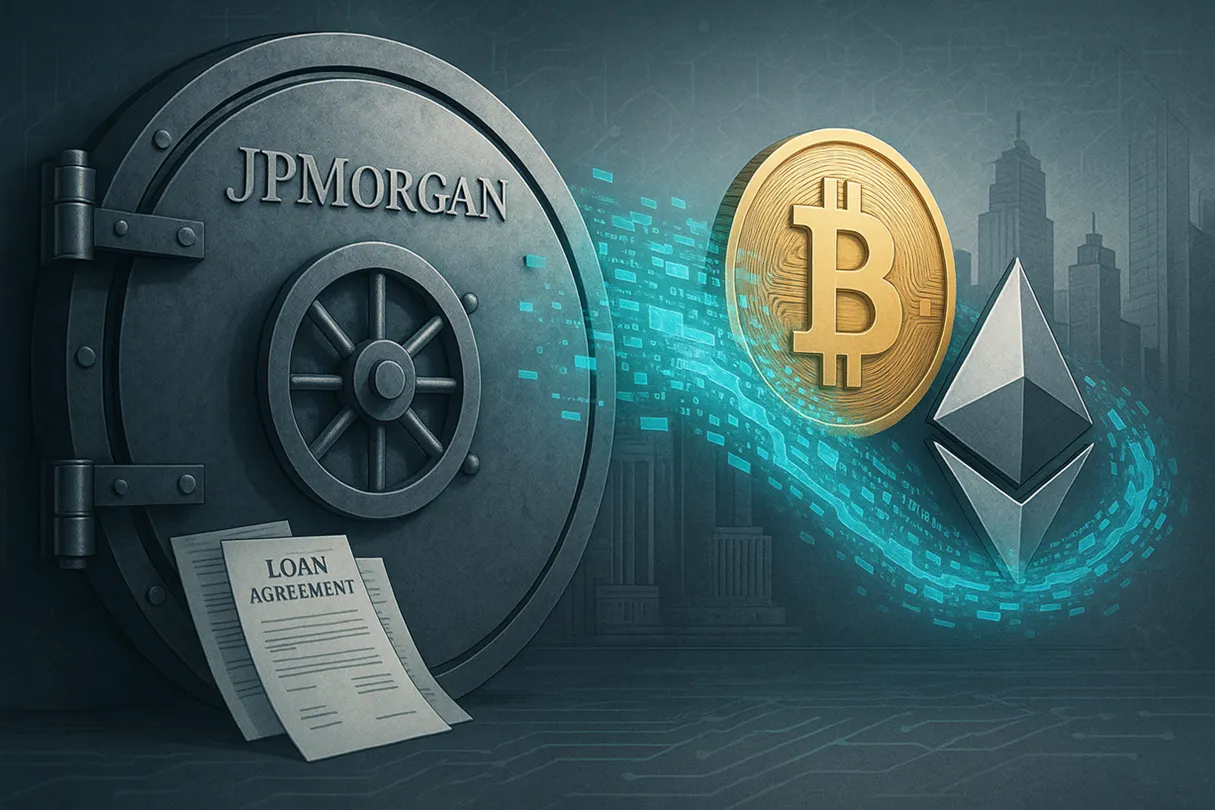
JPMorgan Chase is preparing to allow institutional clients to use bitcoin (BTC) and ether (ETH) as collateral for loans by the end of 2025, according to a report from Bloomberg. The move marks a significant expansion of Wall Street’s engagement with digital assets, signaling growing acceptance of cryptocurrencies in traditional finance.
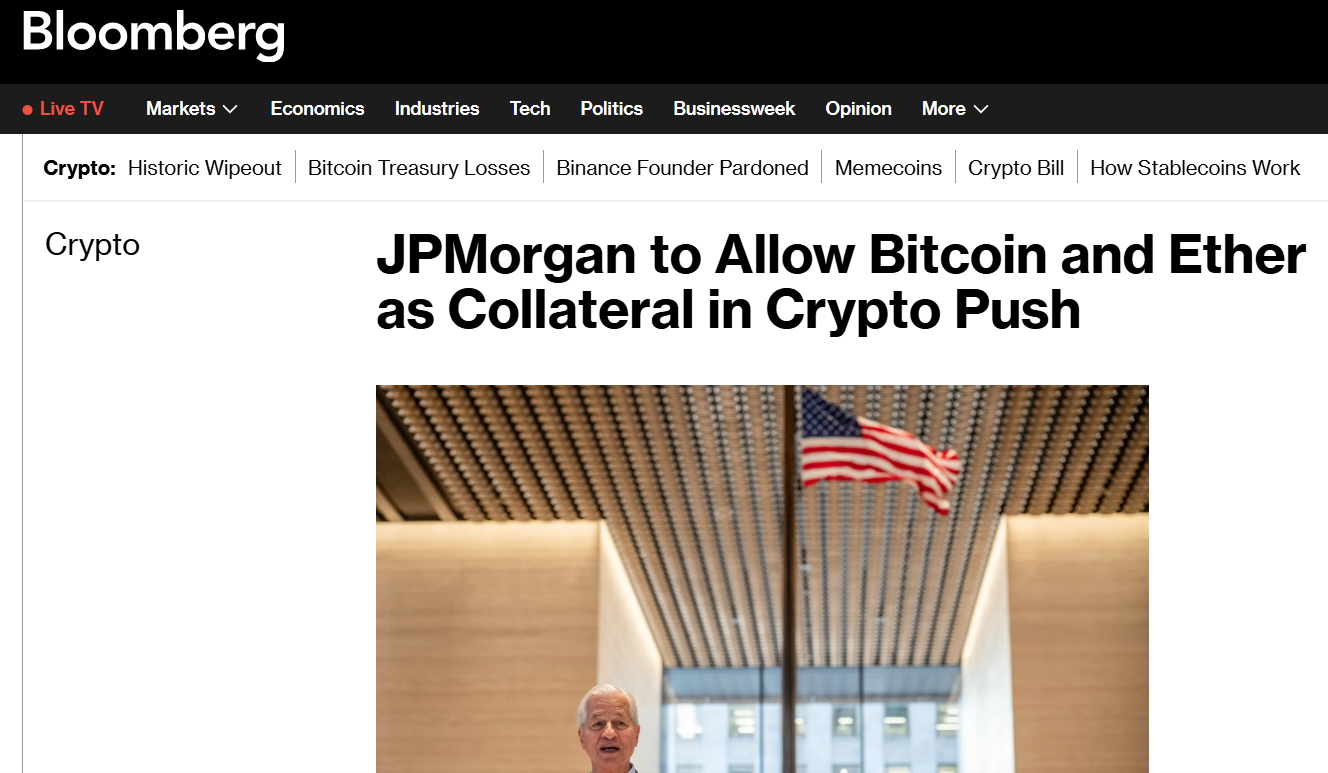
Under the new program, institutional clients worldwide will be able to pledge their crypto holdings directly as loan collateral. The assets will be safeguarded by a third-party custodian, ensuring secure handling and regulatory compliance.
This isn’t JPMorgan’s first step into the crypto space. Earlier this year, the bank began accepting crypto-linked exchange-traded funds (ETFs) as collateral. The upcoming initiative goes a step further, letting clients use the cryptocurrencies themselves instead of ETF shares. For institutions holding long-term crypto positions, the change could unlock new liquidity options without requiring asset liquidation.
The shift is particularly notable given the stance of JPMorgan CEO Jamie Dimon, who once dismissed bitcoin as a “money-laundering tool” and compared it to “tulip bulbs.” In recent months, however, Dimon’s tone has softened. While he maintains personal skepticism, he has publicly acknowledged clients’ interest in crypto and affirmed, “I’ll defend your right to buy bitcoin.”
JPMorgan’s evolving strategy reflects both market demand and clearer regulatory frameworks around digital assets. The bank has quietly expanded its crypto-related services, offering trading, custody, and financing solutions for institutional clients.
The move comes as other major financial institutions ramp up their crypto initiatives. Morgan Stanley, State Street, BNY Mellon, and Fidelity have all expanded their digital asset operations, from custody to trading platforms. Regulatory developments — including progress on the U.S. crypto market structure bill and international efforts to clarify compliance standards — have further eased banks’ concerns about crypto exposure.
As the world’s largest banks move deeper into digital finance, JPMorgan’s decision underscores a broader shift: crypto is no longer a fringe asset but an increasingly mainstream part of global capital markets.



