

JPMorgan analysts are urging caution over Ethereum’s recent surge in network activity, warning that the gains seen after the Fusaka upgrade may prove short-lived. In a new research note, the bank said many of the same structural challenges that have limited Ethereum’s long-term growth in recent years are still firmly in place.
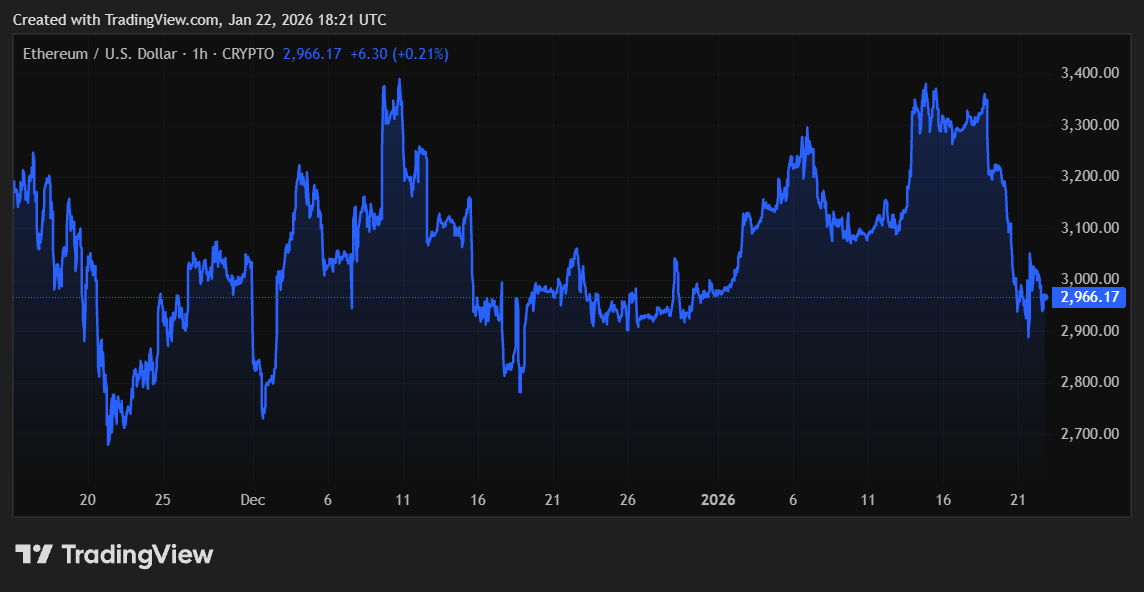
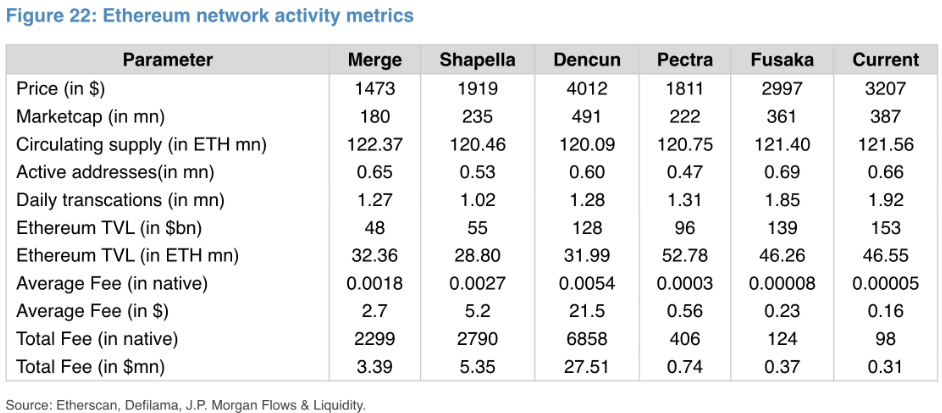
Ethereum’s Fusaka upgrade went live on December 3 and increased the network’s maximum data capacity from 15 to 21 blobs per block. The immediate effect was clear: transaction fees dropped, and on-chain activity picked up. Active addresses and transaction volumes both rose, offering a brief sense of renewed momentum for the world’s second-largest blockchain.
But JPMorgan’s analysts, led by managing director Nikolaos Panigirtzoglou, are not convinced the trend will hold.
“It remains unclear whether this most recent boost in network activity will be sustained over time,” the team wrote, pointing out that previous Ethereum upgrades have also delivered short-term lifts without leading to lasting growth.
Layer 2s Continue to Pull Activity Away
One of the main headwinds, according to JPMorgan, is the ongoing shift of users and developers away from Ethereum’s main chain toward Layer 2 networks. Platforms such as Base, Arbitrum, and Optimism now handle a growing share of activity that once took place directly on Ethereum.
Using data from CryptoRank, the analysts noted that Base alone accounts for roughly 60% to 70% of total revenue generated across all Ethereum Layer 2s. While this expansion helps the broader Ethereum ecosystem scale, it also means less activity and fee generation on the main chain itself.
Rising Competition From Other Blockchains
Ethereum is also facing sustained competition from alternative blockchains. JPMorgan highlighted networks like Solana, which have gained market share by offering faster transactions and lower fees. These advantages have attracted both users and developers, contributing to a wider redistribution of on-chain activity across competing ecosystems.
At the same time, the speculative demand that once drove Ethereum usage has cooled. During the 2021–2022 bull market, activity linked to initial coin offerings, NFTs, and memecoins helped push transaction volumes higher. Much of that speculation has since faded or moved to other chains, removing a key source of network demand.
Capital Spreads Beyond Ethereum
The analysts also pointed to the growing trend of major applications launching their own blockchains. Uniswap’s move to its Layer 2, Unichain, and dYdX’s shift to an independent chain were cited as examples. Both platforms have successfully drawn liquidity to their own networks and captured protocol revenue that might previously have flowed through Ethereum.
These shifts have broader implications for Ethereum’s economics. Lower main-chain activity reduces the amount of ETH burned through fees, contributing to a gradual increase in circulating supply. JPMorgan said this dynamic has added downward pressure on ETH’s price. The bank also noted a decline in Ethereum’s total value locked, measured in ETH terms, between the Pectra and Fusaka upgrades.
Cautious Outlook Despite Technical Progress
Taken together, JPMorgan remains skeptical that Fusaka marks a turning point. While the upgrade triggered a sharp rise in activity, the analysts believe the underlying issues limiting sustained growth remain unresolved.
That cautious tone was echoed elsewhere in the ecosystem. During Thursday’s All Core Devs call, several Ethereum researchers questioned whether the community can maintain the pace of recent development and deliver two more major hard forks in 2026.
JPMorgan’s broader crypto outlook continues to favor bitcoin over ether. The bank has reiterated a bullish $170,000 price target for BTC over the next six to 12 months, while warning that Ethereum will likely continue to face intense competition. More generally, the analysts expect crypto inflows to extend into 2026, driven largely by institutional investors, after nearly $130 billion flowed into the market in 2025.



