

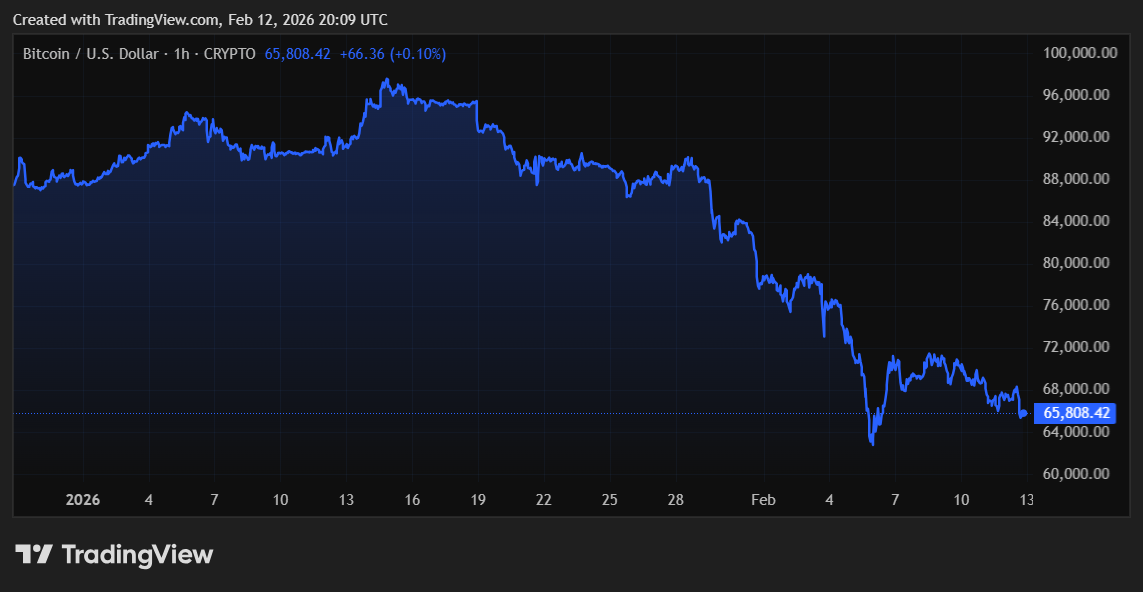
JPMorgan believes bitcoin may find a key support level near $77,000, as shifting mining economics reshape the digital asset landscape. In a recent report, analysts led by managing director Nikolaos Panigirtzoglou said the estimated cost of producing one bitcoin has fallen from about $90,000 at the start of the year to roughly $77,000 today.
That production cost has historically acted as a “soft floor” for bitcoin’s price. When prices dip close to or below mining costs, higher-cost operators often shut down, which in turn reduces network activity and helps rebalance the market.
Why Bitcoin’s Production Cost Has Dropped
The decline in bitcoin’s estimated production cost comes after a sharp drop in network hashrate and mining difficulty. According to JPMorgan, mining difficulty has fallen about 15% year to date, marking the steepest decline since China’s 2021 ban on bitcoin mining.
Mining difficulty automatically adjusts about every two weeks to maintain bitcoin’s average block time of 10 minutes. When hashrate drops, difficulty falls as well, making it easier and less costly to mine new coins.
The analysts pointed to two main drivers behind the recent slowdown.
First, bitcoin’s price weakness earlier this year squeezed margins for higher-cost miners, particularly those running older machines or facing elevated energy prices. Many were forced to power down operations as mining became unprofitable.
Second, severe winter storms in parts of the United States, especially Texas, temporarily shut down large mining facilities. Grid operators curtailed electricity use to protect energy supplies during peak demand, pushing additional miners offline.
Signs of Stabilization in the Mining Sector
Historically, steep drops in mining difficulty are seen as signs of “capitulation,” when less efficient miners exit the market and sometimes sell bitcoin holdings to cover costs. JPMorgan noted that a similar pattern followed China’s mining ban in 2021, when difficulty fell roughly 45% between May and July before recovering later that year.
This time, some higher-cost miners have reportedly sold bitcoin to fund operations, reduce debt, or shift toward artificial intelligence-related businesses. That selling likely added to price pressure earlier in the year.
However, JPMorgan believes the exit of these operators may now be stabilizing the market. With fewer competitors, remaining miners benefit from lower difficulty and improved profitability. Each unit of computing power has a better chance of earning block rewards, allowing more efficient operators to capture market share.
The bank’s analysts already see signs of recovery in hashrate, which could lead to a higher mining difficulty at the next network adjustment. If that trend continues, bitcoin’s production cost may rise again.
At the time of writing, bitcoin is trading around $65,660, down more than 1% over the past 24 hours.
JPMorgan’s Broader Crypto Outlook for 2026
Beyond near-term mining dynamics, JPMorgan maintains a constructive view on the broader crypto market heading into 2026.
In a separate report titled Alternative Investments Outlook and Strategy, the bank said it expects digital asset flows to increase next year, driven primarily by institutional investors rather than retail participants or corporate treasury buyers.
Analysts suggest that clearer regulatory frameworks could help unlock that institutional demand. Proposed legislation in the United States, including the Clarity Act, may provide greater certainty for market participants and encourage additional capital inflows.
JPMorgan also reiterated its long-term bitcoin price target of $266,000. The projection is based on a volatility-adjusted comparison with gold, assuming bitcoin regains investor confidence and is viewed as an equally compelling hedge against extreme economic scenarios.
The Bottom Line
While bitcoin remains below its estimated production cost, JPMorgan sees signs that the mining sector is stabilizing after a period of stress. A potential rebound in hashrate and growing institutional interest could shape the next phase of the market. For now, the $77,000 level stands out as a key reference point as investors watch how the network and broader crypto ecosystem evolve.



