
JPMorgan Chase & Co. is weighing whether to offer cryptocurrency trading to its institutional clients, signaling a potential shift in how one of the world’s largest banks engages with digital assets as demand for regulated access continues to grow.
According to a Bloomberg report citing a person familiar with the matter, the bank is reviewing what its markets division could provide in this area. Options under discussion include spot trading and derivatives linked to cryptocurrencies. The talks are ongoing and remain internal, with no final decisions made.
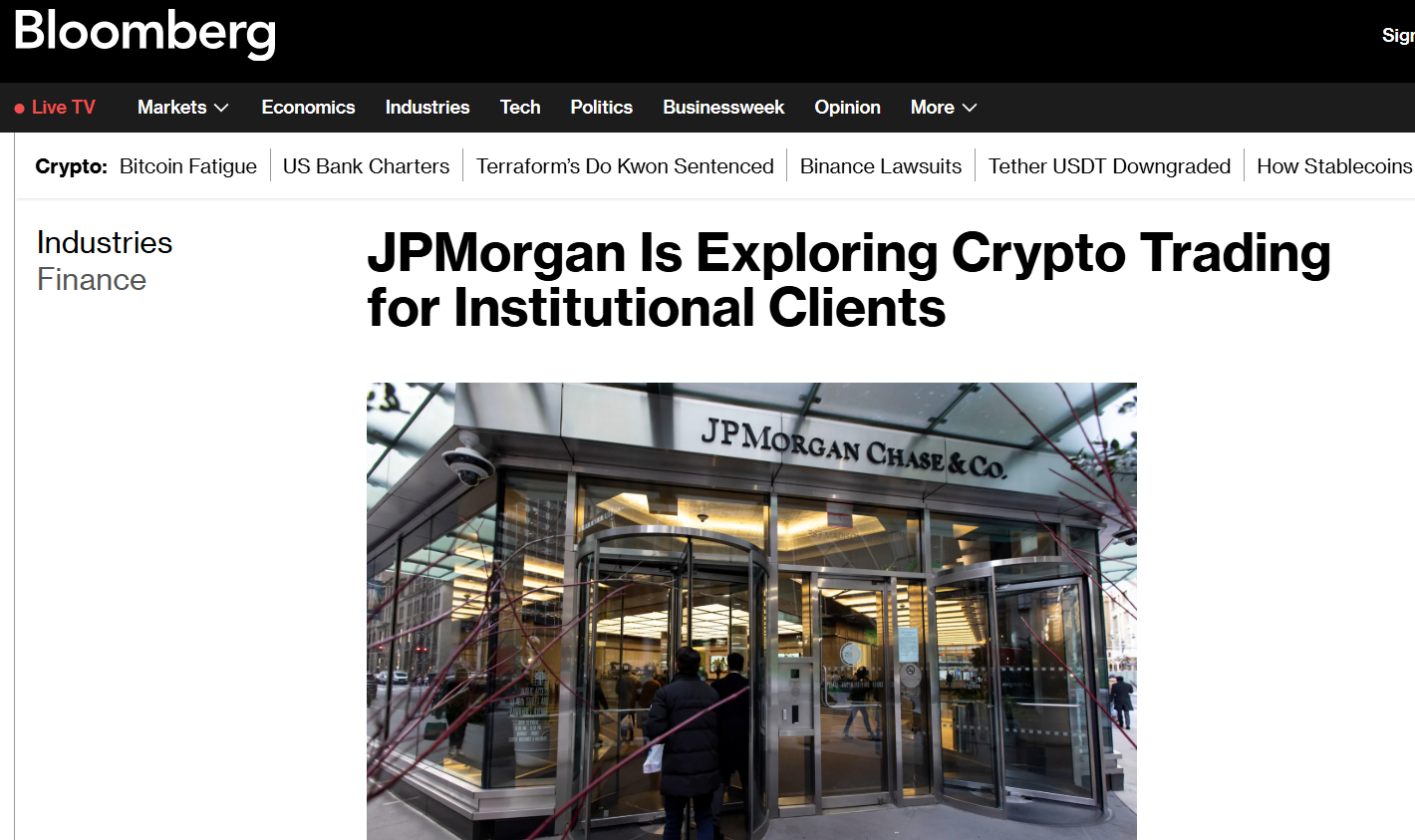
If implemented, the move would mark a notable expansion of JPMorgan’s involvement in crypto markets. While the bank has long invested in blockchain-based infrastructure, including settlement systems and tokenization platforms, it has traditionally avoided offering clients direct exposure to cryptocurrencies.
A cautious bank tests new ground
JPMorgan’s leadership has historically taken a conservative approach to crypto trading, even as client interest has steadily increased. Allowing institutional-only trading would represent a measured step, aimed at serving professional investors within a regulated framework rather than opening access to the broader retail market.
The exploration reflects a wider reassessment across Wall Street, where banks are balancing client demand against regulatory uncertainty, particularly in the United States.
Major banks broaden crypto offerings
JPMorgan is not alone in reconsidering its crypto strategy. Several global banks have already moved further into digital assets this year.
Standard Chartered launched spot bitcoin and ether trading for institutional clients, becoming one of the first major banks to offer direct crypto market access. Morgan Stanley has expanded availability of spot bitcoin ETFs for wealth clients and is preparing to enable direct trading of bitcoin, ether, and Solana through its E-Trade platform.
Citi has focused on digital asset infrastructure, exploring payment rails and stablecoin-related services for institutional customers. It has also partnered with Coinbase and is evaluating potential stablecoin-linked products of its own.
Elsewhere, Bank of New York has extended its custody and tokenization services and is set to hold dollar reserves for Ripple’s RLUSD stablecoin. Goldman Sachs continues to invest in tokenization and digital asset initiatives through industry partnerships and collaborative platforms.
Positioning for long-term adoption
Taken together, these developments point to a broader shift among established financial institutions. Rather than sitting on the sidelines, major banks are positioning themselves to support digital assets over the long term, even as regulatory clarity remains uneven.
For JPMorgan, offering institutional crypto trading would align it more closely with peers who are responding to client demand for trusted, compliant access to emerging markets. Whether or not the bank ultimately proceeds, the discussions highlight how deeply digital assets are now embedded in the strategic planning of global finance.
As Wall Street continues to adapt, crypto is increasingly moving from the margins toward the mainstream, reshaping how traditional institutions approach the future of markets.



