

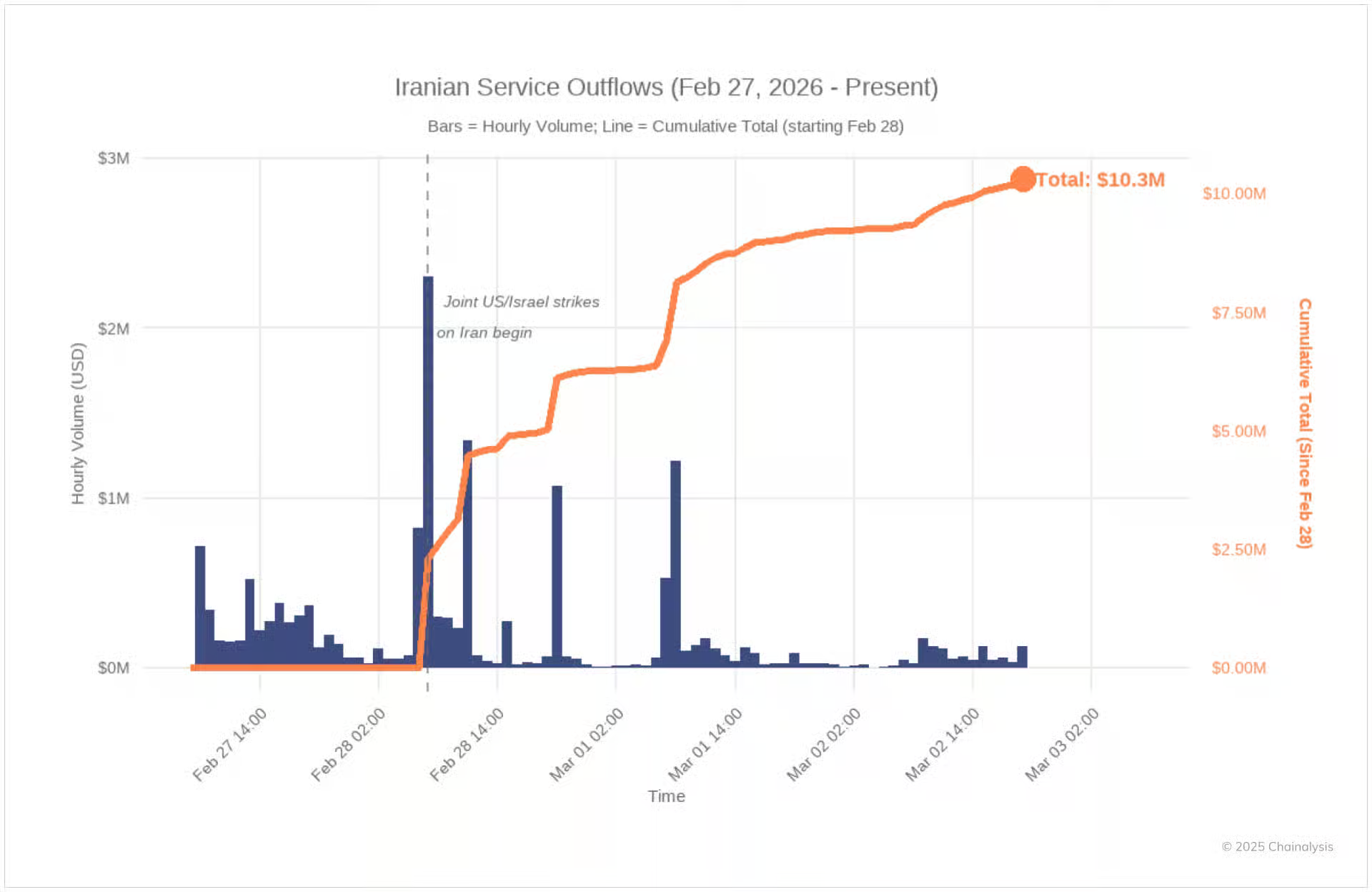
Roughly $10.3 million in crypto assets exited major Iranian exchanges within days of U.S.-Israeli airstrikes on Feb. 28. The spike, recorded through March 2, highlights how digital assets function as a rapid-response channel during geopolitical stress.
According to Chainalysis, hourly outflows accelerated sharply after news of the strikes broke, at times nearing or exceeding $2 million per hour after relatively muted activity beforehand. The firm said the movements mirror prior episodes of unrest when onchain flows surged amid domestic protests, sanctions pressure, and regional confrontation.
Do Geopolitical Shocks Trigger Predictable Onchain Flight?
Chainalysis estimates Iran’s crypto ecosystem reached about $7.8 billion in 2025, with transaction volumes consistently rising around moments of instability. Earlier reporting from Elliptic found outflows from Iran’s largest exchange jumped 700% immediately after the latest strikes, while TRM Labs observed that broader trading volumes later fell 80% even as the ecosystem remained operational.
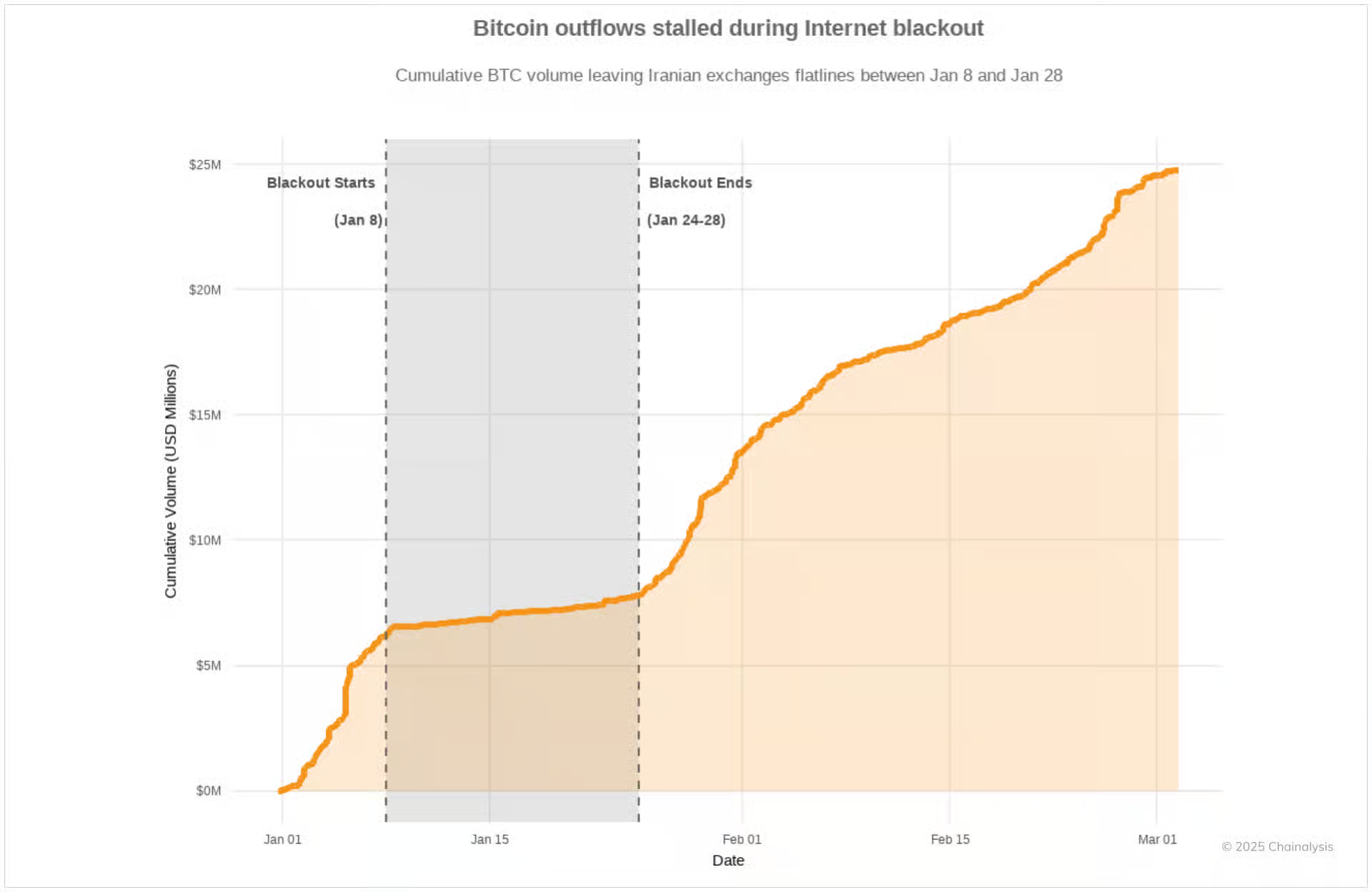
Past protest cycles followed a similar pattern. Bitcoin withdrawals climbed steadily ahead of government-imposed internet blackouts, then dropped to near zero once connectivity was cut, before resuming when access returned. That sequence suggested some users anticipated restrictions and shifted funds into self-custody while they retained network access.
“The truth is that from this close to the events, it’s extremely difficult to confidently separate retail flight from service-level wallet management, from state-related activity,” Chainalysis wrote.
Destination analysis shows transfers heading to overseas exchanges, other domestic platforms, and a significant share to unspecified wallets, leaving motives open to interpretation.
Sanctions exposure and cyber risk further complicate the picture. Iranian platforms have faced sustained pressure, including a 2025 hack of Nobitex that resulted in more than $90 million in losses. Whether the latest $10.3 million wave reflects retail precaution, exchange-level liquidity management, or state-linked routing will depend on subsequent wallet-level tracing as funds continue to move across networks.



