
At Huawei’s Shanghai Acoustics R&D Centre, car audio is not treated as a luxury add-on—it’s treated as science. Since investing heavily in audio research back in 2012, the tech giant has been building a comprehensive program that combines laboratory-grade engineering with artistic sound tuning. The result is a push into territory long dominated by legacy European audio brands.
Where Science Meets Sound
The Shanghai facility includes three specialized spaces: a fully anechoic chamber to eliminate echoes, a large semi-anechoic room designed to simulate real-world reflections, and a dedicated 9.1.6 listening room for immersive testing. These environments allow engineers to refine every aspect of sound behavior in the car cabin, from distortion levels to how bass interacts with interior surfaces.
Leading the effort is audio veteran Goller, who previously worked with Bang & Olufsen and Harman. He describes Huawei’s philosophy as “master-tuning methodology”—a blend of scientific measurement and psychoacoustics aimed at recreating music exactly as artists intended. The goal, he explained, is to achieve a “phantom effect” that transports passengers into the original recording environment.
The HUAWEI SOUND ULTIMATE Series
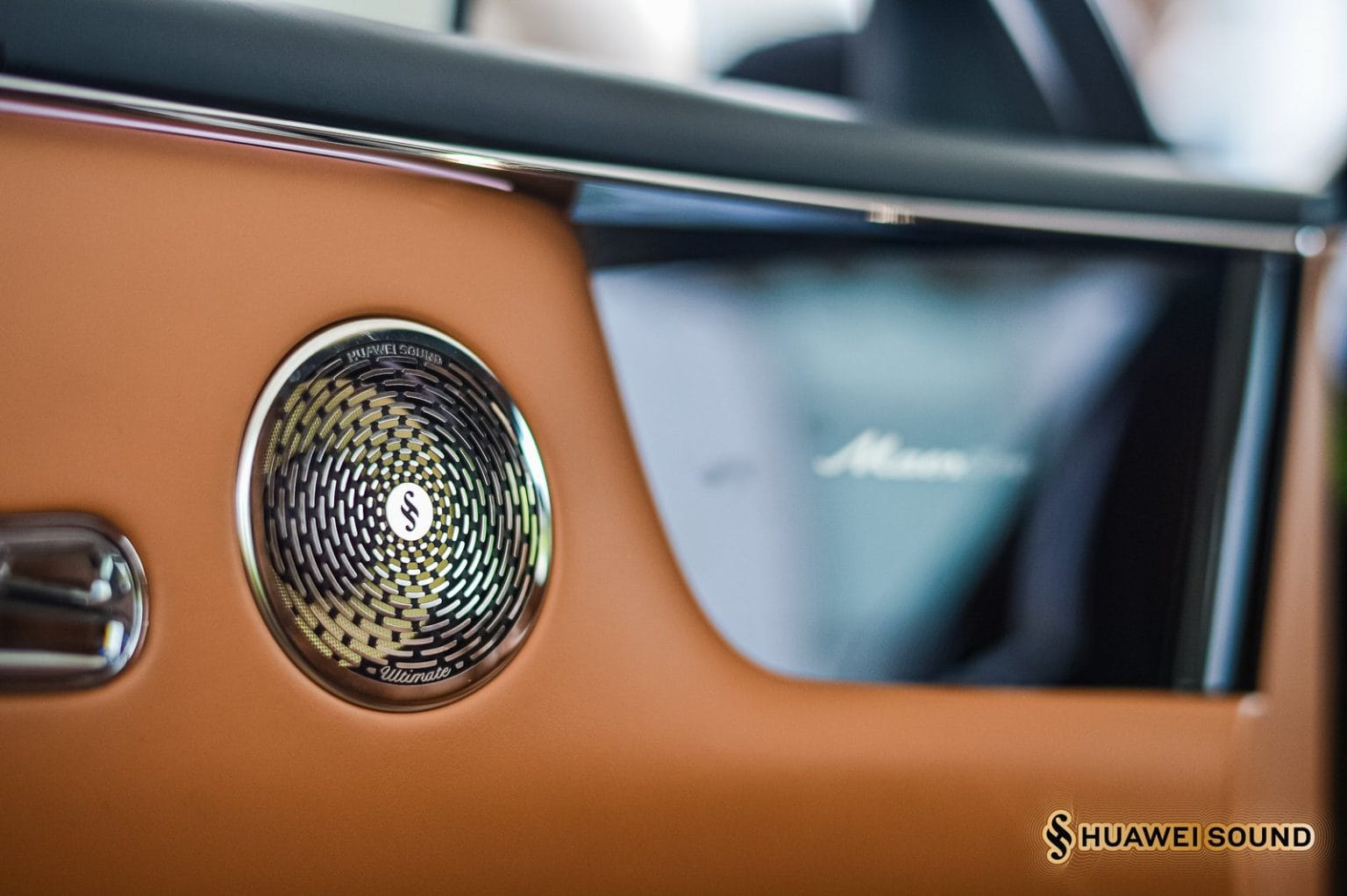
The most tangible outcome of this work is the HUAWEI SOUND ULTIMATE Series, currently featured in the Maextro S800 luxury electric sedan. It’s Huawei’s most advanced in-car sound system to date, boasting:
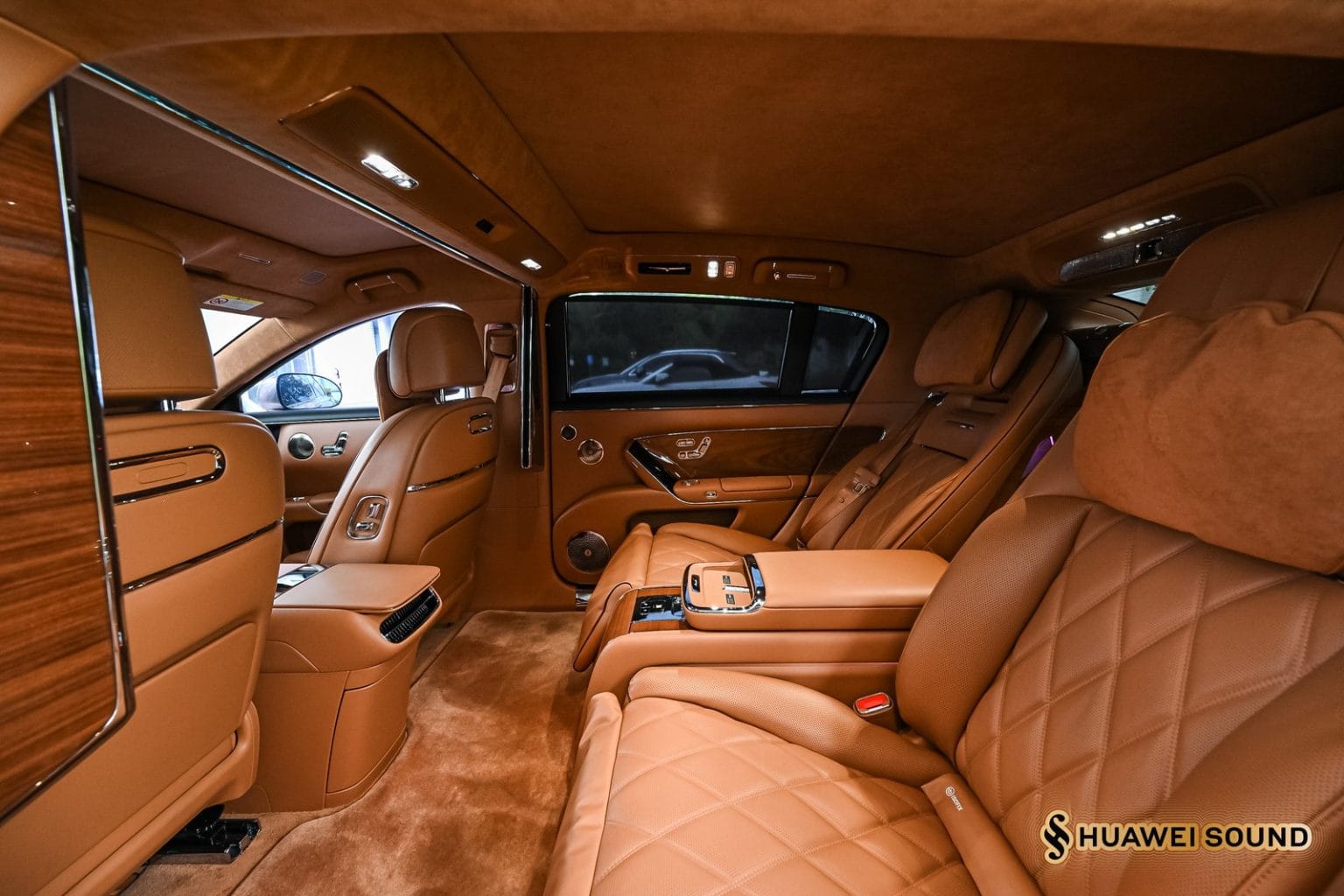
- 43 speakers powered by dual amplifiers with nearly 3,000 watts of output.
- An industry-first seat-specific 4D immersive surround sound, where rear seat exciters synchronize vibrations with music and video for a tactile experience.
- Innovative hardware like the Tangential Force Woofer, a dual-diaphragm subwoofer, and the Crystal Star-Ring Diffuser, which combines ambient lighting with precision sound imaging.
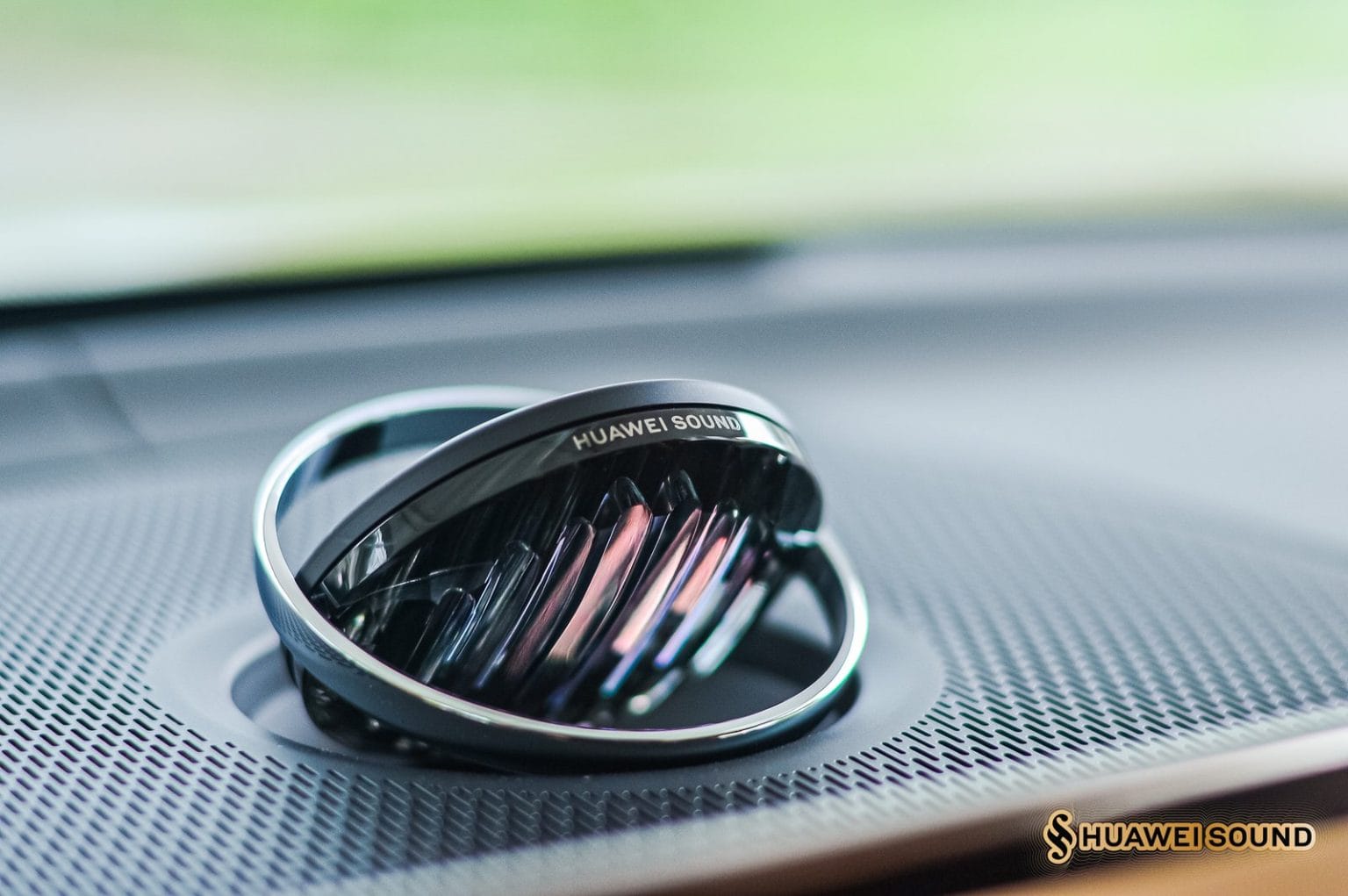
- HarmonyOS integration for AI-driven “sound-to-light” features, where ambient lighting responds dynamically to music.
The system also introduces independent sound zones—a feature that uses headrest speakers and advanced algorithms to isolate sound between front and back seats. In demonstrations, one row could enjoy classical music while another watched an action film, with up to 30dB of isolation. Huawei also incorporates advanced road-noise cancellation, aiming to create a “library-level” quiet cabin baseline.
Investment and Market Ambitions
Huawei is backing this push with serious resources. In 2024, the company invested CNY 179.7 billion ($23.4 billion) in R&D, representing more than one-fifth of its total revenue. Around CNY 60 billion was allocated specifically to fundamental science research.
Currently, Huawei supplies more than 20 automakers with solutions spanning driver assistance, cockpit systems, and now acoustics. But unlike consumer-facing brands, Huawei positions itself as a supplier, leaving automakers to decide how and where these systems are launched.
Can Huawei Challenge the Audio Establishment?
For decades, high-end automotive audio has been dominated by European names like Bang & Olufsen, Bose, and Harman. Huawei’s methodical approach—purpose-built labs, talent recruited from industry leaders, and massive investment—signals a direct challenge to this status quo.
Still, questions remain. The Maextro S800 demonstrates impressive technical achievement, but broader adoption will depend on whether these innovations can be scaled across diverse vehicle models at competitive costs. Just as importantly, it remains to be seen whether consumers will value independent sound zones or immersive light-sound experiences enough to justify premium pricing.
A Sound Future
Huawei’s Shanghai lab showcases more than just technology—it demonstrates ambition. By blending hard science with human-focused tuning, the company is betting that the car of the future will not only drive smarter but also sound better than ever. Whether this vision takes hold in the mass market will depend on how seamlessly Huawei can translate its flagship breakthroughs into everyday driving experiences.



