

Hyperliquid Strategies, a soon-to-launch crypto-focused firm, has filed an S-1 registration with the U.S. Securities and Exchange Commission (SEC) seeking to raise up to $1 billion through a public stock offering.
According to the filing submitted on Wednesday, the company plans to issue up to 160 million shares of common stock, with Chardan Capital Markets acting as its financial advisor.
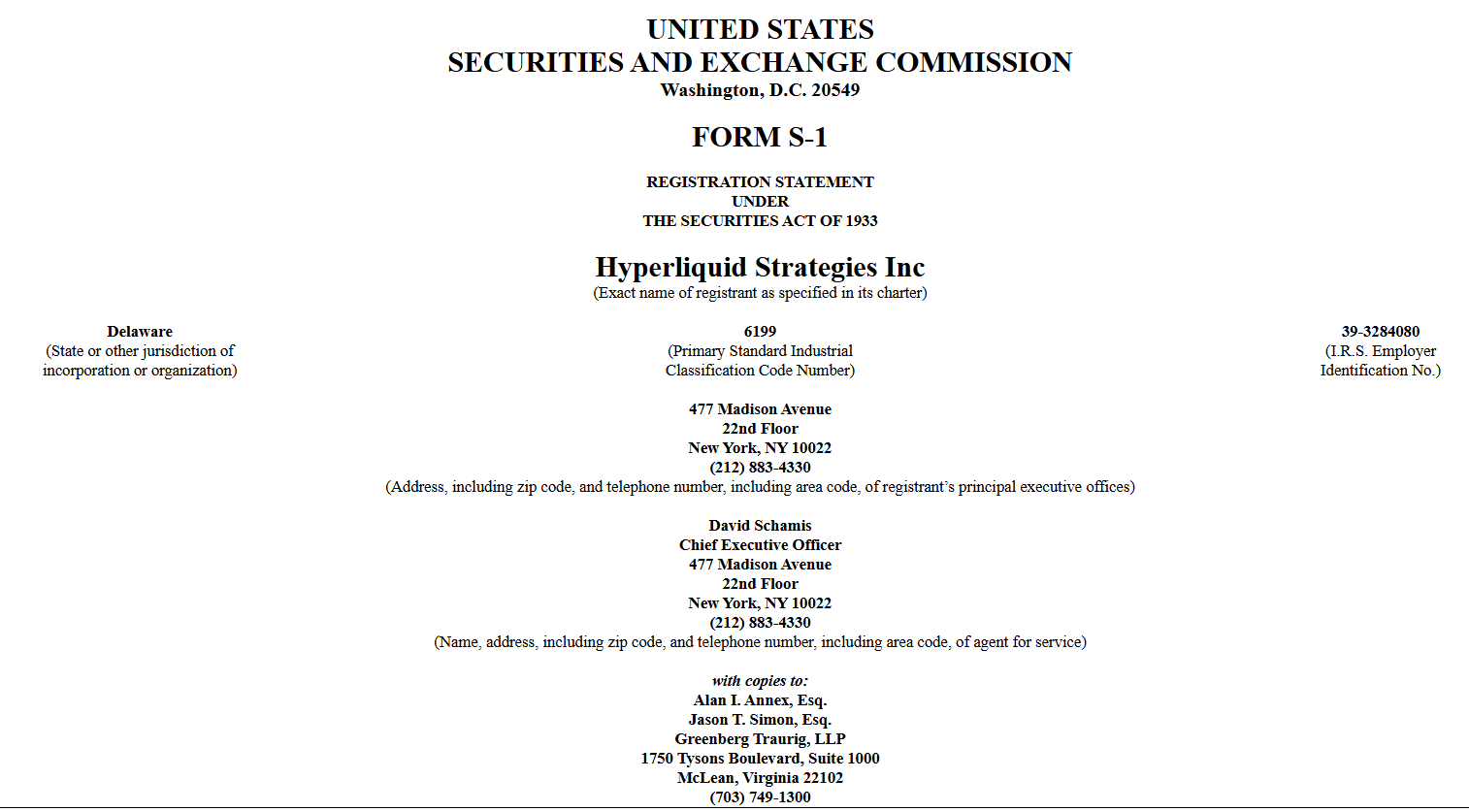
Hyperliquid Strategies is being created through a merger between Nasdaq-listed biotech firm Sonnet BioTherapeutics and special purpose acquisition company (SPAC) Rorschach I LLC. The merger, announced in July, is expected to close before the end of the year. Once finalized, the combined company will operate as a crypto treasury management firm dedicated to the Hyperliquid ecosystem, trading on Nasdaq under a new ticker symbol yet to be disclosed.
The leadership team includes Bob Diamond, former CEO of Barclays, as Chairman, and David Schamis as CEO.
In its filing, Hyperliquid Strategies said it plans to use the funds raised for general corporate purposes, including the purchase and management of Hyperliquid’s native HYPE tokens. The company currently holds 12.6 million HYPE tokens and about $305 million in cash.
Hyperliquid Strategies aims to stake most of its HYPE holdings to earn ongoing staking rewards, while also exploring other decentralized finance (DeFi) opportunities within the Hyperliquid ecosystem after internal assessments.
Hyperliquid, launched in 2023, is a decentralized perpetual futures exchange known for its high-performance trading infrastructure. The platform has processed over $1.5 trillion in total trading volume to date.
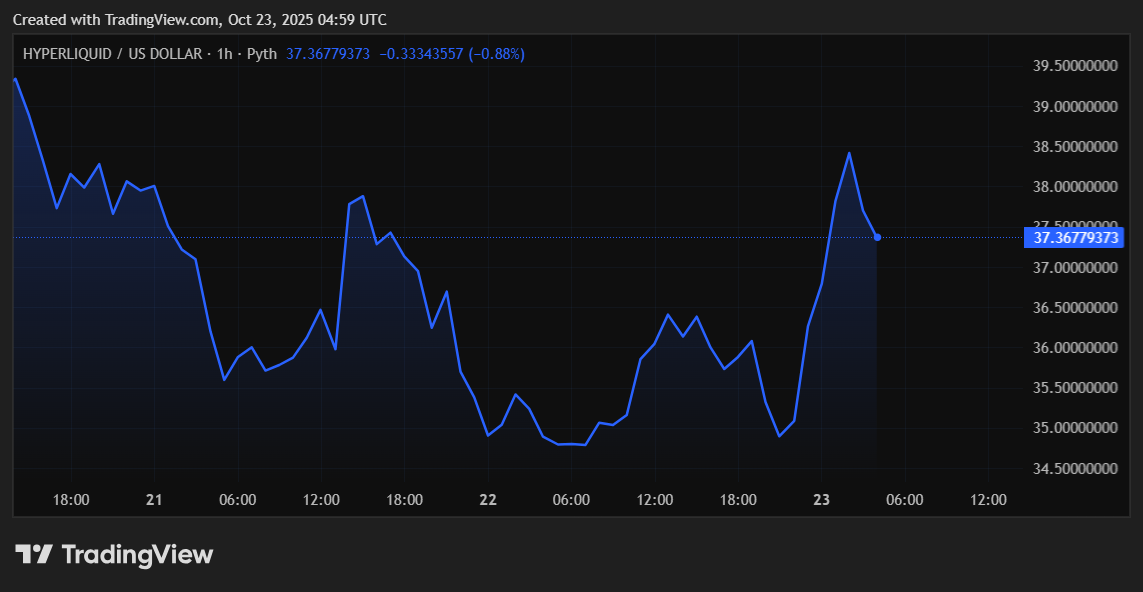
The HYPE token, introduced last year with a total supply of 1 billion, serves as the ecosystem’s native asset. Around 38% of HYPE tokens are designated for community rewards. As of Thursday, HYPE’s price rose 7.67% to $37.73, according to data.
If successful, Hyperliquid Strategies’ public offering would mark one of the most ambitious fundraises in the crypto treasury management space this year—potentially reinforcing the bridge between traditional capital markets and decentralized finance.



