

Crypto users on Hyperliquid, a prominent decentralized exchange (DEX), breathed a collective sigh of relief as the platform announced it's refunding those affected by a recent, albeit brief, API outage. The incident, which caused some users to face unfavorable position closings and other trading disruptions, wasn't a hack, thankfully. Instead, it was simply a case of surging popularity causing some "growing pains," as the team put it.
An update on the API congestion yesterday:
— steven.hl (@stevenyuntcap) July 30, 2025
+ Improvements will be made to prevent this from occurring again.
+ A refund methodology will be created to refund affected users. This will be an automated process; no tickets need to be opened.
Hyperliquid pic.twitter.com/6O31uuzgxB
What Happened During the Outage?
Yesterday, Hyperliquid experienced a short but impactful outage. While the exact cause was initially unclear, users quickly suspected an API (Application Programming Interface) issue, mainly because the glitch seemed to affect only user-end operations. Think of an API as the invisible bridge connecting your actions on the exchange's website or app to the underlying blockchain. When that bridge hit a snag, traders couldn't execute orders as they normally would.
The good news? Hyperliquid's core blockchain, HyperEVM, and its consensus mechanisms kept humming along. The issue was specifically with the API servers handling the massive influx of user activity and protocol revenue. Orders were delayed in reaching the nodes, leading to frustrating experiences for some.
Hyperliquid's Swift Response and Community Reception
In a move that's garnered significant goodwill from the crypto community, Hyperliquid swiftly pledged to refund all affected users automatically. This proactive approach stands in stark contrast to some exchanges that can be sluggish in addressing user concerns and issuing reimbursements. It truly highlights Hyperliquid's commitment to maintaining user trust, especially crucial for a decentralized platform where trust is paramount.
The platform has confirmed that the issue was due to a "significant spike in traffic," not a security breach or exploit. They've also stated that they're implementing additional protections at various levels of their technical stack to detect similar API server issues and prevent future impact on users. This quick and transparent communication has largely helped mitigate any "fear, uncertainty, and doubt" (FUD) among its user base.
Hyperliquid is now working to establish clear criteria for identifying impacted users, after which funds will be dispersed automatically in the coming days.
The Case of James Wynn: A Notable Liquidation
While the outage itself was brief, it certainly amplified existing market volatility. In a separate, but highly visible, event around the same time, prominent Hyperliquid whale James Wynn reportedly saw a $2.99 million position liquidated. This was particularly painful for Wynn, coming just days after he'd secured his first significant profits in two months. His active holdings are now reported to be under $4,000.
It's important to clarify that, at present, it doesn't appear this specific liquidation directly coincided with the API outage window. However, user-end issues can certainly compound trading difficulties, and any ambiguous cases like this could lead to unhappy clients. Hyperliquid's thorough refund process will be key to addressing all legitimate claims.
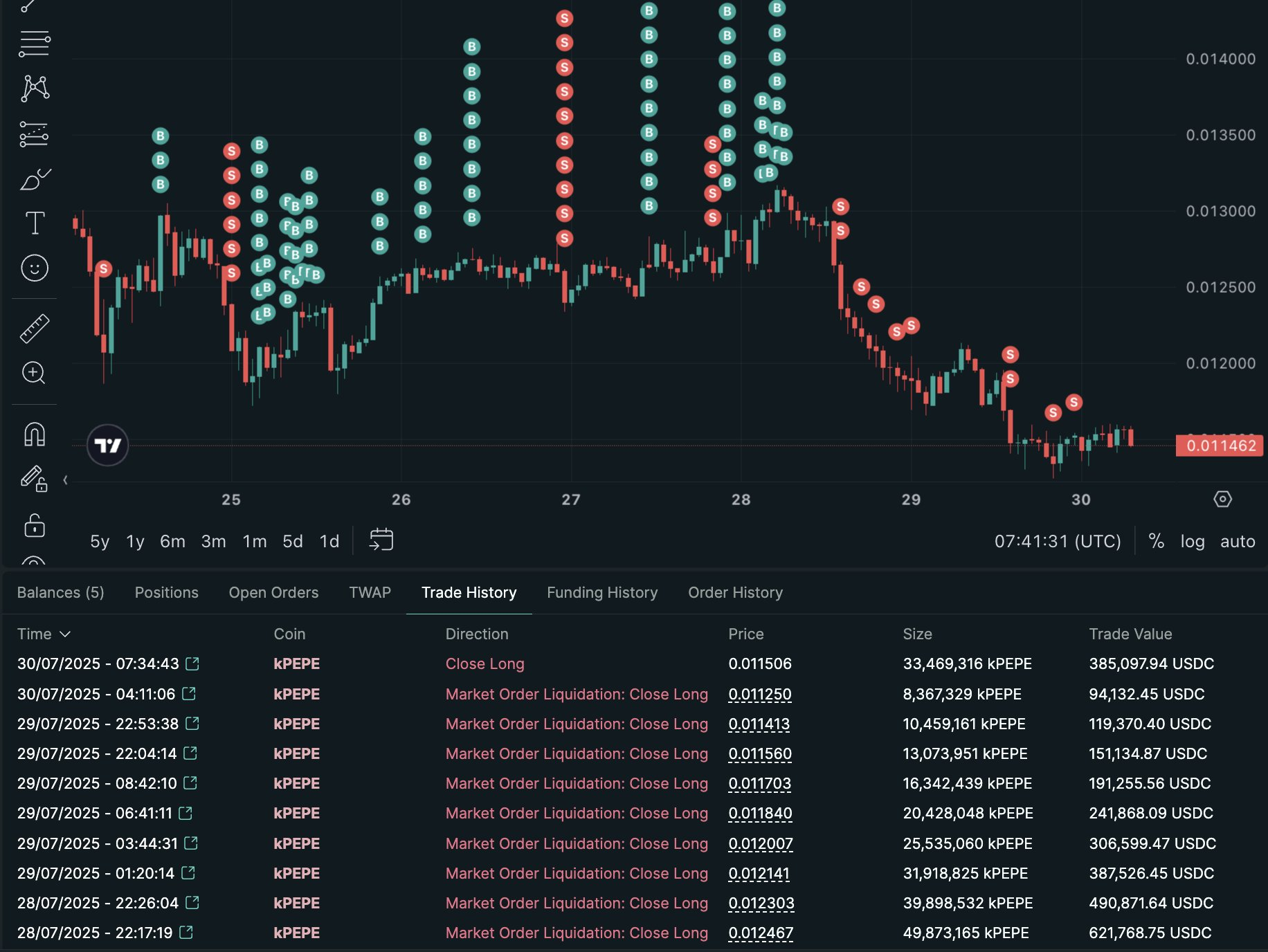
Overall, Hyperliquid's transparent communication and commitment to automated refunds demonstrate a positive step in managing technical challenges within the DeFi space. While network outages aren't uncommon in crypto, a swift and user-centric response like this can significantly bolster trust in decentralized platforms. Here's hoping the developers have indeed fortified their infrastructure to avoid future disruptions.



