
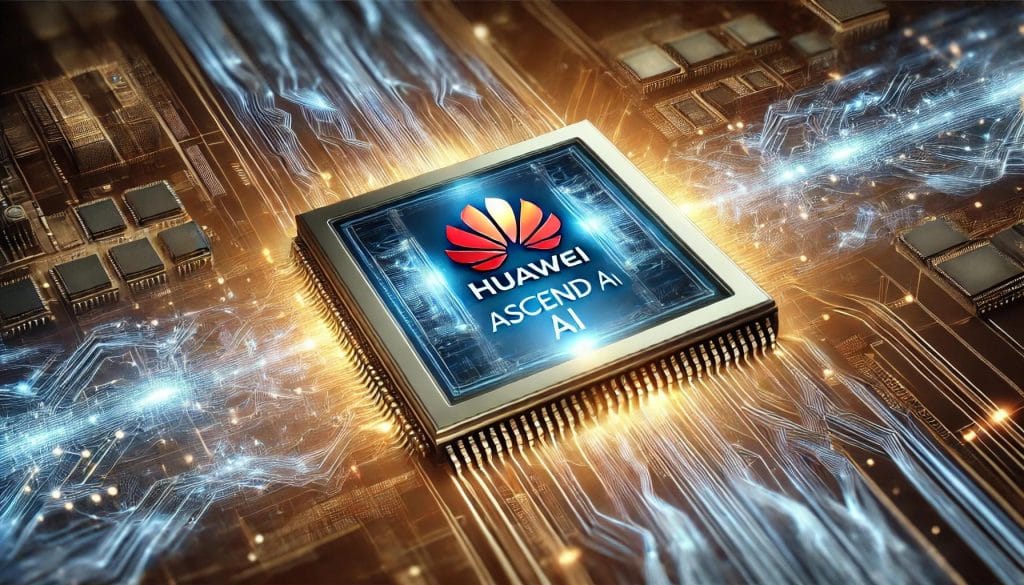
Huawei is taking a bold step toward reshaping the future of artificial intelligence computing. At its HUAWEI CONNECT 2025 event, the company introduced SuperPoD, an AI infrastructure designed to connect thousands of chips across multiple server cabinets, enabling them to function as if they were a single, unified computer.
Breaking the Boundaries of AI Infrastructure
Traditional server setups typically work in semi-isolation, but Huawei’s SuperPoD changes that model. By leveraging its UnifiedBus 2.0 interconnect protocol, the company has developed a system where thousands of processing units can “learn, think, and reason” together as one logical machine.
Huawei executives emphasized that overcoming challenges around communication reliability and bandwidth-latency was key. Copper connections offer speed but short range, while optical cables scale distance but face reliability issues. SuperPoD’s protocol introduces reliability safeguards across every networking layer, including fault detection at 100 nanoseconds—making interruptions practically invisible to applications.
SuperPoD Performance at Scale
The Atlas 950 SuperPoD serves as the flagship model. It integrates up to 8,192 Ascend 950DT chips, reaching 8 EFLOPS in FP8 precision and 16 EFLOPS in FP4. Its interconnect bandwidth—16 PB/s—is more than ten times greater than the world’s peak internet bandwidth. Despite its enormous processing power, latency remains just 2.1 microseconds across the system.
Next in line is the Atlas 960 SuperPoD, slated to house 15,488 Ascend 960 chips. This configuration will deliver up to 60 EFLOPS in FP4 with over 4,400 TB of memory and a staggering 34 PB/s interconnect bandwidth, further raising the bar for AI infrastructure.
Beyond AI: Broader Computing Applications
Huawei is extending the concept beyond AI-specific workloads. Its TaiShan 950 SuperPoD, powered by Kunpeng processors, targets general-purpose computing, particularly for enterprises still relying on legacy mainframes. The company suggested that this system, combined with its distributed GaussDB, could provide a modern replacement for older computing platforms in industries such as finance.
Open Standards for an AI Ecosystem
One of the most significant announcements was Huawei’s decision to open-source its UnifiedBus 2.0 specifications, along with hardware modules and software tools. The company plans to release components such as AI cards, CPU boards, and cooling systems, as well as fully open-source its CANN compiler, Mind series application kits, and openPangu models by the end of 2025.
 Contributors to Wikimedia projects
Huawei frames this move as an ecosystem-building strategy, aimed at enabling partners to develop industry-specific solutions and fostering collaborative innovation. The open approach also reflects practical realities: the company acknowledged that China may face long-term constraints in advanced semiconductor manufacturing, making it critical to maximize performance with available technologies.
Deployment and Global Implications
The technology is already in use. More than 300 Atlas 900 A3 SuperPoD units have been delivered in 2025, powering AI and computing projects across sectors including finance, telecommunications, energy, and manufacturing.
For China, this strategy strengthens domestic AI infrastructure development while reducing dependence on foreign supply chains. For the global market, Huawei’s model offers an alternative to the proprietary systems common among Western competitors. Whether this open, partner-driven ecosystem can achieve the same scale and efficiency remains to be seen, but it represents a significant shift in how AI infrastructure could evolve.



