
Trading Tesla Beyond Wall Street
For decades, trading shares of Tesla meant going through a traditional stockbroker, sticking to Nasdaq’s market hours, and navigating layers of paperwork and restrictions. That model is starting to change.
Crypto exchanges are increasingly offering exposure to traditional assets, and Binance Futures is one of the most visible examples. It allows traders to speculate on Tesla’s price through futures contracts, without owning the underlying stock. For many retail traders, this opens the door to faster access, smaller position sizes, and round-the-clock markets.
What Is the TSLAUSDT Contract on Binance?
On Binance Futures, Tesla trades as a USDT-margined perpetual contract under the ticker TSLAUSDT. The contract tracks the market price of Tesla Inc. (TSLA) shares listed on Nasdaq, but all profits and losses are settled in USDT, a dollar-pegged stablecoin.
These are cash-settled derivatives. You’re not buying Tesla shares, so there are no dividends or voting rights. Instead, you’re trading price movements. Go long if you believe Tesla’s price will rise. Go short if you expect it to fall. Either way, gains and losses are reflected directly in your USDT balance.
Why Traders Use Binance Futures for Tesla
24/7 Market Access
Nasdaq closes on weekends and holidays. Binance Futures doesn’t. TSLAUSDT trades around the clock, which means traders can react to news or market sentiment at any time, even outside traditional equity hours.
Lower Entry Requirements
Tesla shares can be expensive for smaller investors. Binance Futures allows fractional exposure, with a minimum trade size of just 0.01 TSLA. That makes it easier to participate without committing large amounts of capital upfront.
Built-In Leverage
Futures contracts allow traders to control larger positions with less margin. As of February 2026, Binance offers up to 5x leverage on TSLAUSDT. For example, $100 in margin can provide exposure to roughly $500 worth of Tesla contracts. This can amplify gains, but it also magnifies losses.
How Funding Rates Work
Because perpetual futures don’t expire, Binance uses funding rates to keep the contract price aligned with Tesla’s spot market price.
Every four hours, traders exchange funding payments with each other. If the funding rate is positive, long positions pay shorts. If it’s negative, shorts pay longs. Binance caps funding rates for this contract at approximately ±2%, according to data cited by Proactive Investors. In some market conditions, traders can earn funding payments, though this should never be treated as guaranteed income.
Understanding the Risks
Trading leveraged derivatives carries real risk.
A 5x leveraged position can be liquidated if Tesla’s price moves about 20% against you. Tech stocks like Tesla are known for volatility, and when combined with futures markets, price swings can be sharp and fast.
Experienced traders manage this risk by:
- Using stop-loss orders
- Keeping position sizes modest
- Avoiding high leverage during unstable market conditions
Risk management isn’t optional here. It’s the difference between staying in the game and blowing up an account.
How to Trade TSLA on Binance Futures
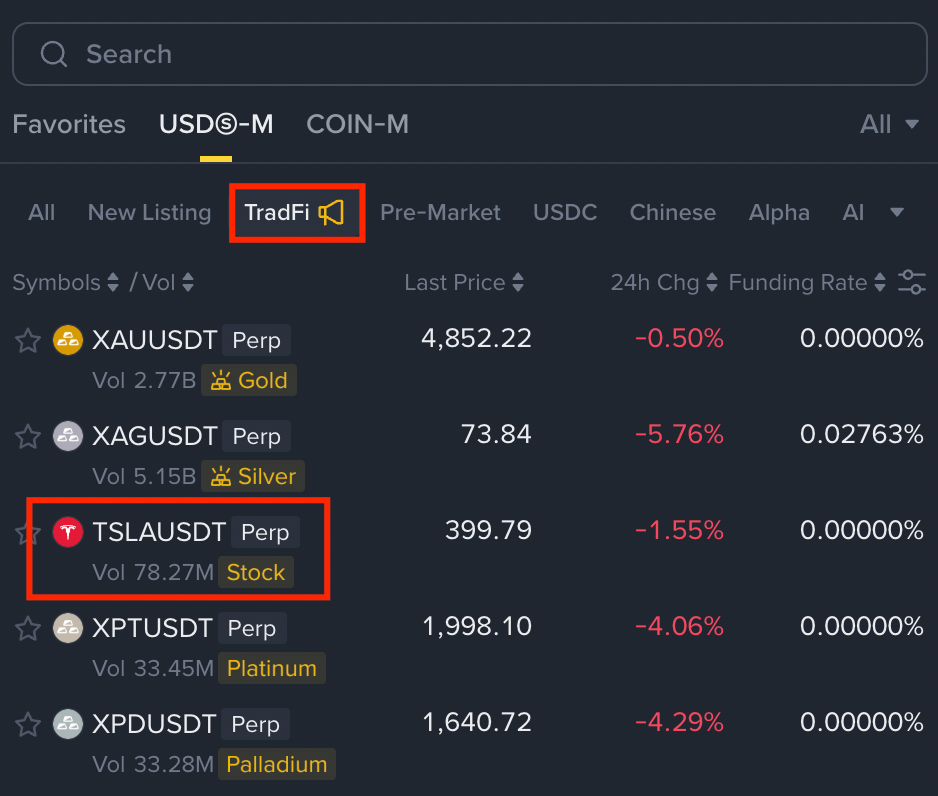
Start by logging into Binance and navigating to Futures > USD(S)-M Futures. Availability depends on your region. Search for TSLAUSDT, which appears under the equity or TradFi categories.
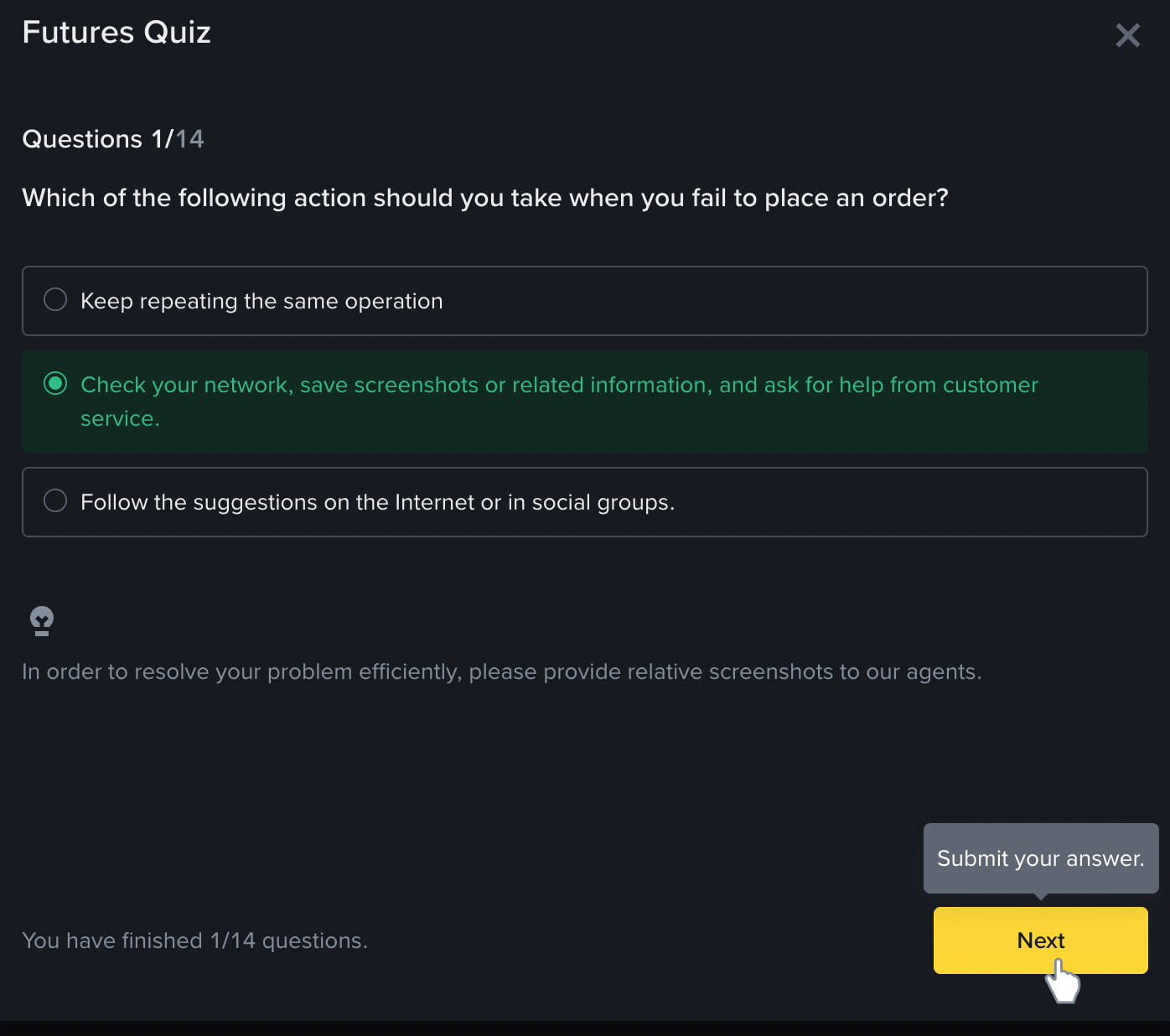
Make sure your Futures wallet is funded. If it’s empty, you can transfer funds or buy crypto directly on Binance. First-time users will need to open a Futures account and complete a short risk quiz.
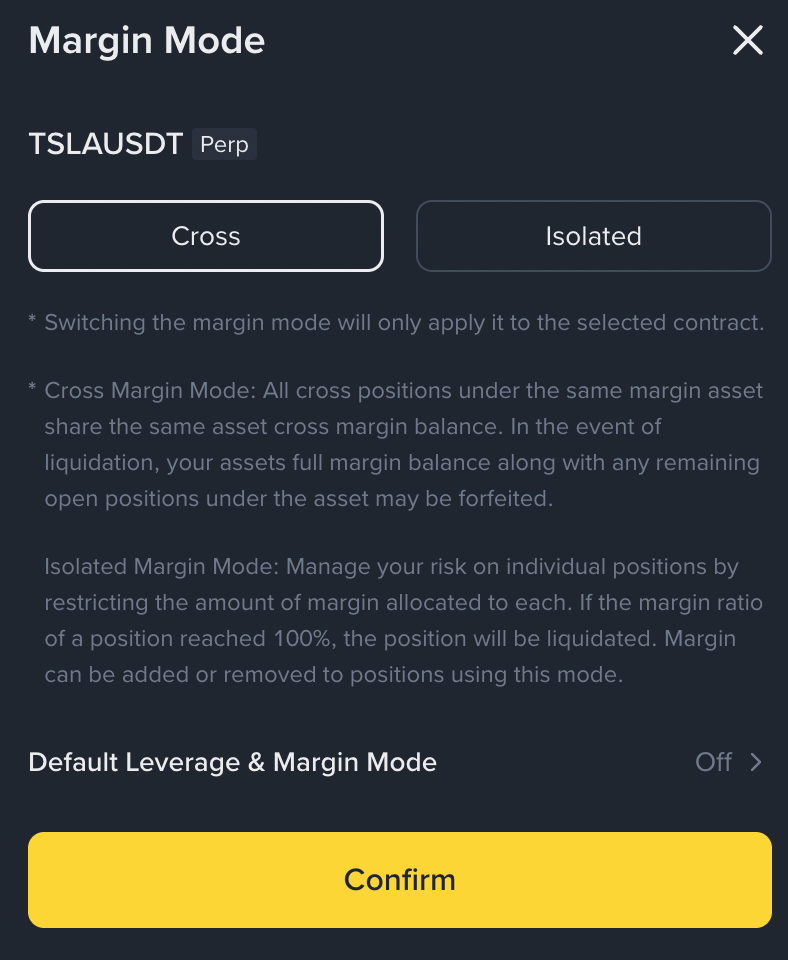
From the order panel, you can place buy or sell orders. You’ll also choose between Cross Margin and Isolated Margin. Cross uses your entire Futures balance to support positions, while Isolated limits risk to a single trade. Many traders prefer isolated margin for better risk control.
Final Thoughts
Tesla futures on Binance sit at the intersection of traditional equities and crypto trading. They offer flexibility, accessibility, and constant market access, but they also demand discipline.
If you’re exploring this market, take time to understand how futures, leverage, and funding rates work. Never trade with money you can’t afford to lose, and treat risk management as a core strategy, not an afterthought.



