
A New Way to Access Oil Futures
Trading crude oil futures has long been tied to traditional financial exchanges with fixed trading hours and strict access rules. That’s beginning to change.
Binance now offers exposure to oil prices directly through Binance Wallet, using a decentralized exchange called Aster. The setup allows traders to access tokenized crude oil futures contracts that run on blockchain infrastructure instead of centralized derivatives platforms.
The contract, listed under the ticker CLUSDT, is a perpetual futures product. That means it tracks crude oil prices without a fixed expiration date. Traders can open and close positions at any time.
Unlike conventional commodity trading platforms, these contracts run 24 hours a day, seven days a week. Transactions are executed through smart contracts and settled on-chain, allowing traders to interact directly from their crypto wallet.
For crypto users already operating inside the blockchain ecosystem, it removes the need to move funds to traditional brokerage accounts.
What Makes the Binance–Aster Setup Different?
The core difference lies in how the trade infrastructure works.
Traditional oil futures are typically traded on exchanges such as CME Group through licensed brokers. The Binance Wallet model uses a decentralized exchange (DEX) instead.
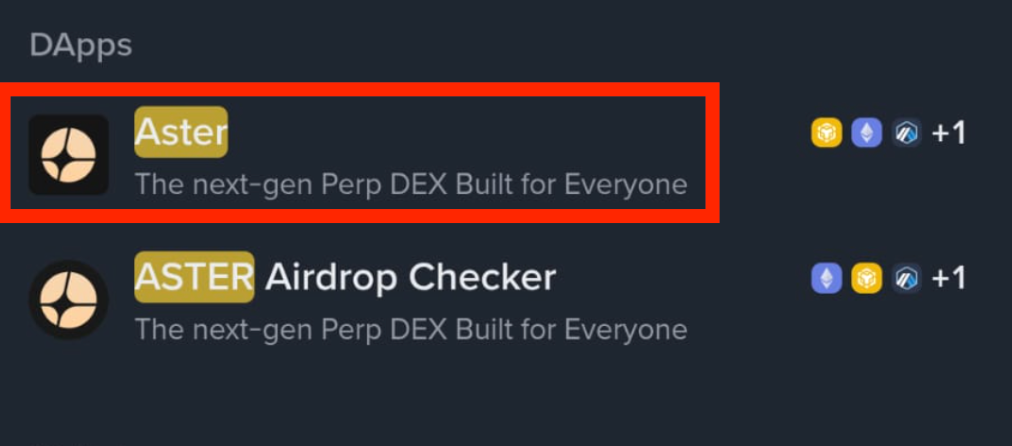
Aster acts as the trading engine while Binance Wallet serves as the interface and custody layer. Users maintain control of their funds and connect their wallet directly to the trading application.
The futures contract itself is tokenized exposure to crude oil, rather than physical oil delivery. This structure allows the price of the derivative to follow the oil market while remaining fully compatible with blockchain-based trading systems.
In practice, this means traders can move capital from their wallet into the perpetual futures market without leaving the crypto environment.
Incentives for Early Traders
To encourage early participation, Binance and Aster have introduced several incentives tied to oil futures trading activity.
These include:
0% maker fees
Traders placing limit orders currently pay no maker fees, reducing trading costs.
1.2× Aster airdrop points
Trading activity on CL perpetual contracts earns enhanced reward points that may later be redeemable for ASTER tokens.
Trading competition eligibility
Volume generated from CL contracts may count toward ongoing Aster trading competitions, depending on the event rules.
Programs like these are designed to help bootstrap liquidity in new markets, a common strategy among decentralized exchanges launching new derivatives products.
How to Trade Oil Futures on Binance Wallet
Getting started requires a Binance account and an activated Binance Wallet.
Mobile Version
- Log into your Binance account and open Binance Wallet.
- Transfer funds into the wallet if needed. Assets can come from the Binance exchange account, an external wallet, or Binance P2P.
- Ensure funds are sent using the BNB Chain network.
- Open the DApps section and search for Aster.
- Connect the wallet and approve the required signatures.
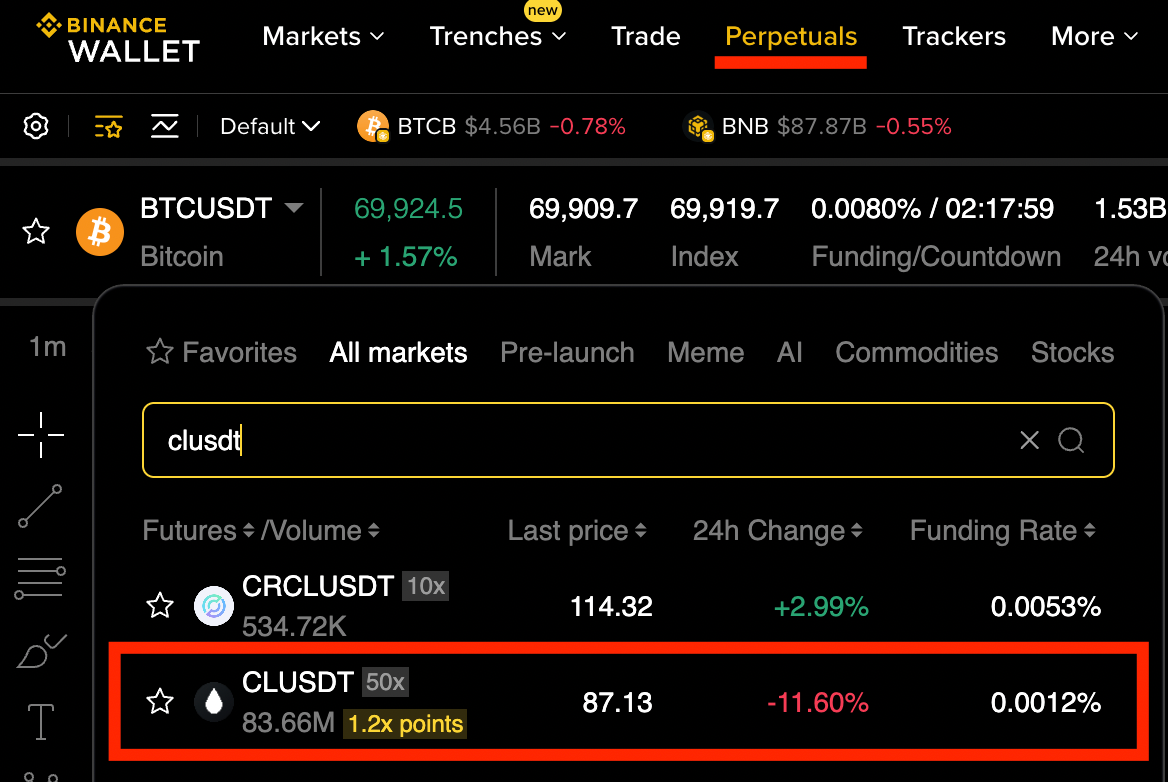
- Inside Aster, search for the oil contract ticker CLUSDT.
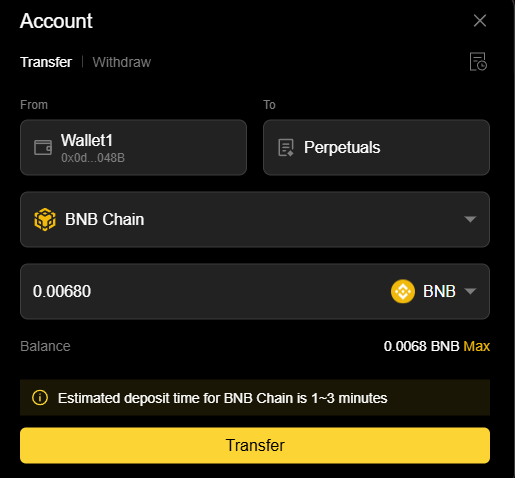
- Transfer funds from the wallet to the Perpetuals trading account within Aster.
Once completed, you can start trading the oil perpetual contract.
Web Version
- Log into Binance and go to Trade → DEX.
- Connect your wallet.
- If prompted, enable Secure Auto Sign and authorize access through the Binance app.
- Deposit funds into Binance Wallet using the BNB Chain network.
- Navigate to Perpetuals and search for CLUSDT.
- Transfer funds from your wallet into the Aster trading account and confirm the transaction.
Risks to Understand Before Trading
Perpetual futures can amplify gains, but they also increase risk.
Because these products allow leveraged trading, even small price movements can lead to large profit or loss. Traders should understand how funding rates, liquidation thresholds, and margin requirements work before opening positions.
Still, the concept is significant.
Tokenized commodity derivatives like CLUSDT show how traditional financial instruments are slowly entering the decentralized finance (DeFi) ecosystem.
If liquidity continues to grow, oil may not be the only commodity moving onto blockchain trading infrastructure.



