

The European Union has a chance to shape how the world approaches artificial intelligence—and trust may be its greatest competitive edge. That’s the view of Resham Kotecha, Global Head of Policy at the Open Data Institute (ODI), who argues that Europe can prove rights protection and innovation don’t have to be at odds.
Kotecha outlined how the ODI’s European Data and AI Policy Manifesto calls on policymakers to build AI governance around six principles: strong oversight, inclusive ecosystems, and meaningful public participation among them. The aim is simple but ambitious—create a digital environment where data is shared responsibly, businesses can innovate, and citizens’ rights remain protected.
Setting Global Standards in AI and Data
“The EU has a unique opportunity to shape a global benchmark for digital governance that puts people first,” Kotecha said.

Initiatives like Common European Data Spaces and Gaia-X are already testing this vision. Both projects are building shared data infrastructure designed to unlock large-scale collaboration without forcing businesses or governments to surrender control. If successful, they could enable Europe to harness the power of data while embedding privacy and security protections from the ground up.
A key enabler will be privacy-enhancing technologies (PETs), which allow sensitive data to be analyzed without exposing the raw information. While research programs such as Horizon Europe and Digital Europe are backing PETs, Kotecha stressed that they need to move beyond pilot projects into mainstream adoption to demonstrate responsible data use at scale.
Oversight is another critical factor. Independent bodies, she argued, bring impartial scrutiny, build trust, and hold both governments and industry accountable. The ODI’s Data Institutions Programme is already exploring governance models to keep these organizations sustainable and independent.
 Jack Hardinges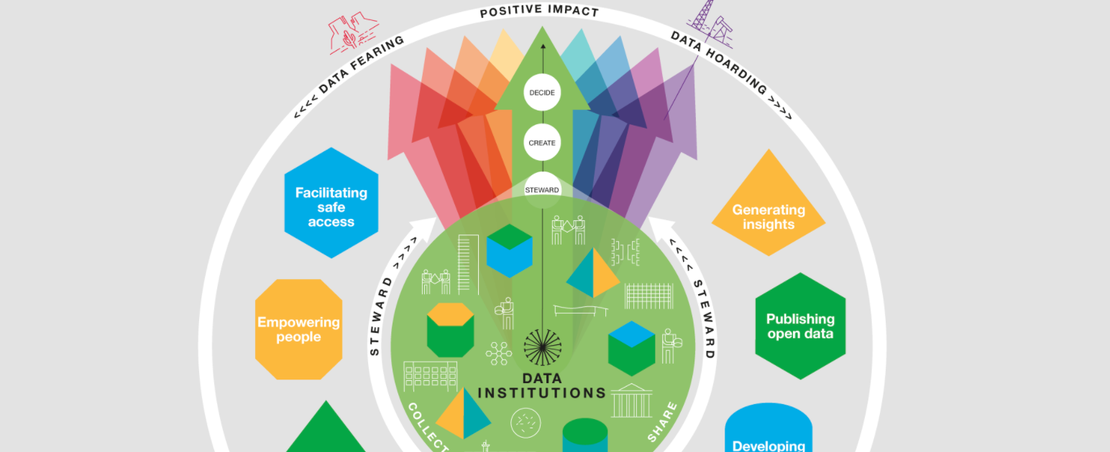
Open Data as a Foundation for AI
The manifesto identifies open data as essential for responsible AI. But businesses remain cautious, citing commercial risks, legal uncertainty, and inconsistent formats that make published data hard to use.
To address this, Kotecha suggested the EU should lower the cost of data collection, sharing, and use. That means combining regulation with financial incentives, infrastructure investment, and capacity-building.
She noted that persuasion matters too: executives need to see tangible business benefits of data sharing, not just broad appeals to the “public good.” Supporting structures such as the Data Spaces Support Centre (DSSC) and International Data Spaces Association (IDSA) are already working to make this easier, alongside updates to the Data Governance Act (DGA) and GDPR.
Regulatory sandboxes—safe testing environments—can also help firms trial new approaches, proving that public benefit and commercial value can reinforce each other.
Building Trust Across Borders
One of Europe’s biggest challenges is fragmentation. Different national standards and legal frameworks make it difficult to create a unified AI ecosystem.
The Data Governance Act is meant to bridge that gap, but consistent implementation across member states will be the real test.
“If Europe can align on standards and execution, it could strengthen its AI ecosystem and set the global standard for trustworthy cross-border data flows,” Kotecha said.
Trust, however, won’t come from technical fixes alone. Stronger collaboration between governments, businesses, and communities is needed to make data sharing both safe and effective.
Supporting Oversight and Smaller Players
Independent oversight requires more than good intentions—it needs long-term funding. Without it, watchdogs risk becoming temporary consultancies. Embedding transparency, ethical oversight, and accountability into EU funding models could help keep these organizations effective and independent.
The ODI also highlights the importance of giving startups and SMEs access to high-value datasets, a resource often limited to big tech. Programs like AI Factories and Data Labs are designed to lower barriers, offering smaller firms curated datasets, tools, and expertise. Past projects such as Data Pitch and OpenActive show how this model can generate jobs, investment, and innovative products.
Bringing Communities Into the Conversation
For Europe’s AI ecosystem to succeed, the public must be more than passive observers. The ODI’s 2024 report, What makes participatory data initiatives successful?, found that local participation strengthens ownership and gives under-represented groups influence.
Jack HardingesThis could mean community-led health data projects or tools designed with open standards for everyday use. Effective engagement requires training, resources, and culturally relevant communication, particularly for reaching under-represented groups.
“That’s how we turn data literacy into real influence,” Kotecha said.
Why Trust Could Be Europe’s Edge
While the U.S. grapples with fragmented regulation and China faces scrutiny over state-driven models, the EU has a chance to chart a different path. By proving that trust is a competitive advantage, Kotecha believes Europe can position itself as a global leader in responsible AI.
“Europe can position itself not just as a rule-maker, but as a global standard-setter for trustworthy AI,” she said.



