
Why Blockchains Still Struggle With Scale
Crypto keeps pulling in new users, new apps, and far more transactions than early blockchain designers ever imagined. The result is a familiar problem: most public blockchains can’t scale fast enough without giving up something important. This tension is known as the blockchain trilemma. In simple terms, it’s hard for a network to stay decentralized, secure, and highly scalable at the same time. Most chains end up leaning toward two and compromising on the third.
To keep pace with demand, developers have taken two broad paths. Some upgrade the blockchain itself (Layer 1). Others build separate networks that take pressure off the base layer (Layer 2). Both matter, but they solve different parts of the problem.
What Layer 1 and Layer 2 Actually Mean
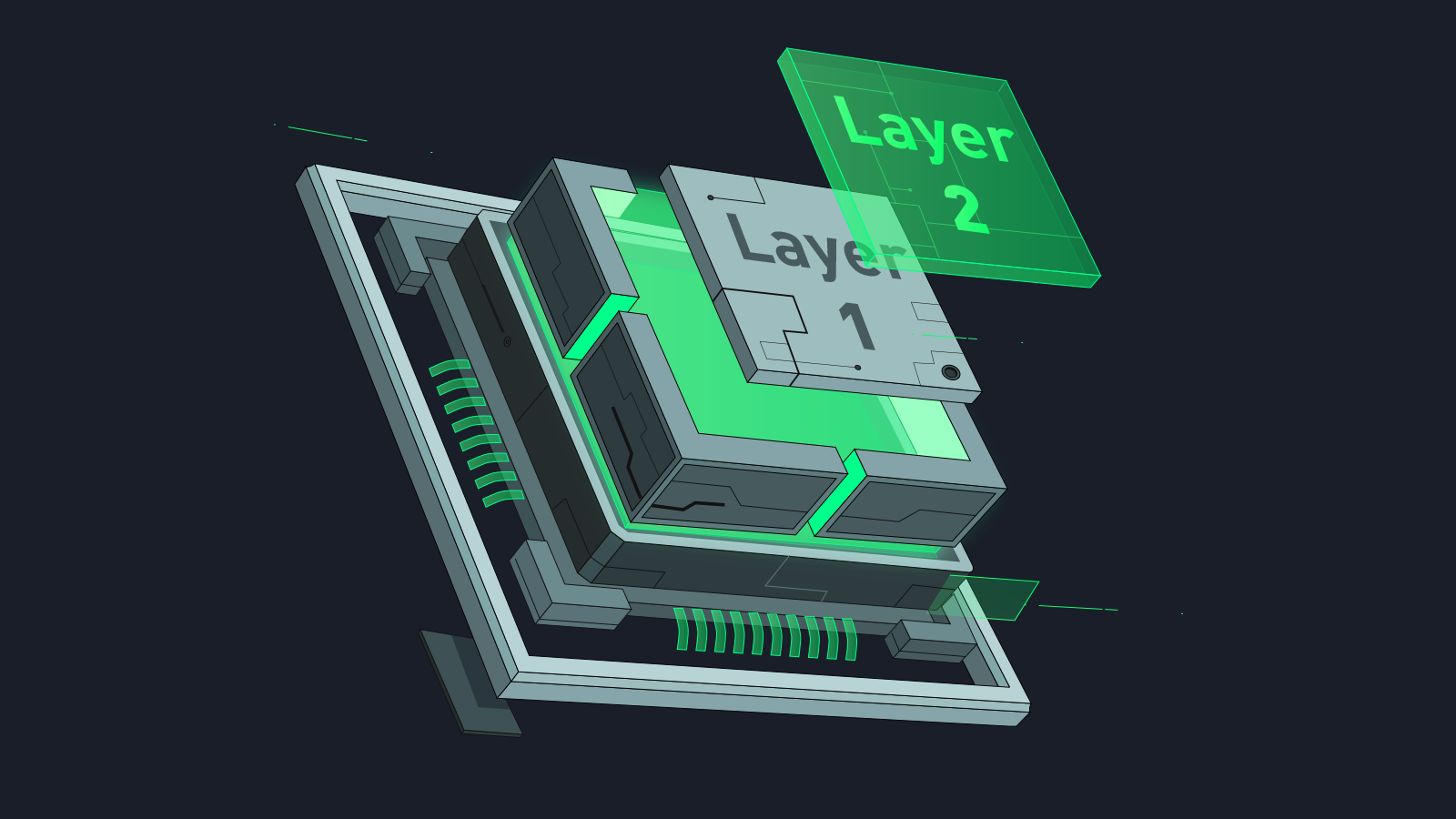
Layer 1 is the base network—the place where transactions settle and final truth lives. Bitcoin, Ethereum, Solana, and BNB Chain all fall into this category.
Layer 2 refers to protocols built on top of Layer 1. They process transactions elsewhere, then anchor results back to the main chain. Arbitrum on Ethereum and the Lightning Network on Bitcoin are good examples.
Think of it this way:
- Layer 1 upgrades change how the main network works.
- Layer 2 systems handle activity off-chain to keep the base layer from getting overwhelmed.
Common Layer 1 Scaling Approaches
Consensus Upgrades
Many networks have moved away from Proof of Work, which is secure but slow and energy-heavy. Ethereum’s switch to Proof of Stake is the most notable change. PoS lets users stake tokens to validate transactions, which cuts energy use and helps the network process data more efficiently.
Sharding
Sharding breaks the blockchain’s workload into smaller pieces called shards. Instead of every node verifying everything, nodes handle only a portion of the network’s data. This allows the system to process many transactions at once.
Larger Blocks
Some chains increase block size to hold more transactions. This boosts throughput but can make it harder for everyday users to run a node, which risks centralizing the network.
Common Layer 2 Scaling Approaches
Rollups
Rollups bundle large batches of transactions and settle them on the main chain.
- Optimistic rollups (Optimism, Arbitrum) assume transactions are valid by default and rely on a dispute period to catch fraud.
- Zero-knowledge rollups (zkSync, Scroll) use cryptographic proofs to verify transactions instantly, offering strong security without a waiting window.
Sidechains
Sidechains like Polygon PoS run parallel to the main chain and handle their own security. They’re fast and cheap but don’t inherit Layer 1 security in the same way rollups do.
State Channels
State channels allow users to transact off-chain as many times as they want. Only the opening and closing balances hit the blockchain. The Lightning Network uses this model to enable faster, low-fee Bitcoin payments.
Nested Blockchains
Nested systems push tasks to “child” chains, which process them and return results to the main chain. Ethereum’s Plasma framework is a well-known example.
How the Two Layers Differ
Layer 1 focuses on the core rules of the blockchain. Changing those rules is slow and often contentious because upgrades require broad consensus and may lead to forks.
Layer 2 moves activity elsewhere. It’s faster to upgrade and usually cheaper to use, though it can introduce new complexity. Users often need to bridge funds, liquidity spreads across multiple networks, and some L2s rely on centralized sequencers.
The Road Ahead
Scalability won’t be solved by one approach. Layer 1 improvements like sharding strengthen the foundation, while Layer 2 solutions deliver the speed and low fees users expect today. The future will likely blend both: a secure Layer 1 for settlement and a diverse ecosystem of Layer 2 networks to handle day-to-day activity.



