

Binance Expands AI Automation With New Trading Skills
Automation is quickly becoming part of everyday crypto trading. To support this shift, Binance has expanded its Skills Hub, giving AI agents direct access to market data, trading tools, and wallet management features.
Four key modules power this system: Alpha, Derivatives, Margin, and Assets. Together, they allow AI agents to scan emerging crypto projects, analyze markets, execute leveraged trades, and manage funds automatically.
Before using these tools, developers need to install the Binance Skills Hub within their AI agent framework. Installation typically depends on the framework being used. For terminal-based environments such as Node.js agents, developers can install the package through a command like npx skills add binance/binance-skills-hub.
Once installed, agents gain access to a set of modular capabilities designed for automated trading workflows.
Binance Alpha: Tracking Early-Stage DeFi Tokens
Binance Alpha focuses on early-stage decentralized finance projects. Unlike most trading tools, it provides market data without requiring an API key.
Through Alpha, AI agents can:
- Retrieve lists of newly listed tokens
- Access exchange information and trading rules
- Pull candlestick (K-line) data across multiple timeframes
- Review aggregated trade activity
- Track 24-hour price statistics, including volume and highs/lows
This data allows automated systems to detect momentum or unusual trading activity in new DeFi tokens. Traders often use Alpha as a discovery engine to identify projects gaining traction before they reach broader markets.
Derivatives Skill: AI-Driven Futures Trading
The Derivatives skill unlocks full functionality for USDS-margined futures trading on Binance. Through more than 70 API endpoints, AI agents can analyze markets and execute trades.
Available features include:
Market data tools
- Order book depth and real-time pricing
- Funding rate history
- Open interest across the market
- Liquidation event tracking
- Historical candlestick charts
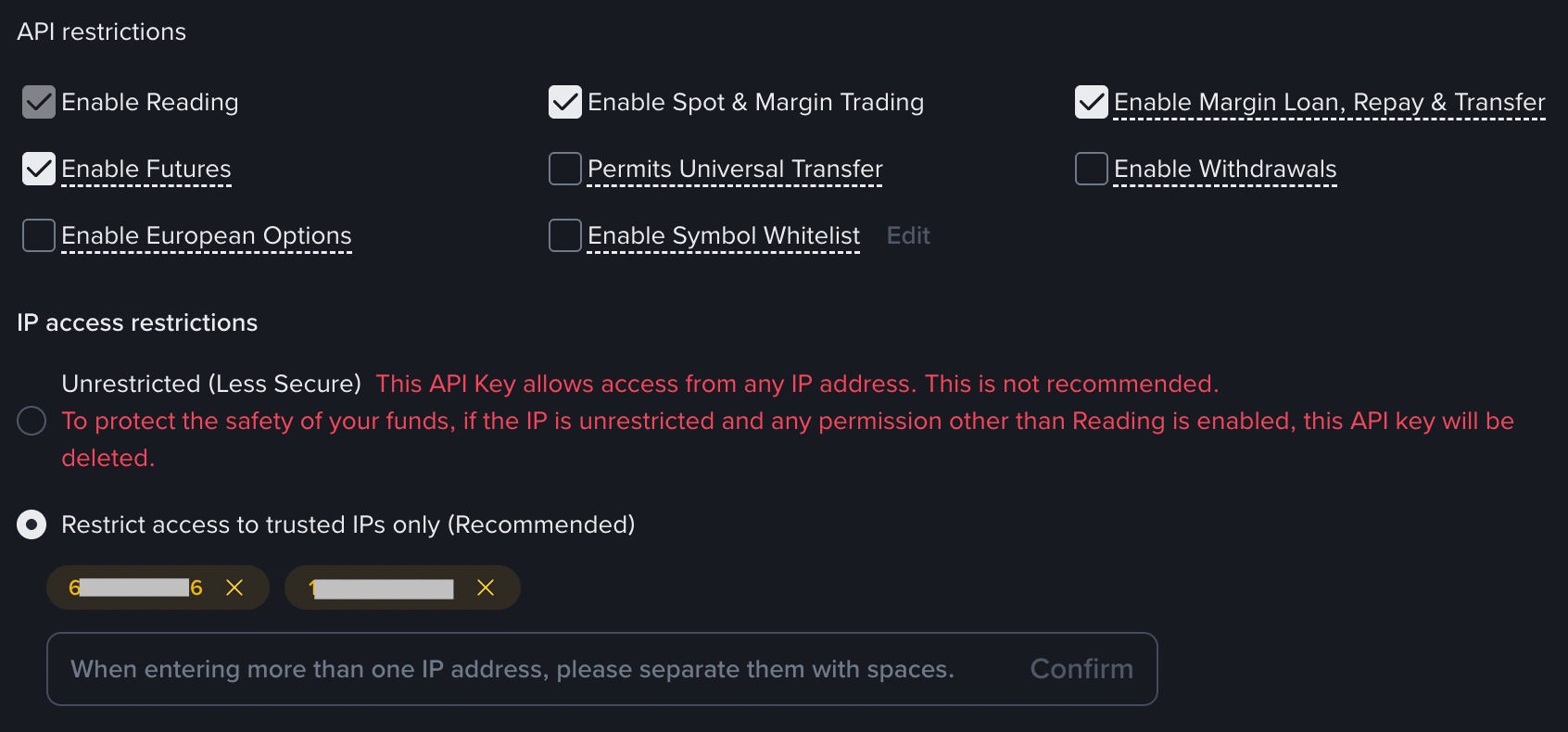
Trading capabilities
- Market, limit, and stop orders
- Trailing stop and algorithmic orders
- Position management and leverage adjustments (up to 125× depending on the asset)
Developers are encouraged to begin on Binance Futures Testnet, where strategies can be tested using simulated funds before deploying on the live exchange.
Because leveraged trading increases liquidation risk, automated systems typically include stop-loss logic and funding rate monitoring.
Margin Trading: Borrowing and Leveraged Positions
The Margin skill enables AI agents to borrow assets and trade with leverage through both cross margin and isolated margin accounts.
Key capabilities include:
- Borrowing and repaying assets
- Monitoring interest rates and historical charges
- Placing margin orders such as market, limit, and OCO (one-cancels-the-other) orders
- Managing collateral ratios and liquidation thresholds
For risk management, many traders use isolated margin accounts, which restrict potential losses to a single trading pair rather than an entire portfolio.
Assets Skill: Wallet and Fund Management
The Assets skill focuses on wallet operations. It allows AI agents to manage balances, deposits, withdrawals, and fee settings across Binance accounts.
Supported functions include:
- Viewing spot and funding wallet balances
- Generating deposit addresses for various networks
- Tracking deposit and withdrawal history
- Converting small balances (“dust”) into BNB
- Checking trading fees and account status
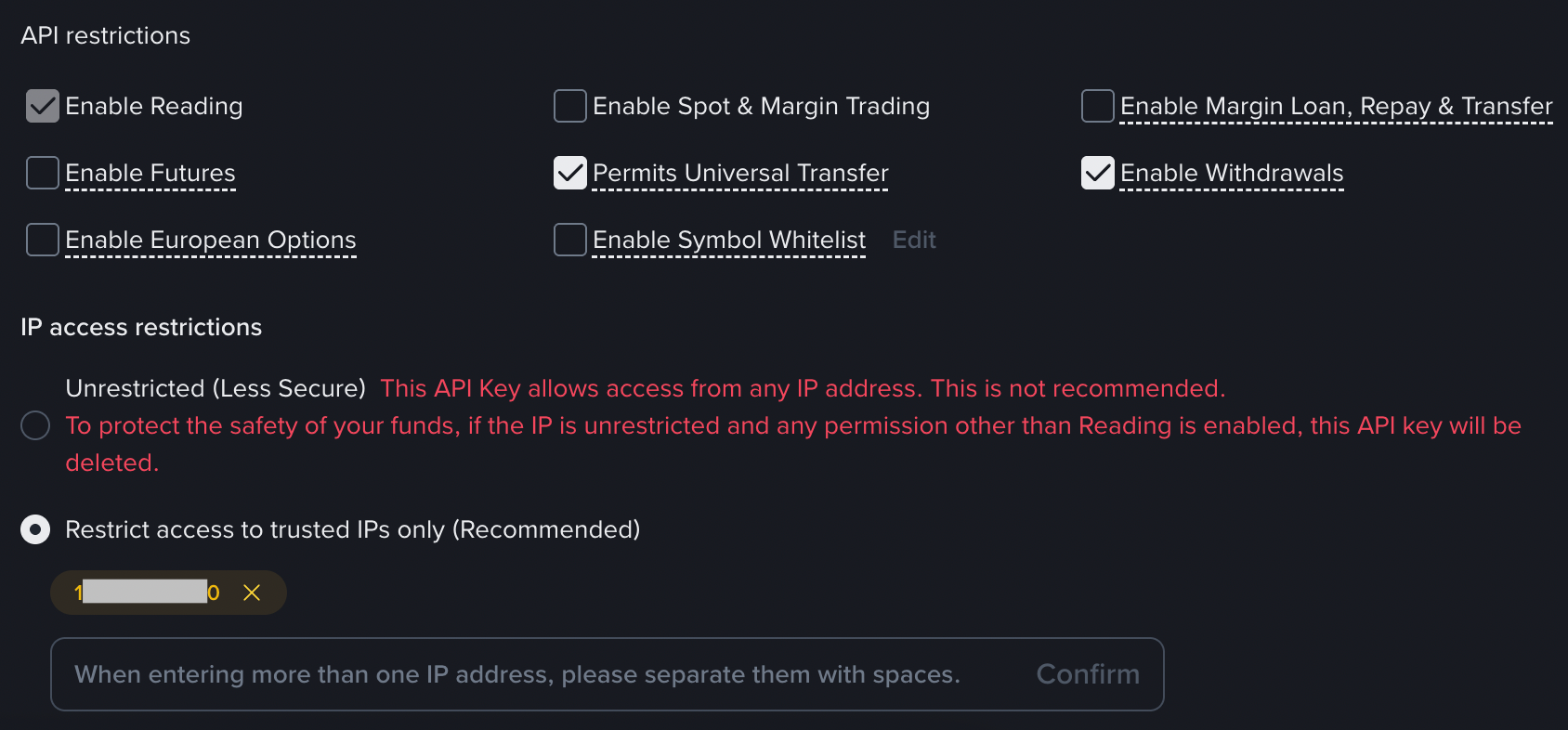
Security features such as IP whitelisting and withdrawal address whitelists are strongly recommended for API keys connected to automated systems.
Building Multi-Step Trading Strategies
The real power of Binance’s AI skills appears when they work together.
A typical automated workflow might look like this:
- Discovery: Scan Alpha for tokens showing major volume increases.
- Analysis: Check futures funding rates and open interest through the Derivatives skill.
- Execution: Borrow capital through Margin and open a leveraged position.
- Risk control: Apply stop-loss orders via derivatives trading.
- Settlement: Move profits to a funding wallet using the Assets module.
For developers building crypto trading bots or AI agents, these modules effectively connect market analysis, trading execution, and portfolio management into one automated pipeline.



