

A New Kind of Travel Companion
Artificial intelligence is quietly but profoundly reshaping the way we plan, book, and experience travel. From TikTok and Instagram Reels recommending hidden gems to booking platforms that build complete itineraries in seconds, AI is turning the once time-consuming process of trip planning into something dynamic, personal, and almost effortless.
But with every algorithm that learns our preferences, a question emerges: is AI giving travellers more freedom—or subtly guiding their choices?
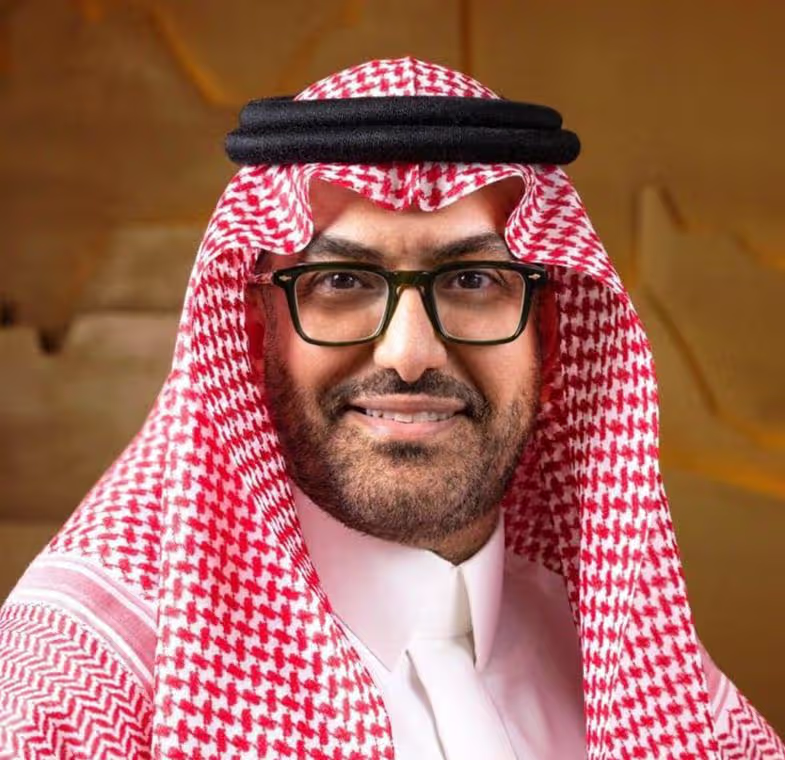
That balance is at the heart of the conversation led by Fahd Hamidaddin, Founding CEO of the Saudi Tourism Authority and President of the upcoming TOURISE Summit in Riyadh. In a recent interview, he discussed how AI is changing travel discovery, personalization, cultural exchange, and ethics—and why setting clear boundaries is essential as technology takes a more active role in shaping journeys.
From Inspiration to Action: AI’s Role in Travel
AI has transformed the way we discover destinations. Instead of scrolling through generic “top 10” lists, travellers now see curated suggestions that feel almost handpicked.
“AI has turned travel discovery into a personal canvas,” Hamidaddin said. “Platforms no longer just show you where to go—they help you imagine journeys that fit your interests, values, and even moods.”
This personalization does more than make planning easier. By highlighting lesser-known places, AI can spread demand away from overcrowded destinations and boost visibility for local communities that might otherwise stay off the tourist map.
The next stage, Hamidaddin explained, is what he calls “agentic AI”—systems that don’t just recommend but act. Imagine an AI that automatically rebooks flights delayed by weather, reschedules hotel reservations, and adjusts activities without you lifting a finger.
“That’s frictionless travel,” he said. “The logistics fade away, and the adventure takes centre stage.”
Power and Responsibility: AI’s Ethical Crossroads
AI-driven travel tools can make planning seamless and deeply personal, but they also introduce new risks. Algorithms that tailor experiences can just as easily narrow options, pushing travellers toward predictable routes or commercial partners.
“AI can empower travellers like never before,” Hamidaddin noted, “but unchecked, it can quietly limit horizons. That’s why transparency and accountability are non-negotiable. AI should be a compass, not a cage.”
Trust, he emphasized, must be the foundation of this new travel era. As AI systems collect more data—from searches to spending habits—travellers are becoming more aware of how their information is used.
“The era of hyper-personalization must be built on radical transparency,” he said. “People deserve clear explanations and genuine control over their data.”
Setting Global Standards for AI in Tourism
These issues will take centre stage at the TOURISE Summit in Riyadh this November, where government, business, and technology leaders will work toward a shared ethical framework for AI in travel.
“The TOURISE is designed to be more than an event,” Hamidaddin said. “It’s the world’s first platform dedicated to shaping travel tech responsibly.”
Key goals include setting international standards for data privacy, promoting sustainability, and equipping the global tourism workforce to thrive in an AI-driven future.
“Innovation must go hand in hand with integrity,” he added.
Cultural Exchange and Economic Impact
Beyond convenience, AI is helping bridge cultures and stimulate local economies. In Saudi Arabia, AI is being used to spotlight cultural landmarks such as AlUla and Diriyah, while promoting artisans, festivals, and small businesses.
“AI is dissolving barriers—linguistic, cultural, and economic,” Hamidaddin said. “It’s creating authentic connections that go beyond sightseeing.”
By 2030, AI is expected to add $135 billion to Saudi Arabia’s GDP, with tourism playing a major role. But Hamidaddin sees the true impact in “the bonds between people.”
Innovation with Integrity
As AI becomes more autonomous, Hamidaddin believes the industry must hold fast to ethical principles: explainable algorithms, clear user consent, bias audits, and inclusivity.
“When AI acts on a traveller’s behalf, agency must never replace autonomy,” he said.
His message is clear: the goal isn’t to resist AI—it’s to guide it responsibly.
“Our job is to make sure technology serves people, not the other way around.”
A Smarter, More Connected Future
Looking ahead, Hamidaddin envisions travel that’s more immersive, efficient, and human-centered. AI companions could eliminate language barriers, auto-adjust itineraries, and connect travellers with local experiences that matter.
In Saudi Arabia, initiatives like Spirit of Saudi already use AI to personalize cultural journeys—from desert adventures to artisan workshops.
“We’re not just shaping the future of tourism,” he said. “We’re building a new era of global connection and shared prosperity.”



