
Hong Kong’s insurance regulator is weighing a new set of capital rules that could reshape how insurers allocate funds to cryptocurrencies and major infrastructure projects, according to a proposal reviewed by Bloomberg. The draft framework signals a cautious but structured approach to digital assets as the city continues its push to establish itself as a global crypto hub.
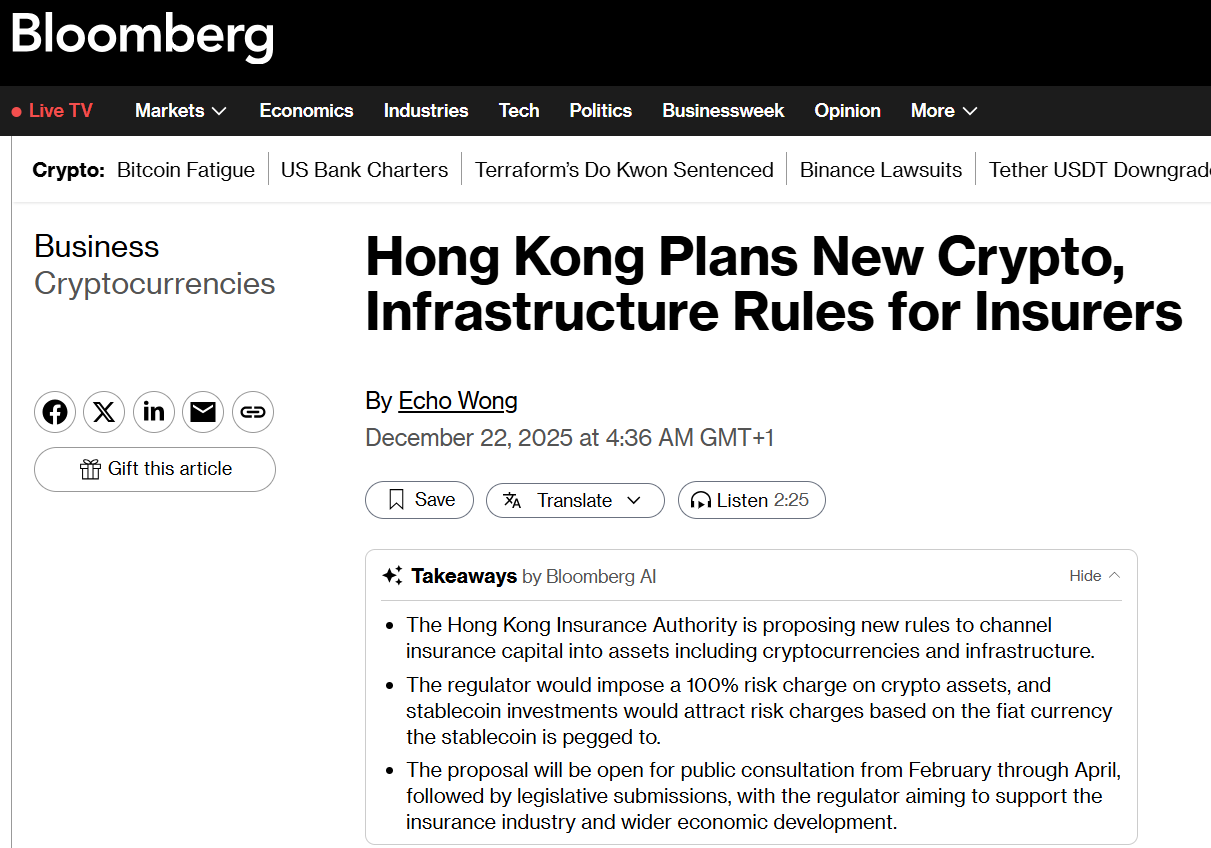
Under the proposal, dated Dec. 4, the Hong Kong Insurance Authority plans to apply a 100% risk charge to insurers’ direct exposure to crypto assets. In practical terms, this would require insurers to hold capital equal to the full value of their crypto holdings, reflecting the regulator’s view of the sector’s volatility and risk profile.
Stablecoins, however, would be treated differently. The draft suggests that investments in stablecoins could be assessed based on the risk level of their underlying fiat currencies, provided those stablecoins are regulated within Hong Kong. This distinction indicates a more nuanced stance toward digital assets that are designed to maintain price stability and operate within a clear regulatory framework.
The proposed rules are still subject to change. The Insurance Authority is expected to release the draft for public consultation between February and April. After gathering feedback, the regulator plans to submit the measures for legislative consideration, marking a multi-step process before any new requirements come into force.
In a statement to Bloomberg, the Insurance Authority said it began reviewing its risk-based capital regime earlier this year. The goal, according to the regulator, is to ensure the insurance sector remains resilient while also supporting broader economic development. The review reflects a balancing act between safeguarding financial stability and allowing insurers to participate in emerging areas of growth.
The move comes as Hong Kong steps up efforts to position itself as a leading center for digital assets. Over the past year, authorities have introduced licensing regimes for virtual asset trading platforms and are advancing rules for stablecoin issuers. These initiatives aim to provide clearer guardrails for the crypto industry while attracting global firms and capital to the city.
Regulatory momentum has also been building in the securities market. In November, the Hong Kong Securities and Futures Commission issued new circulars designed to boost liquidity and expand product offerings for licensed crypto exchanges. Among the changes, local platforms are now allowed to access global liquidity through shared order books, a move intended to improve market depth and competitiveness.
Taken together, the proposed insurance capital rules and broader regulatory updates suggest Hong Kong is pursuing a structured, risk-aware approach to digital assets. By assigning high capital charges to volatile crypto exposures while offering more tailored treatment for regulated stablecoins, regulators appear focused on encouraging innovation without compromising financial stability.
As the consultation period approaches, insurers, investors, and industry participants will be watching closely. The final shape of the rules could influence how insurance capital flows into digital assets and infrastructure projects, and how Hong Kong balances its ambitions as a crypto-friendly jurisdiction with its long-standing emphasis on prudential oversight.



