

Harvard University’s endowment has scaled back its exposure to bitcoin while taking a significant new step into ethereum, according to a recent regulatory filing.
A fourth-quarter disclosure from Harvard Management Company shows the investment arm reduced its holdings in BlackRock’s iShares Bitcoin Trust by more than 20 percent. At the same time, it established its first position in iShares Ethereum Trust, signaling a broader approach to digital assets.
Bitcoin Position Trimmed, But Still the Largest Holding
As of December 31, Harvard held 5.35 million shares of the iShares Bitcoin Trust, valued at approximately $265.8 million. That marks a reduction of 1.48 million shares from the previous quarter, when the endowment reported 6.81 million shares worth $442.8 million.
Despite the cut, bitcoin remained Harvard’s largest publicly disclosed equity holding at year-end, exceeding its reported positions in major technology companies such as Alphabet, Microsoft, and Amazon.
The changes were detailed in a Form 13F filing submitted to the U.S. Securities and Exchange Commission, which requires large institutional investors to report certain holdings each quarter.
First Publicly Disclosed Ethereum Investment
In the same quarter, Harvard initiated a new $86.8 million investment in the iShares Ethereum Trust, acquiring 3.87 million shares. The move represents the endowment’s first publicly disclosed position in an exchange-traded fund tied to ethereum, the world’s second-largest cryptocurrency by market value.
Combined, Harvard’s exposure to bitcoin and ethereum ETFs totaled roughly $352.6 million at the end of December.
Market Volatility Shapes the Quarter
The adjustments came during a turbulent period for digital assets. Bitcoin reached a high near $126,000 in October 2025 before retreating to $88,429 by December 31. Ethereum declined by about 28 percent over the same period.
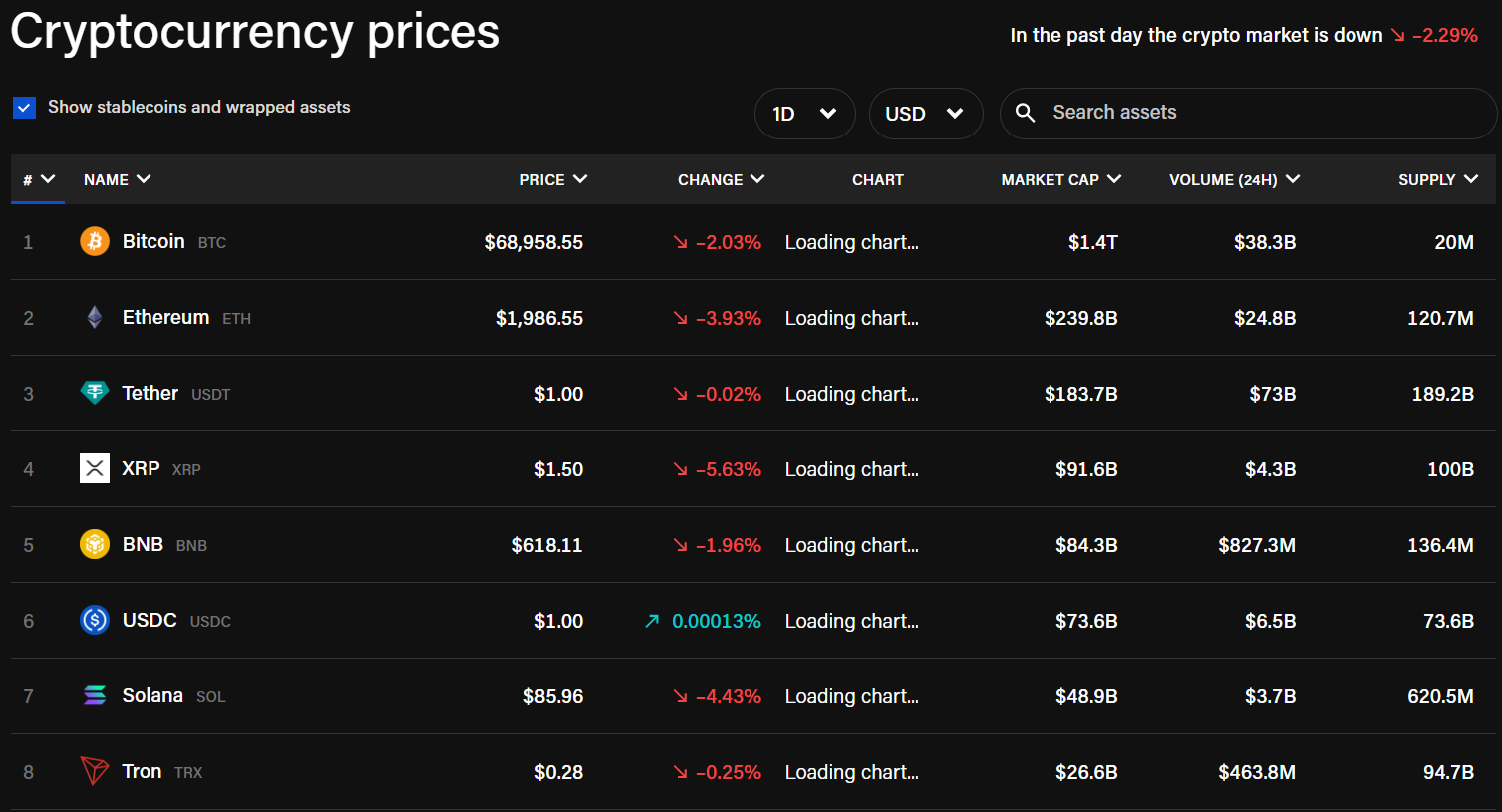
As of this week, bitcoin is trading around $68,600, while ethereum is near $1,900, reflecting continued volatility across the crypto market.
Academic Voices Raise Questions
Harvard’s cryptocurrency strategy has drawn attention within academic circles. Reporting by The Harvard Crimson highlighted concerns from finance scholars about the risks associated with digital assets.


Andrew F. Siegel, emeritus professor of finance at the University of Washington, described the bitcoin investment as risky, pointing to its year-to-date decline of 22.8 percent and citing what he called its lack of intrinsic value.
Avanidhar Subrahmanyam, a finance professor at UCLA, expressed reservations about expanding into ethereum, describing cryptocurrency as an unproven asset class with unclear valuation methods. He noted that his earlier skepticism about Harvard’s bitcoin exposure had been reinforced by subsequent market performance.
A Measured Shift in Strategy
Harvard’s latest moves suggest a recalibration rather than a retreat. The endowment has reduced its bitcoin position but maintained it as a core holding, while also diversifying into ethereum for the first time.
For now, the filing underscores how even the world’s most established institutions are navigating the evolving and often unpredictable landscape of digital assets. As markets continue to shift, investors will be watching closely to see how long-term strategies adapt to crypto’s rapid cycles.



