

Wallets tied to known hacker addresses suffered a $5.5 million loss after hastily selling and repurchasing ether (ETH) during last weekend’s dramatic crypto market sell-off, according to data from onchain analytics firm Lookonchain.
The wallets reportedly offloaded 8,638 ETH, valued at around $32.5 million, when prices plunged to $3,764 amid what analysts now call the largest liquidation event in crypto history. As markets rebounded, the same wallets bought back 7,816 ETH for roughly the same dollar amount—this time at $4,159 per token—locking in a net loss of approximately $5.5 million.
Lookonchain cited three wallet addresses labeled as belonging to “hackers” by blockchain intelligence platform Arkham and shared links to those addresses in a post on X (formerly Twitter). However, the firm did not identify the individuals or groups controlling the funds.
During the crash, hackers panic-sold 8,638 $ETH($32.5M) at $3,764, losing $5.5M!
— Lookonchain (@lookonchain) October 13, 2025
After the market rebounded, they bought back 7,816 $ETH($32.5M) at a higher price of $4,159.https://t.co/j50RDjvSkRhttps://t.co/F4opWbkJXEhttps://t.co/IhX9e4vrKS pic.twitter.com/ZxH12TzgkM
A Turbulent Weekend for Crypto
The sell-off came during one of the most severe deleveraging events the crypto market has seen. According to data, the total cryptocurrency market capitalization dropped more than 9% on October 10 following the White House’s announcement of 100% tariffs on Chinese imports. The sudden policy shock triggered mass liquidations across exchanges.
By some estimates, over $19 billion in leveraged positions were wiped out. Hyperliquid’s founder later criticized centralized exchanges for allegedly underreporting the full scale of the event, calling it “crypto’s biggest rout to date.”
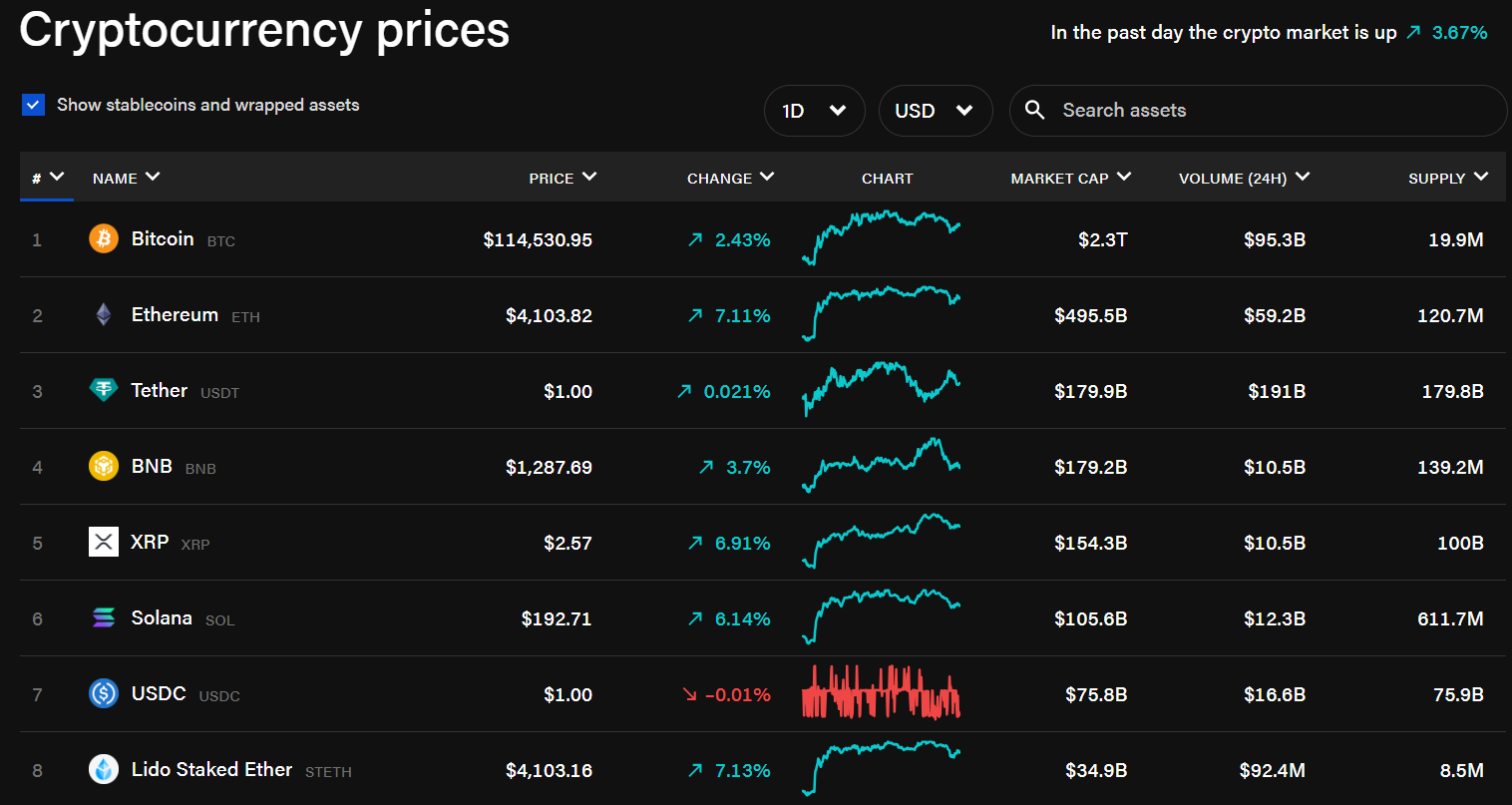
Despite the chaos, digital assets have since stabilized. Bitcoin has rebounded above $114,000, while ether recovered past $4,100, according to market data.
Lessons From a Whipsaw Market
The hacker-linked wallets’ misstep underscores how even large holders can be caught off guard by the speed of crypto market movements. The sequence—panic selling into a crash, then rebuying into a rebound—mirrors the classic pitfalls of emotional trading that can cost millions, even for technically sophisticated actors.
As volatility continues to define digital asset markets, analysts say transparency tools like Arkham and Lookonchain are becoming essential for tracking large wallet behaviors that can influence price action or signal market sentiment shifts.
In summary: While markets have steadied after the historic liquidation, the $5.5 million loss suffered by these hacker-linked wallets serves as a reminder that timing the crypto market—especially during high-stress events—remains a risky endeavor.



