

Grayscale has taken another step in expanding its lineup of digital asset investment products, filing paperwork with U.S. regulators to launch a spot exchange-traded fund tied to Bittensor’s native token, TAO. The move comes shortly after the decentralized AI network completed its first-ever halving event, a milestone that reduced the pace of new token issuance.
On Tuesday, the digital asset manager submitted a registration statement to the U.S. Securities and Exchange Commission for the Grayscale Bittensor Trust (TAO). If approved, the product would become the first U.S.-listed spot ETF offering direct exposure to Bittensor, reflecting growing institutional interest in blockchain projects linked to artificial intelligence.
Grayscale said the filing represents an early step in meeting rising investor demand for diversified digital asset access. A company spokesperson noted that the firm continues to broaden its product range as the market for crypto-linked investment vehicles matures.
The proposed ETF would be listed on NYSE Arca under the ticker symbol GTAO. According to the filing, Coinbase Custody Trust Company LLC and BitGo Trust Company, Inc. are set to serve as custodians for the fund’s assets.
Until recently, Grayscale’s Bittensor Trust was available only to private investors. Earlier this month, the trust became publicly quoted, making it accessible to a wider audience. Converting the trust into an ETF would further lower the barrier for investors who prefer regulated, exchange-traded products over direct token ownership.
Bittensor is a decentralized network designed to support artificial intelligence development through a hub-and-spoke blockchain structure. It allows developers to build application-specific subnets, each focused on distinct AI use cases. Participants earn TAO tokens by contributing computing power and resources that help train and maintain these AI models, creating an incentive-driven ecosystem.
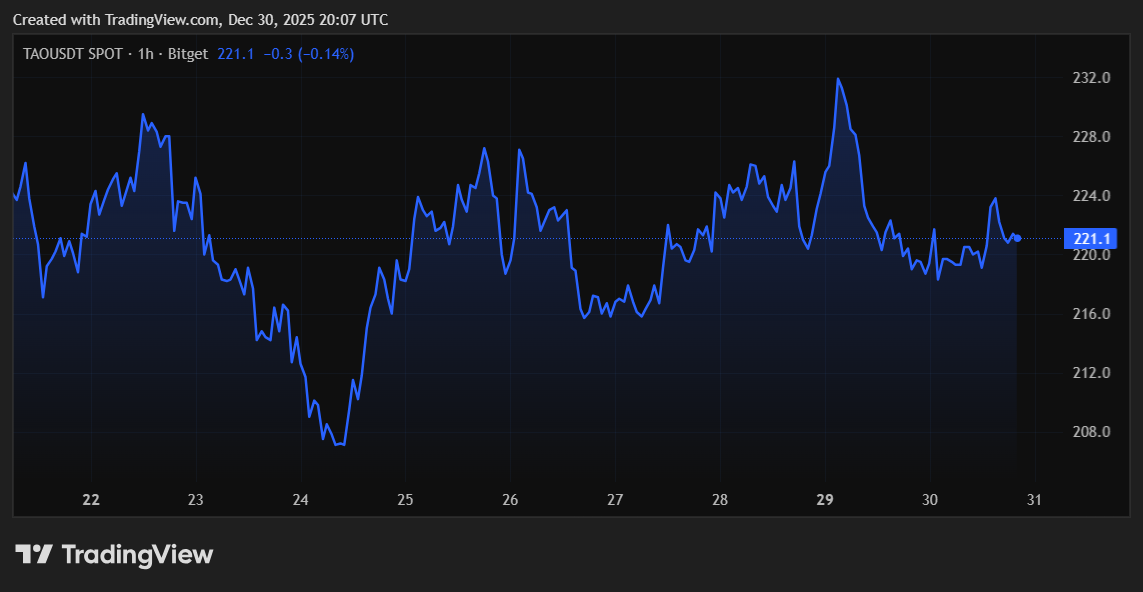
In mid-December, the Bittensor network completed its first halving, cutting the rate at which new TAO tokens are generated. The mechanism mirrors bitcoin’s well-known halving events, which occur roughly every four years and are intended to limit supply growth over time. Following the halving, TAO’s price initially declined but has since stabilized, trading at around $222, according to market data.
Grayscale’s latest filing fits into a broader strategy. The firm already operates some of the largest cryptocurrency ETFs on the market, including funds tracking Bitcoin and Ethereum. Over the past year, it has also converted several altcoin-focused trusts into ETFs. One recent example is the Grayscale LINK fund, which became the first ETF offering exposure to Chainlink.
While the SEC has yet to rule on the proposed Bittensor ETF, the application highlights how asset managers are increasingly looking beyond established cryptocurrencies. AI-focused blockchain projects are gaining attention as investors seek exposure to emerging technologies through familiar financial products.
If approved, the Grayscale Bittensor ETF would mark a notable addition to the growing list of spot crypto ETFs in the U.S., offering investors a new way to access a network that sits at the intersection of artificial intelligence and blockchain innovation.



