

Grayscale Investments listed a new Avalanche staking exchange-traded fund on Nasdaq Wednesday. The product introduces direct exposure to the Avalanche token while generating yield through on-chain staking.
The fund trades under the ticker GAVA. It holds AVAX directly and stakes those tokens through the Avalanche proof-of-stake network to capture staking rewards alongside price exposure.
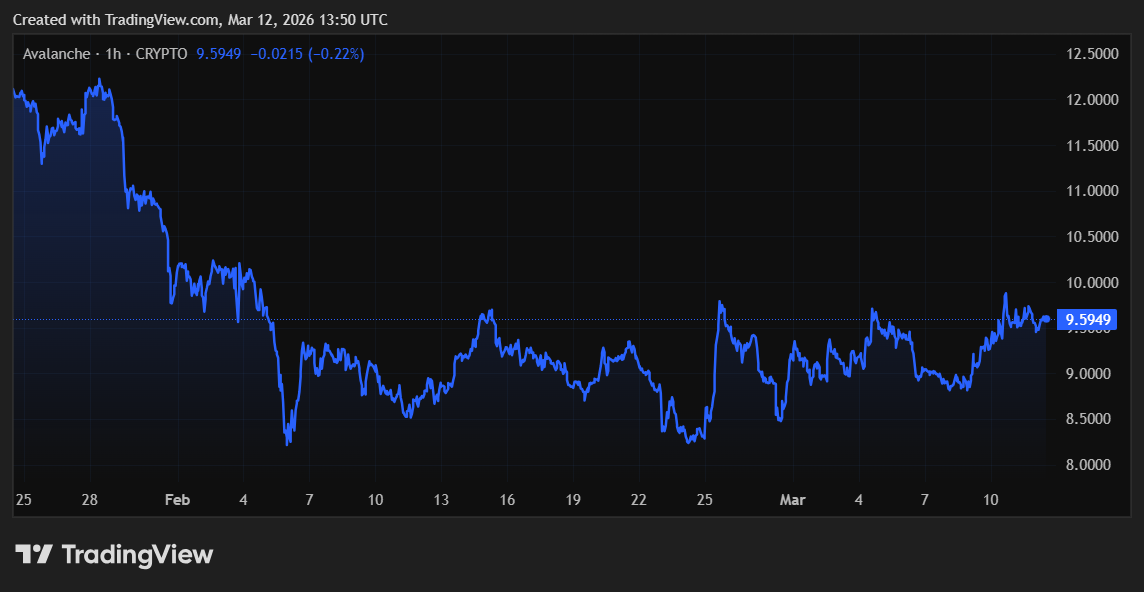
The product originally launched as a private placement in August 2024 before transitioning into a publicly traded structure. According to its prospectus, the vehicle operates as a Delaware statutory trust designed to track AVAX while participating in network validation.
Will Staking ETFs Expand Institutional Access To Layer 1s?
Staking-based exchange-traded funds are emerging as a new structure in digital asset markets. They combine spot exposure with on-chain yield generation, offering investors both price participation and protocol rewards through a regulated wrapper.
Avalanche’s network supports customizable chains known as Avalanche L1s and has processed more than 11.4 billion transactions since launching in 2020. The architecture has attracted developers building high-throughput financial and enterprise applications.
Grayscale already operates one of the largest digital asset product suites in the market. The firm manages roughly $35 billion in assets across more than 40 crypto investment vehicles.
“GAVA complements our existing suite of digital asset products and provides investors with exposure to one of the market’s leading smart contract platforms,” said Inkoo Kang.
Other staking-enabled funds within the lineup include products linked to Solana and Sui. Grayscale’s largest funds remains its Bitcoin products, including the Grayscale Bitcoin Trust ETF with roughly $11 billion in assets.
The asset manager is also expanding its ETF pipeline. Filings with the U.S. Securities and Exchange Commission seek to convert trusts tied to AAVE and NEAR tokens into ETFs while a separate registration statement proposes a BNB-based fund.
The next signal will likely come from regulatory responses to staking-enabled funds, a structure that could shape how proof-of-stake networks access institutional capital markets.



