
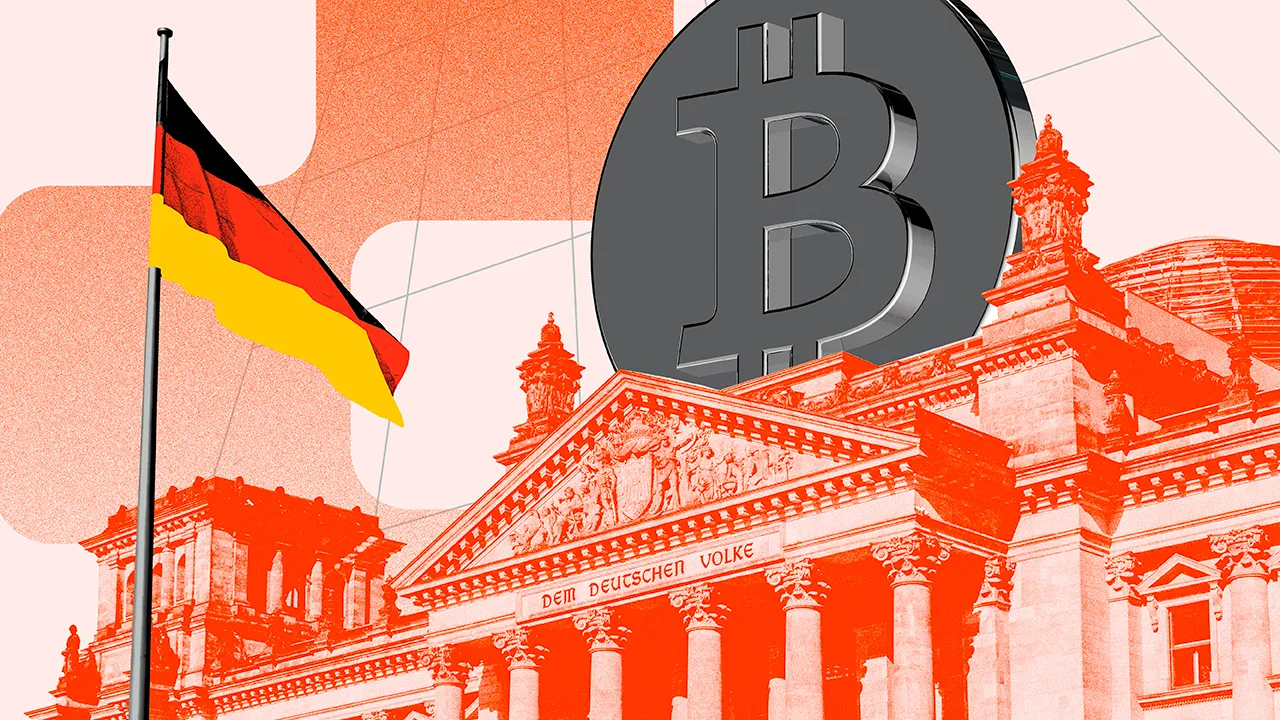
One year ago, the German government made a bold decision: it sold its entire 50,000-Bitcoin stash for $3.13 billion. At the time, it may have seemed like a practical financial move. Fast forward to today, and that same holding would be worth over $6.6 billion—a difference of more than $3.5 billion.
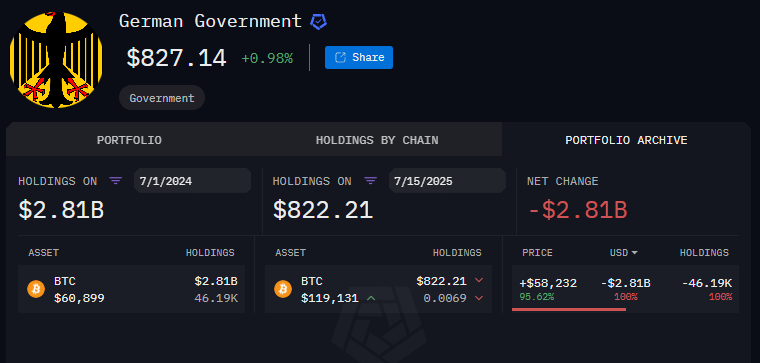
The fallout from that decision is now raising eyebrows, and for good reason.
From Seizure to Sell-Off
Germany’s Bitcoin trove originated from a criminal seizure tied to a piracy investigation. Rather than hold the assets as potential reserves, German authorities opted to liquidate the full stack in July 2024. Since then, Bitcoin’s price has doubled, transforming what could have been a historic windfall into one of the most regrettable missed opportunities in recent economic memory.
Today, the country’s government-controlled wallet holds a mere 0.0069 BTC—worth just a few hundred dollars—largely made up of symbolic donations from private citizens.
It’s not that Germany is inherently anti-crypto. Quite the opposite. The country leads the EU in granting MiCA (Markets in Crypto-Assets) licenses, a sign of its growing commitment to developing a regulated digital asset sector. And yet, despite being an emerging hub for blockchain innovation, the government offloaded its crypto assets at exactly the wrong time.
Governments Liquidate, But At What Cost?
Germany wasn’t the only country to offload crypto reserves in 2024. Ukraine, the U.S., and others joined the trend. Under President Biden, the U.S. moved to reduce its crypto holdings, a decision that indirectly sparked calls from President Trump for a national Bitcoin reserve strategy.
In contrast, countries like El Salvador and Bhutan went in the opposite direction—buying more Bitcoin to strengthen their national balance sheets. While risky at the time, those bets now appear remarkably savvy as Bitcoin’s value surges.
Meanwhile, countries like China and the UK chose to hold. They neither added nor sold their Bitcoin assets last year, but the value of what they kept has climbed substantially.
A Cautionary Tale for Policymakers
Germany’s hasty liquidation is being labeled by some analysts as one of the most expensive financial missteps of the past decade. While hindsight is 20/20, it’s hard to ignore the growing consensus that holding—rather than rushing to sell—might be the better long-term strategy for managing seized digital assets.
The message from the global crypto community was clear then, and it rings louder now: HODL. Even in a volatile market, patience may pay off far more than short-term certainty.



