
The U.S. has a new law on the books that could transform the stablecoin market. The GENIUS Act — short for Guiding and Establishing National Innovation for U.S. Stablecoins of 2025 — lays out the first comprehensive regulatory framework for dollar-pegged digital assets. And with clarity comes money. Investors are betting this could be the start of a major funding wave for stablecoin startups.
Stablecoins as the New Financial Rails
Stablecoins have already proven themselves as a faster, cheaper alternative to traditional payment networks. By cutting out costly intermediaries, they offer near-instant transactions at a fraction of the price of legacy banking rails.
That efficiency explains why some venture capitalists see them as the next big growth engine.
“The most highly observable, fast-growing trend to keep an eye on is stablecoins,” said David Mort, General Partner at Propel VC and an early backer of Coinbase. “Over the next five years, we’ll likely see exponential growth in stablecoin-linked treasuries and deposits on-chain.”
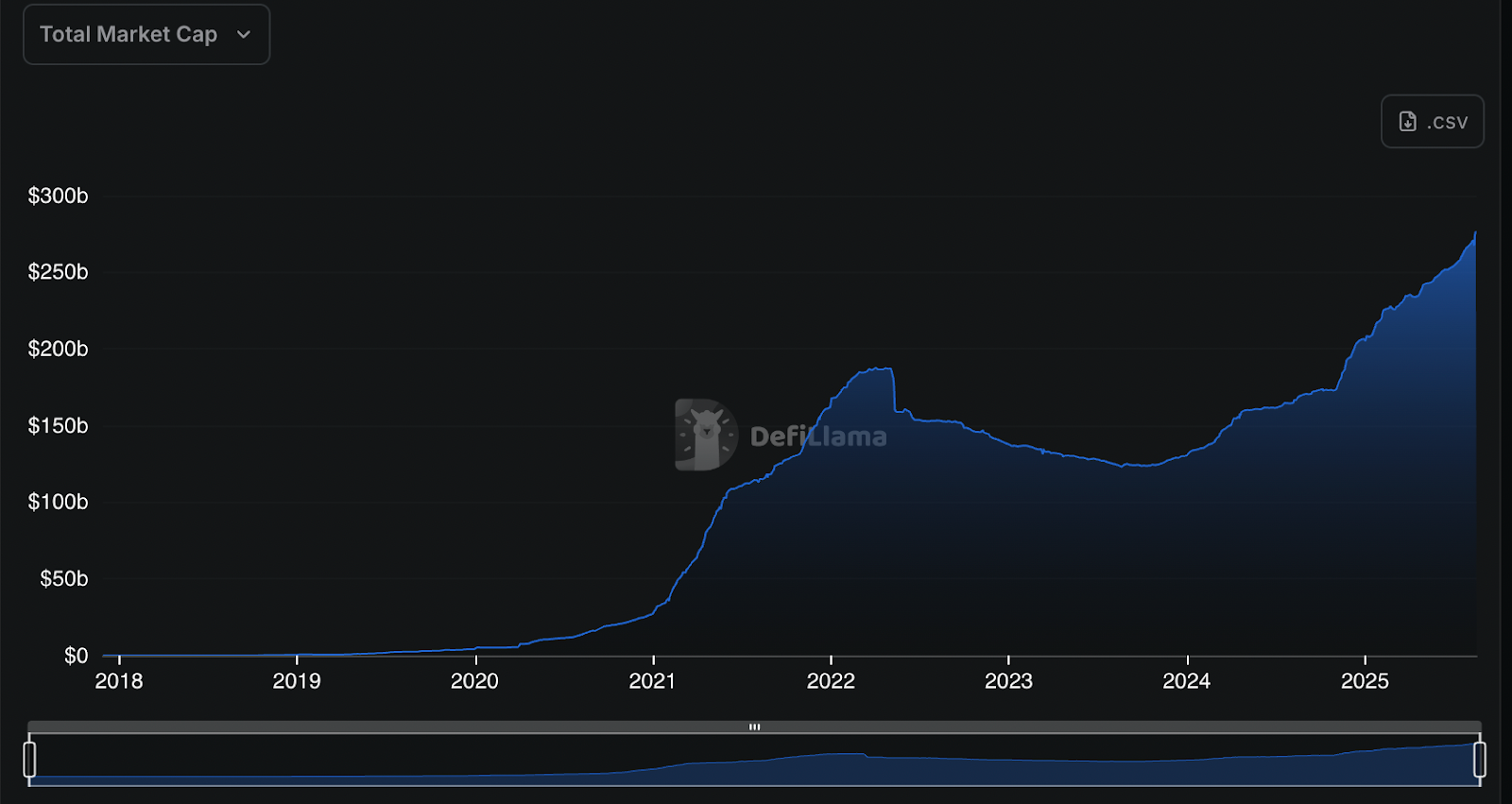
According to DefiLlama, the stablecoin market cap currently sits at around $272 billion, with Tether (USDT) commanding $165 billion, Circle’s USDC holding $67 billion, and newer players like Ethena at $11 billion.
What the GENIUS Act Changes
Under the GENIUS Act, payment stablecoins issued in the U.S. must be backed by high-quality, low-risk assets such as cash, Treasury bills, or deposits at Federal Reserve banks. That makes the sector particularly attractive to banks, which are already accustomed to managing these reserves.
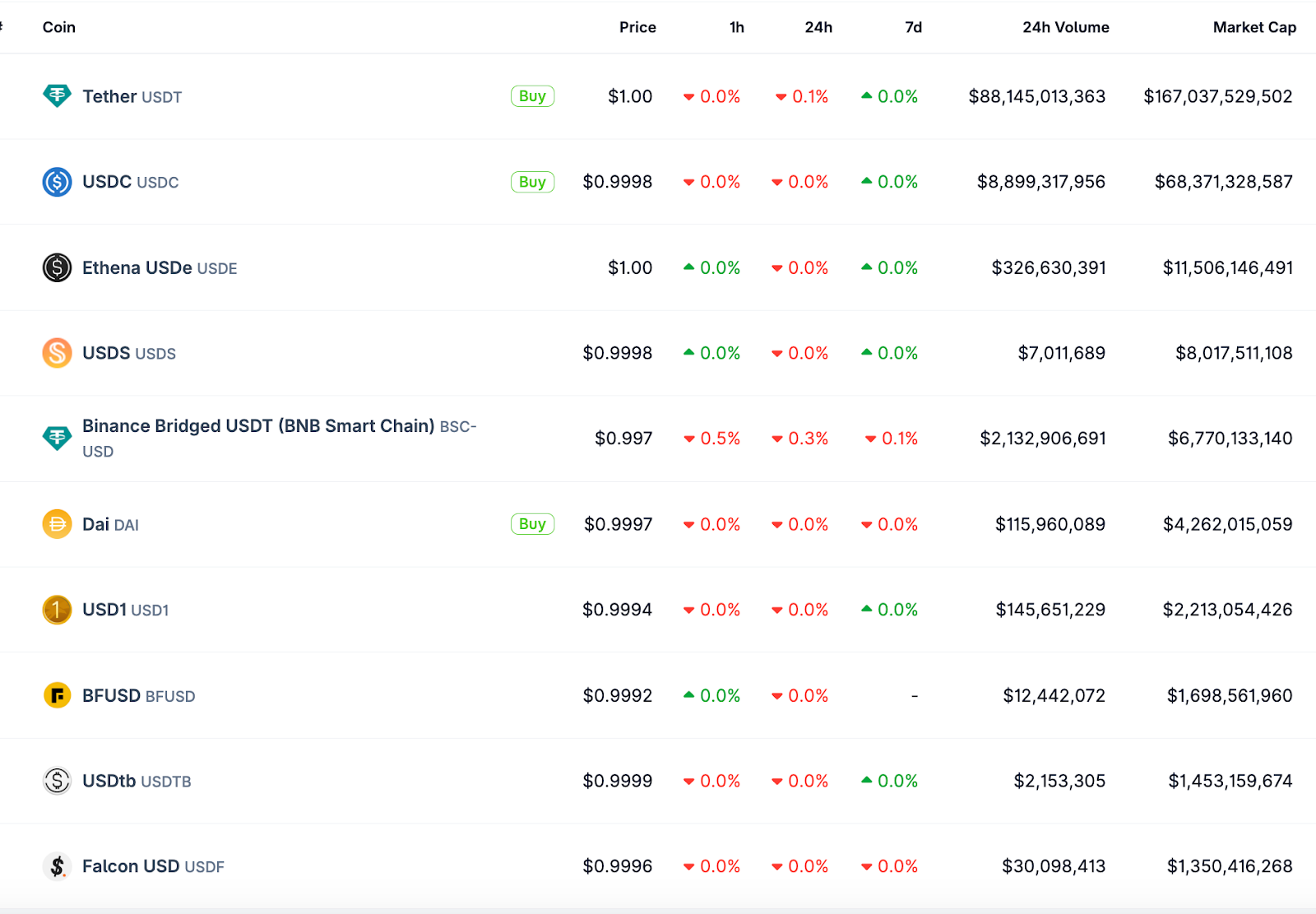
Some models, however, won’t fit neatly into this framework. For instance, “basis trade” stablecoins like Ethena are excluded and may face restrictions. That’s pushing issuers — including Tether — to rethink product strategies for the U.S. market.
“The GENIUS Act provides the regulatory stability for the underlying payment rails, which frees up innovators to focus on building that superior user experience,” said Artem Gordadze, angel investor and Techstars advisor.
The Race to Build Consumer Apps
Banks may be well positioned to issue compliant stablecoins, but startups still hold the advantage in speed and creativity. Investors argue the real opportunity lies in consumer-facing apps built on top of these new “fresh rails.”
“As for the next generation of consumer Web3 apps, we’re more likely to catch the one that looks more traditional but operates on fresh rails,” Mort added.
That could mean apps for micropayments, cross-border remittances, and on-chain financial services like lending and staking. Some see artificial intelligence as the missing piece that could make Web3 apps as seamless as today’s fintech platforms.
“Consumer-facing Web3 apps have historically struggled with complexity,” said Gordadze. “AI is the perfect tool to solve this, creating innovative experiences and simplifying complex DeFi primitives.”
Venture Capital Already Lining Up
Venture funding in crypto is already climbing. In Q2 2025, more than $10 billion in crypto VC was deployed, according to industry data. With GENIUS now law, many expect that number to accelerate in the second half of the year.
“Founders now have a tangible framework to build from, so we’ll start to see powerful ideas that were previously sidelined come to light,” said David Alexander II, partner at Anagram.
The CLARITY Act Looms Large
There’s still another piece of the puzzle. The pending CLARITY Act — which would classify most non-stablecoin digital assets as commodities regulated by the CFTC — could further reshape the landscape.
“This sets the stage for the CLARITY Act, which could have a powerful impact on digital assets and kickstart a new wave of programmable finance,” Alexander II added.
If both acts align, the U.S. could soon be the most stable — and most attractive — market for crypto founders and investors alike.
The Bottom Line
The GENIUS Act doesn’t just regulate stablecoins — it gives entrepreneurs and investors a roadmap. For startups, that means permission to innovate with confidence. For VCs, it signals a green light to deploy capital at scale.
If the CLARITY Act follows, 2025 could be remembered as the year the U.S. finally built the rails for mainstream crypto adoption — and opened the floodgates for a new wave of Web3 startups.



