
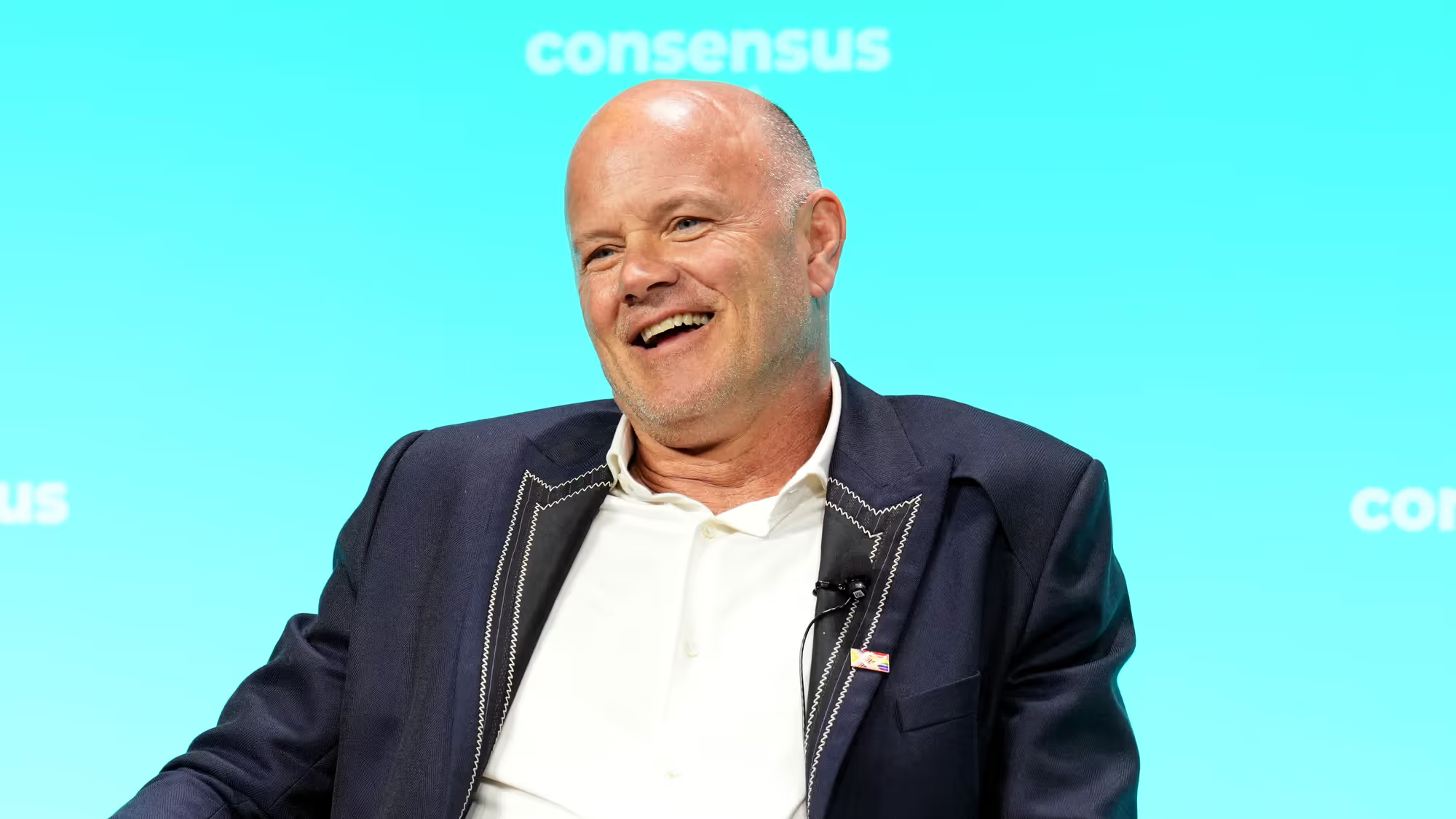
A long-anticipated U.S. bill aimed at regulating the cryptocurrency industry could still move forward in the coming weeks, even after a turbulent stretch of negotiations in Washington. That’s the view of Michael Novogratz, CEO of crypto-focused financial firm Galaxy, who says lawmakers shouldn’t let disagreements derail progress.
Speaking to CNBC, Novogratz argued that while the proposed legislation may not be perfect, passing a framework now would give the industry much-needed clarity and room to grow.


“If it’s not perfect, who cares? We’ll fix it in time,” he said, emphasizing the importance of momentum over delay.
Talks hit turbulence
The bill, which spans more than 270 pages, is designed to establish rules for crypto market structure and oversight. However, negotiations unraveled this week just hours before a scheduled Senate Banking Committee hearing that was meant to amend and vote on the legislation.
At the center of the dispute is how stablecoins are treated, particularly when it comes to rewards and yield. Banking groups have pushed back against a separate stablecoin law known as GENIUS, which passed earlier this summer. While that law prevents stablecoin issuers from paying direct interest to holders, it allows third-party platforms, such as crypto exchanges, to offer rewards.
Critics from the crypto sector say banks are using the issue to limit competition. They also note that the question of stablecoin yield was debated extensively during the summer before GENIUS became law.
Novogratz believes a middle ground is likely. He acknowledged that a compromise may not fully satisfy the crypto industry, but said it would be workable. For him, the larger goal is getting a bill across the finish line so the sector can move beyond regulatory uncertainty.
Coinbase withdraws support
The debate took a sharper turn late Wednesday when Coinbase CEO Brian Armstrong publicly withdrew his company’s support for the bill. In a post on X, Armstrong outlined several concerns, including how the draft handles tokenized equities, decentralized finance, the role of the Securities and Exchange Commission, and provisions he said would effectively eliminate stablecoin rewards.
Within hours of Armstrong’s comments, the Senate Banking Committee canceled its planned markup hearing and postponed it to an unspecified later date.
Coinbase’s decision carried weight. The exchange has grown into one of the most influential voices in the U.S. crypto industry, with significant lobbying power and close ties to policymakers. According to a source familiar with the matter, the move to pull support was not taken lightly, and there was no single provision that triggered the decision.
In an interview with CNBC, Armstrong said he still wants legislation but cannot back the current draft.
“Frankly, I’d rather have no bill than a bad bill,” he said, arguing that the proposal could force Coinbase to shut down several existing products.
He added that if the bill primarily benefits banks, the company would prefer to operate under the existing GENIUS law.
What happens next
Despite the setback, discussions are continuing behind the scenes. Staff from the Senate Banking Committee and the Senate Agriculture Committee are scheduled to hold a call with crypto industry representatives to review the market structure legislation and explore possible paths forward.
For Novogratz, the recent turmoil underscores how difficult it is to regulate a fast-moving industry with competing interests. Still, he remains optimistic that lawmakers can strike a deal that, while imperfect, provides a foundation for future updates.
A critical moment for crypto policy
The coming weeks will be crucial for U.S. crypto regulation. Whether lawmakers choose to press ahead with compromises or return to the drawing board, the outcome will shape how digital assets are developed, offered, and overseen in the world’s largest economy.
For now, the divide between industry leaders like Novogratz and Armstrong highlights a central question facing policymakers: is it better to establish rules quickly and refine them later, or to wait until a broader consensus is reached?



