
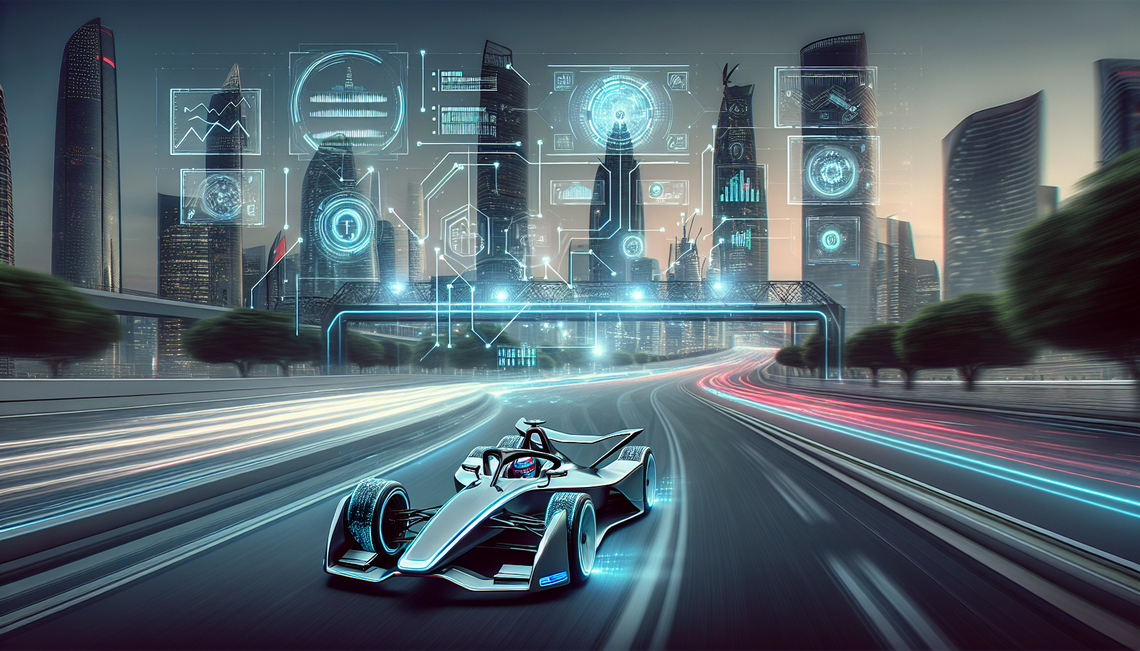
Formula E is deepening its use of artificial intelligence as part of a broader effort to meet its net zero carbon goals while improving how the championship operates worldwide. Under an expanded multi-year agreement, the all-electric racing series is integrating Google Cloud’s Gemini AI models across its logistics, commercial operations, and broadcast systems.
The partnership goes well beyond traditional sports sponsorship. Instead of focusing on branding alone, Formula E and Google Cloud are using cloud infrastructure and AI to drive measurable efficiencies, from how races are planned and delivered to how fans engage with the sport.
Using digital twins to reduce carbon impact
A key focus of the collaboration is logistics, one of the most carbon-intensive aspects of a global motorsport championship. Formula E now uses AI-powered modelling and digital twins to simulate race and event setups before teams arrive on site. These virtual replicas allow organisers to plan infrastructure, staffing, and equipment needs in advance, reducing the need for physical site visits and unnecessary transport.
 Ryan Daws
This approach directly targets Scope 3 emissions, which include indirect emissions from suppliers, freight, and travel. By optimising logistics digitally, Formula E can cut down on moving heavy equipment and streamline supply chains without compromising race performance.
As the only sport certified as net zero carbon since its launch, Formula E faces ongoing pressure to maintain that standard as the championship grows. The use of operational digital twins offers a practical way to lower emissions while keeping events running smoothly.
AI in the workplace and on the track
Beyond logistics, Formula E is rolling out Google Workspace with Gemini AI across its organisation to improve productivity. The tools are designed to reduce administrative delays and help teams work more efficiently across a globally distributed workforce. This reflects a wider shift among international organisations toward using generative AI to speed up decision-making and day-to-day operations.
The partnership builds on earlier technical projects, including the “Mountain Recharge” initiative. In that case, Formula E engineers used Google’s AI Studio and Gemini models to analyse terrain, braking zones, and energy recovery during a mountain descent. The system calculated how regenerative braking could harvest enough energy for the GENBETA car to complete a full lap of the Monaco circuit. The project showed how complex physical variables can be processed by AI to inform real-world performance.
Enhancing the fan experience with real-time data
Google Cloud AI is also playing a growing role in Formula E’s broadcasts. A new “Strategy Agent” processes live race data to deliver insights and predictions about driver tactics and performance in real time. These explanations help viewers understand race strategy as it unfolds, turning dense technical data into accessible storytelling.
Millions of fans have already engaged with these features, which mirror challenges faced by many businesses: transforming vast streams of real-time data into clear, useful information for audiences.
Formula E CEO Jeff Dodds described the expanded partnership as a significant step for the sport, saying the integration of Google Cloud’s AI tools would unlock new levels of performance optimisation and reshape how fans experience racing. Tara Brady, President of Google Cloud EMEA, highlighted the partnership as an example of how AI and data analytics can deliver advantages in high-pressure, time-critical environments.
A model for performance and sustainability
The move from an initial partnership in early 2025 to a broader, business-critical collaboration suggests the early projects delivered strong returns. As organisations across industries look for ways to balance operational performance with net zero targets, Formula E’s use of AI-driven simulation and data analysis offers a clear example of how digital tools can reduce physical impact.
By embedding AI into logistics, operations, and fan engagement, Formula E is showing how technology can support both competitive racing and long-term sustainability goals.



