
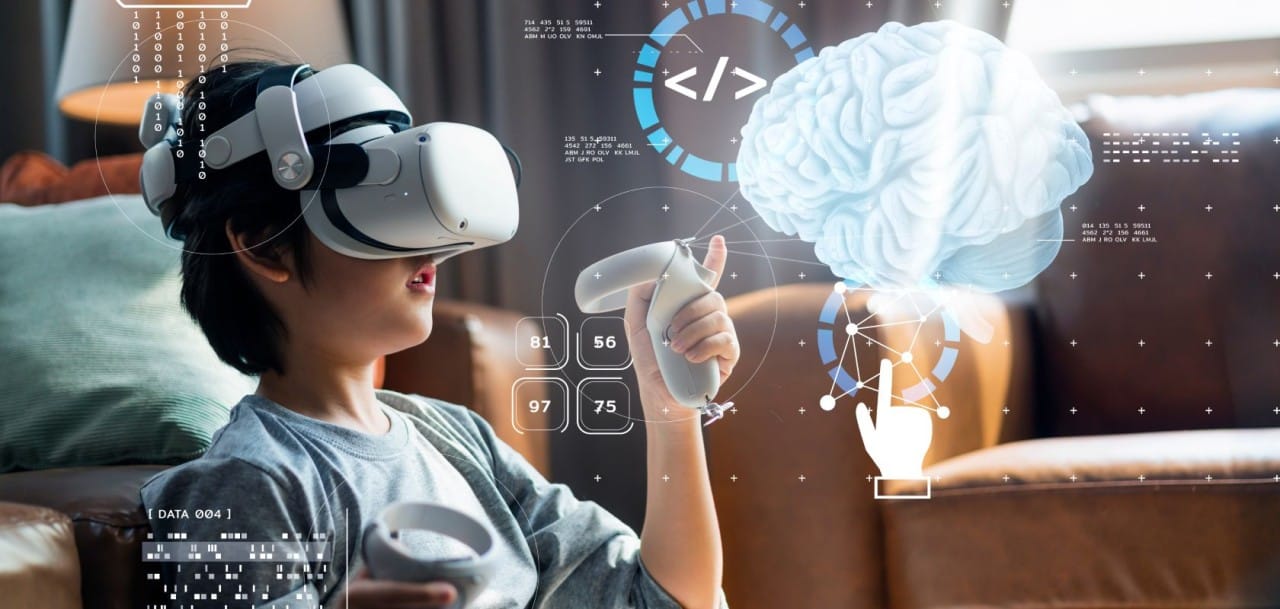
Have you ever wondered how technology is reshaping our very perception of the world? Extended reality, often abbreviated as XR, is the massive umbrella term that covers all technology assisted alternate reality experiences. This fascinating field primarily includes virtual reality and augmented reality. While it might sound like a futuristic concept straight out of a science fiction novel, the foundation of this technology is surprisingly old.
In 1838, an English scientist named Charles Wheatstone described a device capable of showing a three dimensional image to a user. This groundbreaking idea led to the creation of the stereoscope. By utilizing mirrors and glass lenses, it created a projection concept that remains the backbone of 3D technology today.
Of course, the invention of powerful computers rapidly accelerated our ability to simulate alternate and completely fictional realities. From the 1950s through the 1970s, pioneering inventors experimented with early forms of this immersive technology for film, video surveillance, and military operations. These early experiments gave birth to the very first head mounted displays, like the famous Sword of Damocles system, paving the way for the rich and lifelike experiences we enjoy today.
The Immersive Technology Powering XR
At the very core of extended reality is immersive technology. Because these experiences rely entirely on sensory stimuli to feel authentic, the hardware must be incredibly convincing. The audiovisual systems we recognize today, like popular VR goggles or even AR glasses such as Google Glass, are simply modern evolutions of those early headsets. However, visual and audio inputs are only part of the equation.
As hardware has advanced, developers have successfully incorporated other human senses into the mix, including touch, smell, and incredibly, even taste. You might have experienced a basic version of this at a modern theme park attraction where your seat physically moves and specific scents are pumped into the room. For personal use, tactile feedback is often simulated using wearable haptics. These specialized gloves or full body suits provide sensory feedback through carefully timed vibrations and pressure, making digital objects feel genuinely physical.
Diving Deep into Virtual Reality
When you strap on a headset and completely disconnect from your physical surroundings, you are experiencing virtual reality. The entire goal of VR is to block out the real world entirely so your senses can be fully simulated in a digital environment. Users are completely immersed in their experiences, often relying on digital avatars to represent themselves.
Virtual reality is currently one of the primary ways people explore the metaverse, engaging in everything from multiplayer gaming to vibrant social interactions. Because it requires a full separation from physical reality, VR gives developers the ultimate freedom to build vast, wildly creative, and even entirely unrealistic worlds specifically for our entertainment.
Augmented Reality and the Blended World
Augmented reality takes a completely different approach. Instead of isolating you, AR intentionally embraces and blurs the lines between the digital and physical worlds. In an AR experience, computer generated graphics are seamlessly combined with what you can already see and hear in your actual environment.
You can experience this by projecting digital objects into your real space. For instance, you can use your phone camera to see exactly how a new couch would look in your living room before you actually buy it. Beyond interior design, AR is becoming an instrumental tool in education. Students can interact with complex chemical structures, detailed anatomical models, or intricate engine parts in a unique, kinetic way that simply reading a book cannot match. Often, you will hear the term mixed reality used to describe these blended experiences where the physical and digital are intertwined.
Transforming Industries Worldwide
By either transporting us to new dimensions or enhancing our current one, XR presents incredible opportunities across multiple sectors. In the gaming industry, titles like Pokemon Go famously used AR to turn real world maps into global playgrounds. In the corporate sphere, the potential of these virtual spaces even inspired Facebook to acquire the hardware developer Oculus and rebrand entirely to Meta, heavily signaling a massive industry shift.
The impact stretches far beyond entertainment. Telemedicine uses extended reality to train surgeons on complex procedures before they ever enter an operating room. Architects and fashion designers use digital modeling to gain granular control over their drafts. Even the tourism industry is evolving. You can now visit a perfectly rendered digital twin of Helsinki, Finland, and explore its historic streets without ever booking a flight. Extended reality is no longer just a neat party trick, it is fundamentally changing how we learn, work, and play.



