

Ethereum’s staking dynamics have taken a notable turn, with fresh capital flowing back into the network and selling pressure easing sharply. After months of elevated validator exits, on-chain data now shows a clear shift toward long-term participation, driven largely by renewed institutional interest.
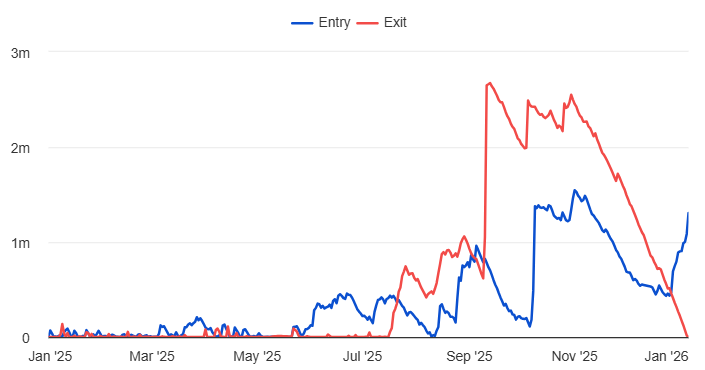
According to data, Ethereum’s validator exit queue dropped to zero ETH early Tuesday. This marks a dramatic change from mid-September, when more than 2.67 million ETH sat in the queue waiting to exit staking. With the backlog cleared, validator withdrawal wait times have fallen to just minutes, removing a key source of potential market pressure.
At the same time, demand to stake has climbed. The network’s entry queue has grown to roughly 1.3 million ETH, its highest level since mid-November. The imbalance between exits and entries suggests that large holders are once again comfortable locking up ether to earn yield, rather than withdrawing it from the network.
Why the empty exit queue matters
A zero exit queue is widely viewed as a sign of stability in Ethereum’s staking market. In previous cycles, long exit queues tended to appear during periods of uncertainty, when validators reassessed yields or prepared to sell. An empty queue, by contrast, often signals that near-term selling pressure has largely been absorbed and that participants are aligned with longer-term expectations.
This shift comes as Ethereum’s staking yield environment steadies and institutional players re-enter with size.
Institutions drive renewed staking activity
Large entities have played a visible role in the recent turnaround. BitMine, the world’s largest Ethereum treasury firm, began staking its holdings in late December. On-chain data from Arkham Intelligence shows the company added 82,560 ETH to the staking queue on Jan. 3. Its total staked balance now stands at 659,219 ETH, valued at about $2.1 billion.
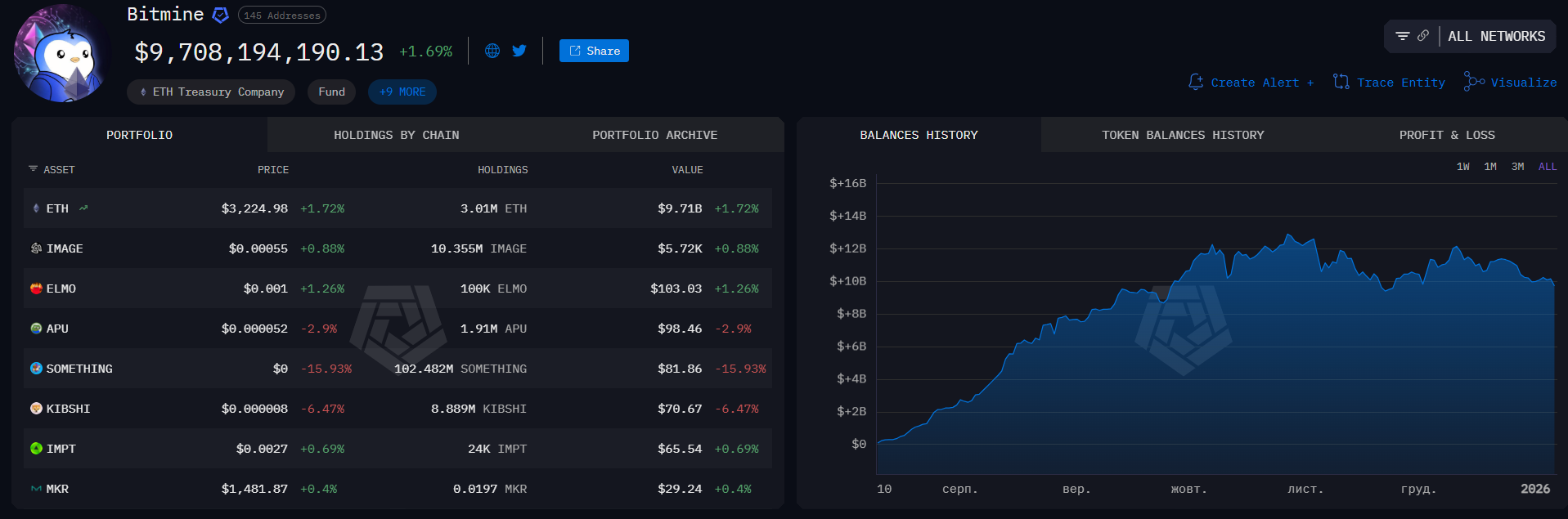
BitMine holds more than 4.1 million ETH overall, roughly 3.4% of Ethereum’s total supply, making it one of the most influential participants in the staking ecosystem. The company is chaired by Tom Lee and has positioned staking as a core part of its treasury strategy.
Momentum from traditional financial products has also added confidence. On Jan. 5, Grayscale’s Ethereum Staking ETF became the first U.S. spot Ethereum ETF to distribute staking rewards. The fund paid $0.083178 per share to eligible investors, representing rewards earned between Oct. 6 and Dec. 31. Shares began trading ex-dividend at the open on Jan. 6, marking a milestone for regulated access to Ethereum yield.
A growing and concentrated validator set
Ethereum currently has 975,088 active validators securing approximately 35.67 million ETH, based on data. While participation continues to expand, staking remains concentrated among a handful of major operators.
Lido DAO leads with just over 22% of all staked ETH, followed by Binance at 9.15%. Ether.fi, Coinbase, and Figment round out the top five, each holding between 4% and 6% of the total stake. About 2% of staked ETH is attributed to unidentified or untagged entities, highlighting the network’s mix of institutional and independent participants.
Market response remains measured
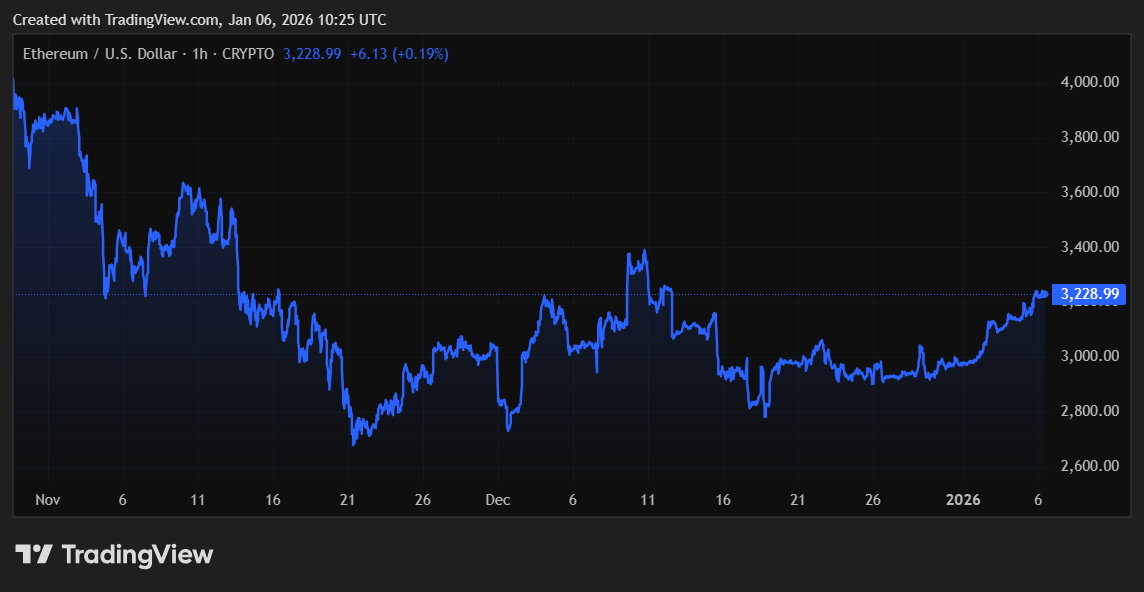
Ether’s price has responded modestly to the improving staking outlook. The asset rose nearly 2% over the past 24 hours and is currently trading around $3,220. Despite the recent gains, ETH remains about 34% below its all-time high of $4,953, reached in August last year.



