

Short seller Culper Research disclosed a bearish position against Ethereum (ETH). The firm argues declining network fee revenue is weakening the economic incentives that secure the blockchain.
The report, published March 5, said Culper is shorting ETH directly as well as equity tied to the asset. That includes BitMine Immersion Technologies, a public company that accumulated millions of dollars worth of ether as part of a corporate treasury strategy.
Culper’s thesis centers on Ethereum’s recent scaling upgrades, which expanded block capacity and reduced transaction costs across the network. While those changes improved user affordability, the report claims they also compressed fee income historically distributed to validators.
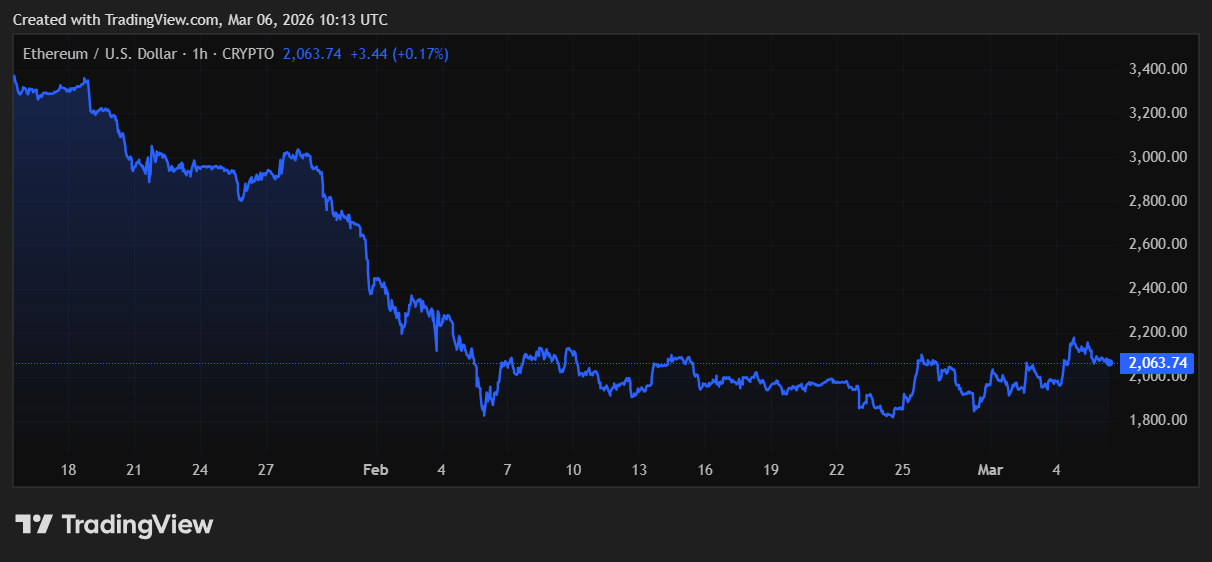
Are Ethereum’s Lower Fees Weakening Validator Incentives?
Ethereum’s fee generation has dropped sharply in recent months, according to Culper’s analysis. The firm argues that shrinking fee revenue directly pressures staking yields paid to validators who secure the network.
Ethereum’s proof-of-stake model depends on those incentives to maintain participation and security. Culper described a scenario in which declining rewards could discourage validators and weaken long-term network stability. Could falling transaction fees ultimately challenge the economic model supporting Ethereum’s security?
The report also highlights corporate exposure through BitMine Immersion Technologies, which holds a large ether treasury. Culper argues the company’s valuation is closely tied to ETH performance and may face downside risk if the token’s economic fundamentals deteriorate.
Culper further pointed to recent on-chain transactions from wallets associated with Ethereum co-founder Vitalik Buterin. The firm claims those wallets have sold tens of thousands of ETH this year.
“Vitalik is selling, while bulls like Tom Lee are clueless as to ETH’s new reality,” the report stated.
The short thesis also challenges bullish interpretations of rising Ethereum activity metrics. Culper suggested that some transaction growth may reflect spam-like activity such as address-poisoning or dusting transactions rather than genuine user demand.
Ethereum’s scaling roadmap has increasingly shifted transaction volume toward layer-2 networks, where fees are lower but base-layer revenue can decline. Whether that transition weakens or ultimately strengthens Ethereum’s economic model remains a central debate among investors and protocol researchers.



