

Ethereum’s newest upgrade, Fusaka, went live on the mainnet on Wednesday at the start of epoch 411392, around 21:50 UTC. The rollout not only delivers a range of user experience and scaling improvements, it also marks the beginning of a faster development rhythm for the network.
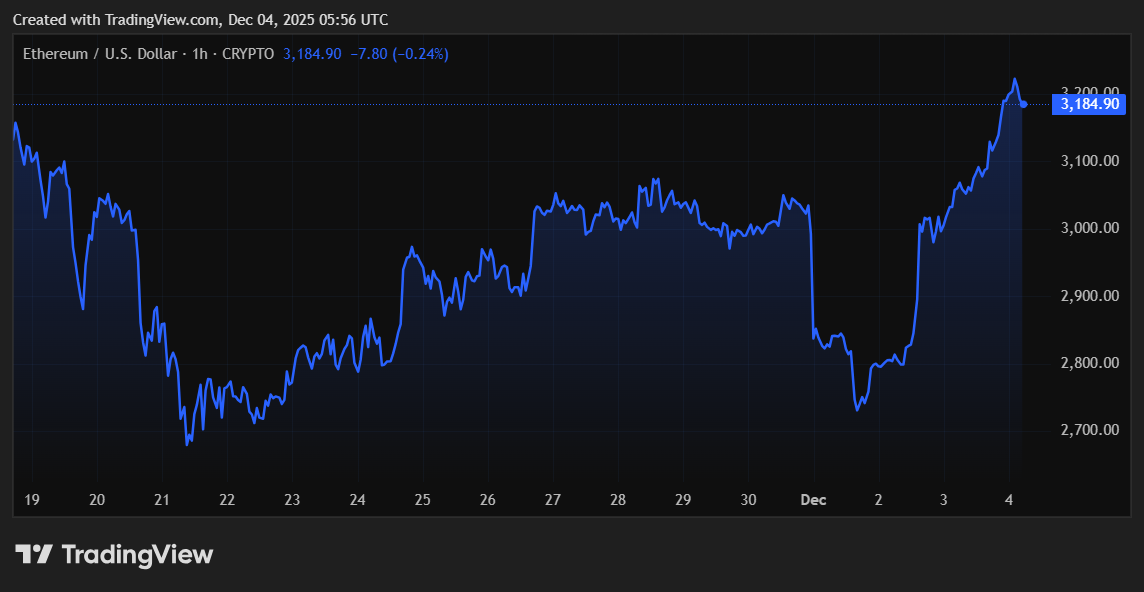
Fusaka is Ethereum’s seventeenth major upgrade and arrives about seven months after May’s Pectra update. Starting with this release, the Ethereum Foundation plans to adopt a twice-a-year hard fork schedule. For a community that averaged one major upgrade annually since the Merge in 2022, this is a notable shift toward quicker innovation.
The update is also one of Ethereum’s most extensive. It introduces nine core Ethereum Improvement Proposals (EIPs) and four supporting EIPs, making it one of the largest batches of changes so far.


PeerDAS takes center stage
The most significant addition in Fusaka is PeerDAS, short for Peer Data Availability Sampling. Introduced through EIP-7594, PeerDAS reshapes how Ethereum handles data availability. Instead of requiring validators to download entire blobs, the temporary data units used by Layer 2 networks, PeerDAS allows them to sample small segments.
This approach is designed to boost blob throughput without burdening individual validators with heavier bandwidth requirements. As blob capacity increases, Layer 2 networks should benefit from lower transaction fees while retaining Ethereum’s strong data availability guarantees.
Additional “Blob Parameter Only” updates scheduled by Jan. 7 will increase the target number of blobs per block to 14 and the maximum to 21. With these changes, blob capacity could expand by up to eight times.
Fusaka also introduces a minimum blob base fee to address the post-Dencun trend of blob fees occasionally dropping near zero. A proportional fee model for spikes in Layer 2 activity aims to improve cost predictability and support more consistent ETH fee burns.
Calvin Leyon, Head of Onchain at Kraken, called Fusaka “a major unlock for rollups,” noting that more blob space, lower L2 costs, and better data availability should allow developers to move faster without compromising user experience.
Backend upgrades for security and efficiency
Beyond data availability, Fusaka includes several protocol-level improvements. The update raises the gas limit cap to reduce the risk of attacks where a single transaction consumes too much block gas. It also adds native support for the secp256r1 elliptic curve, which opens the door to device-native signing and passkey authentication.
The Count Leading Zeros Opcode (EIP-7939) is another forward-looking addition. It helps optimize zero-knowledge proofs and may strengthen Ethereum’s resilience against future quantum computing threats.
Consensys described Fusaka as a collection of “backend boosts” rather than a user-facing overhaul, but emphasized that these changes enable some of the largest scaling gains since the Merge.
Work is already underway for Ethereum’s next major upgrade, Glamsterdam, expected in 2026.



