

The Ethereum Community Foundation (ECF) has introduced a new token, BETH, designed to make Ethereum’s burn mechanism more visible and usable across the network. The move aims to re-center attention on ETH as a core asset and to strengthen Ethereum’s monetary design at a time when debates about scarcity remain unresolved.
How BETH Works
Launched on August 28, BETH functions as a proof-of-burn receipt system. When a user sends ETH to a designated smart contract, the funds are forwarded to a permanent burn address—effectively removing them from circulation. In return, the contract issues an equivalent amount of BETH to the user.
The idea builds on Ethereum’s existing EIP-1559 mechanism, which has burned a portion of transaction fees since 2021. But while those burns happen in the background, BETH provides a tangible representation that can circulate in decentralized applications and protocols.
According to the ECF, BETH can serve as a foundation for new governance tools, incentive structures, and coordination models that rely on verifiable destruction of tokens rather than traditional revenue flows.
More Than Just a Receipt
Ethereum core developer and ECF founder Zak Cole compared BETH’s role to wrapped Ether (WETH), which standardized ETH for use in smart contracts. Just as WETH made ETH more compatible, BETH offers a standardized way to track and use burns.
Potential applications include:
- Burn-based voting systems where influence is tied to destroyed tokens.
- Auctions denominated in burns, where bids are measured by destruction rather than payment.
- Namespaces or digital assets with expiration dates, sustained only through ongoing burns.
Cole stressed that BETH shouldn’t be viewed as a new asset with intrinsic value, but strictly as a receipt system for proof-of-burn activity.
Scarcity Debate Heats Up
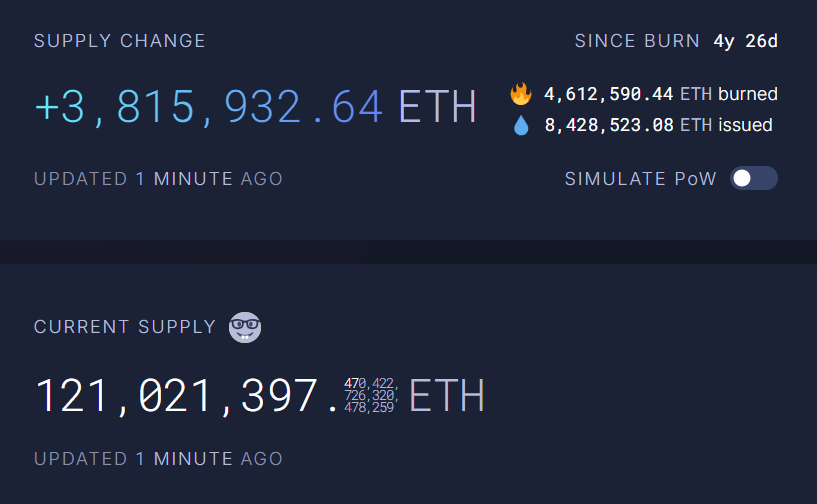
The launch comes amid continued debate over Ethereum’s monetary policy. Since the London upgrade in 2021, the network has burned roughly 4.6 million ETH, but it has also issued over 8 million new tokens in the same period. This dynamic has raised questions about whether Ethereum can maintain a truly deflationary model.
Ethereum co-founder Joseph Lubin believes the community will embrace BETH and build new layers of innovation on top of it. He suggested that burn-based mechanics could become integral to decentralized finance (DeFi) and Web3 gaming:
“Burning ETH is going to be a very lucrative thing to do, as it will spawn industries. And a very fun thing to do, as it will become a popular mechanic in Web3 games. This is one way people will get paid to play in Web3,” Lubin said.
Why It Matters
By transforming Ethereum’s abstract burn mechanism into something visible and programmable, BETH could shape new forms of economic coordination across DeFi, governance, and gaming. Whether it strengthens ETH’s scarcity narrative remains to be seen, but it undeniably gives developers a new tool to experiment with.



